
A soupy espresso puck isn’t just messy—it’s a red flag that something has gone wrong in your extraction. When you pull back the portafilter after brewing and find a wet, sludgy mess instead of a firm, dry cake, your espresso is likely under-extracted, inconsistent, or both. The puck’s texture tells a story about grind size, dose, tamping, water pressure, and machine performance. Getting it right means understanding what causes a soggy puck and systematically adjusting variables until you achieve balance.
Espresso is as much science as it is craft. A perfectly extracted shot produces a rich crema, balanced sweetness, and layered flavor—none of which are possible if your puck collapses into soup. Let’s break down the root causes of a soupy puck and walk through a precise method for dialing in your espresso like a seasoned barista.
Understanding the Ideal Espresso Puck
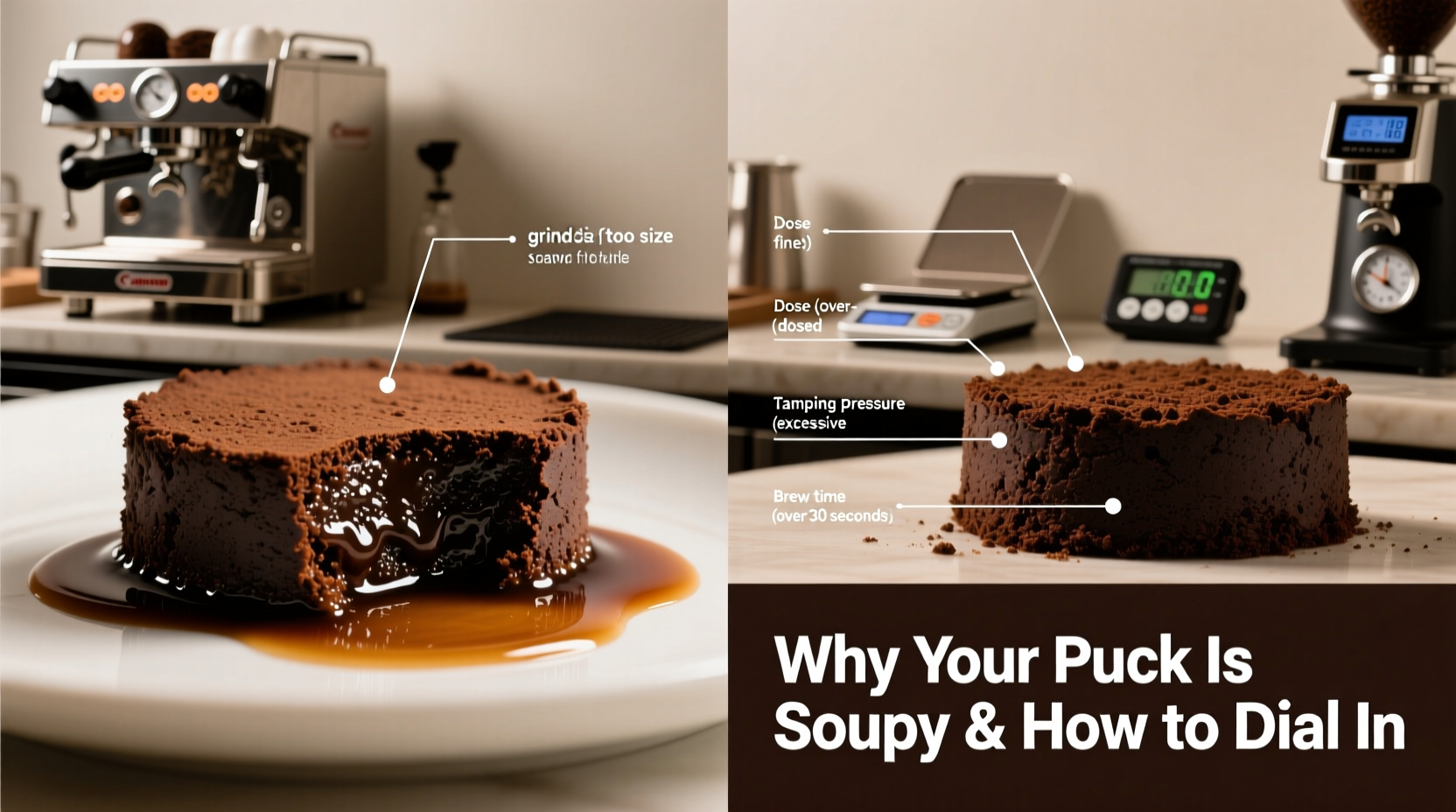
The post-brew espresso puck should be solid, slightly domed, and dry to the touch. It holds its shape when removed from the portafilter and cracks cleanly when tapped. This indicates even saturation, proper channeling resistance, and consistent extraction. A soupy puck, by contrast, is loose, wet, and often sticks to the basket walls or disperses into slurry when cleaned.
This condition typically stems from one or more of the following:
- Grind too coarse
- Inconsistent tamping pressure
- Insufficient dose or uneven distribution
- Low brew pressure or temperature instability
- Worn or clogged shower screen
Each factor disrupts the delicate equilibrium required for optimal water flow through the coffee bed. Water follows the path of least resistance. If the grind is too coarse or the tamp uneven, channels form—fast-moving rivers of water that bypass most of the grounds, leading to weak, sour shots and a saturated, poorly drained puck.
Common Causes of a Soupy Puck
1. Grind Size Too Coarse
When coffee is ground too coarsely, water flows through the puck too quickly. There’s insufficient resistance, so the contact time between water and coffee is too short. This results in under-extraction and a weak, sour shot. More importantly, because water doesn’t evenly saturate the grounds, some areas remain dry while others become oversaturated, creating a sludgy consistency post-brew.
2. Poor Tamping Technique
Tamping isn’t just about applying pressure—it’s about doing so evenly and level. Uneven tamping creates high and low spots in the coffee bed, allowing water to channel through the less-resisted zones. These channels lead to localized over-saturation and poor puck integrity. A wobbly tamp can also disturb the distribution, further compounding the problem.
3. Inadequate Distribution Before Tamping
Even with perfect tamping, if the grounds aren’t evenly distributed in the basket, the resulting puck will lack structural uniformity. Clumping or funneling during dosing leads to density variations. Water exploits these inconsistencies, washing out fines and leaving behind a fragmented, soupy residue.
4. Machine Issues: Pressure and Temperature
Espresso requires stable 9 bars of pressure and water temperature between 90–96°C (194–205°F). If your machine struggles to maintain this—due to scale buildup, faulty pumps, or worn group heads—the extraction becomes erratic. Low pressure fails to compact the puck properly, contributing to poor drainage and a wet finish.
5. Worn or Dirty Equipment
A clogged shower screen or portafilter basket restricts even water dispersion. Instead of raining down uniformly, water jets through isolated openings, creating hotspots and uneven extraction. Similarly, a portafilter with dents or warping won’t seal properly against the group head, reducing effective pressure and altering flow dynamics.
“Puck appearance is the barista’s first diagnostic tool. A soupy puck almost always points to channeling—either from grind, distribution, or equipment failure.” — Luca Maroni, Coffee Quality Analyst
Step-by-Step Guide to Dialing In the Perfect Shot
Dialing in espresso is a methodical process of adjusting variables to achieve balance. Follow this timeline to eliminate a soupy puck and produce consistently excellent shots.
- Start with Fresh, High-Quality Beans
Use beans roasted within the past 2–4 weeks. Stale coffee lacks solubles and produces flat extractions regardless of technique. - Weigh Your Dose and Yield
Use a precision scale. Aim for a 1:2 ratio (e.g., 18g in, 36g out). Consistency begins with measurement. - Set Initial Grind Setting
Begin with a fine setting on your grinder. You’ll adjust finer or coarser based on taste and time. - Distribute Evenly
Use a distribution tool (like a Weiss Distributor) or gentle finger leveling to spread grounds uniformly. Avoid pressing down. - Tamp with 30 lbs of Pressure
Apply steady, level pressure using a calibrated tamper. Use a mirror or gauge to ensure flatness. - Pull the Shot and Time It
Start the timer when extraction begins. A target window is 25–30 seconds for a double shot. - Evaluate Taste and Puck
If sour and fast (<25 sec), grind finer. If bitter and slow (>30 sec), grind coarser. Check puck for evenness. - Adjust One Variable at a Time
Only change grind size between adjustments. Wait 30 seconds after each grind change for stability. - Repeat Until Balanced
You’ve dialed in when the shot tastes sweet, balanced, and finishes in 27–30 seconds with a firm, dry puck.
Essential Checklist for a Solid Puck and Great Espresso
Before every service or home session, run through this checklist to prevent common issues:
- ✅ Clean portafilter and basket thoroughly (backflush daily if using a double boiler)
- ✅ Verify grinder burrs are clean and calibrated
- ✅ Confirm dose is consistent (±0.1g)
- ✅ Distribute grounds evenly before tamping
- ✅ Tamp level and firm (use a leveling tool if needed)
- ✅ Preheat portafilter and cup
- ✅ Check shot time and yield with a scale
- ✅ Inspect puck after extraction for cracks, channels, or sogginess
- ✅ Record settings for reproducibility
Do’s and Don’ts: Puck Health and Extraction
| Do | Don't |
|---|---|
| Use a bottomless portafilter to observe flow patterns | Tap the portafilter aggressively after dosing (causes settling) |
| Backflush your machine weekly with detergent | Use excessively fine grinds to slow extraction (leads to clogging) |
| Store beans in an airtight container away from light | Assume all coffees extract the same (adjust for origin and roast) |
| Replace shower screens every 6–12 months | Ignore temperature swings in your machine |
| Dial in fresh each morning (grinder retention changes overnight) | Reuse old or oily baskets (retains rancid oils) |
Real Example: Fixing a Persistent Soupy Puck at Home
Mark, a home barista in Portland, struggled for weeks with soupy pucks despite using freshly roasted beans and a $1,200 espresso machine. His shots were fast (18 seconds) and sour. He assumed the issue was his grinder, but replacing it didn’t help.
After reviewing his process, he noticed he wasn’t distributing grounds before tamping—just dumping the dose and pressing straight down. This caused clumping and uneven compression. He began using the Stockfleth’s method: tapping the portafilter sideways to level the bed, then tamping with consistent 30-pound pressure.
He also cleaned his portafilter basket with vinegar and a toothbrush, removing built-up coffee oil. Within two days, his extraction time stabilized at 27 seconds, the puck was firm and dry, and the flavor transformed—caramel sweetness replaced the sharp acidity. The soupy puck was gone.
His breakthrough wasn’t new gear, but attention to detail in distribution and maintenance.
Frequently Asked Questions
Why is my puck wet even when the shot tastes good?
Slight moisture is normal, especially with high-yield shots or humid environments. But if the puck is truly soupy—collapsing, sticky, or pooling water—it suggests minor channeling or uneven extraction, even if flavor seems acceptable. Fine-tune distribution and check your basket cleanliness.
Can water quality affect puck texture?
Absolutely. Hard water leads to scale buildup in group heads and shower screens, disrupting even water dispersion. Soft or demineralized water can corrode machines. Use balanced water (around 150 ppm total dissolved solids) for consistent flow and extraction.
Should I change my dose if the puck is soupy?
Not initially. A soupy puck is rarely solved by adjusting dose alone. Focus first on grind size, distribution, and tamping. Only modify dose (±1g) after those fundamentals are stable. Changing dose without rebalancing grind will skew your entire calibration.
Conclusion: Master the Details, Elevate Your Espresso
A soupy espresso puck isn’t just inconvenient—it’s a symptom of deeper issues in your brewing process. Whether it’s an overlooked cleaning routine, inconsistent tamping, or a neglected grinder, each flaw compounds until extraction fails. But the good news is that every element is controllable.
By approaching espresso with discipline—measuring doses, refining technique, maintaining equipment—you transform unpredictable results into repeatable excellence. The perfect shot isn’t magic. It’s method. And once you dial it in, that firm, dry puck becomes proof of mastery.




 浙公网安备
33010002000092号
浙公网安备
33010002000092号 浙B2-20120091-4
Comments
No comments yet. Why don't you start the discussion?