
A flawless makeup look begins with smooth, even foundation—but too often, the result is anything but perfect. Even when you’ve applied primer as directed, your foundation can still end up looking patchy, flaky, or uneven. This frustrating issue doesn’t mean your products are defective or that your technique is beyond repair. More often than not, it’s a combination of skincare oversights, product mismatches, and subtle application missteps that sabotage your base. Understanding the root causes and correcting them systematically can transform your makeup routine from inconsistent to impeccable.
The Hidden Causes Behind Patchy Foundation
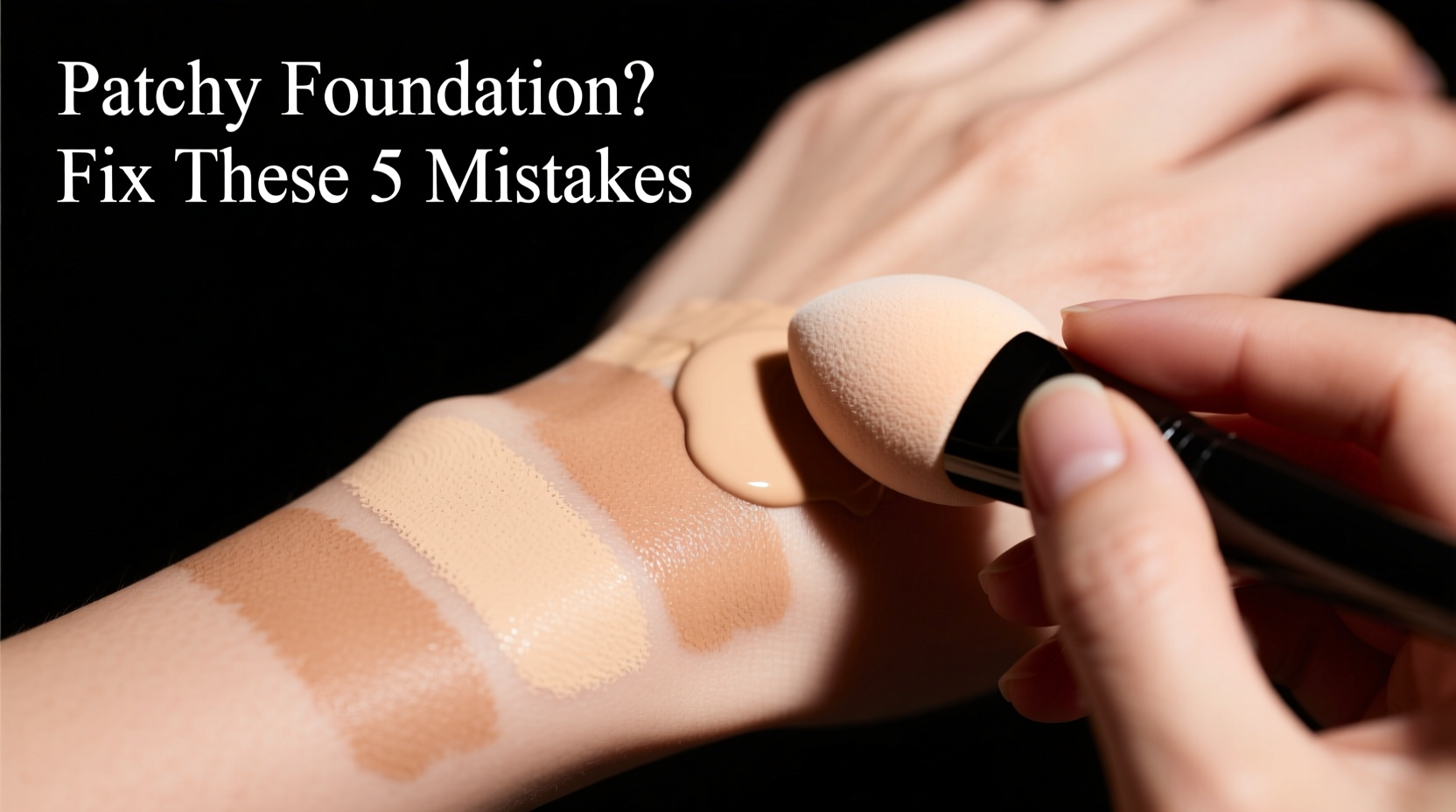
Patchiness occurs when foundation fails to adhere uniformly to the skin. It may appear as dry spots, uneven color distribution, or areas where the product lifts away—especially around the nose, forehead, or jawline. While primer is designed to create a smooth canvas, it cannot compensate for underlying issues like dehydration, improper exfoliation, or incompatible formulations.
One common misconception is that primer acts as a universal fix-all. In reality, primers serve specific functions: some mattify, others hydrate, and a few blur texture. Using the wrong type—or applying it incorrectly—can actually worsen the appearance of patchiness. For example, a silicone-based primer on already dry skin may emphasize flakiness instead of smoothing it.
Skin prep is the true foundation of any successful makeup application. If your skin lacks moisture or has built-up dead cells, no amount of primer will prevent foundation from clinging unevenly. Similarly, skipping sunscreen or moisturizer can leave your skin vulnerable to rapid drying throughout the day, leading to midday breakdown and visible patches.
Common Application Errors That Cause Patchiness
Even with high-quality products, poor technique can ruin your base. Here are the most frequent mistakes:
- Applying foundation to damp skin: When moisturizer or serum hasn’t fully absorbed, foundation can pill or slide off in patches.
- Overloading the sponge or brush: Too much product leads to buildup in certain areas, creating an uneven finish.
- Rubbing instead of blending: Aggressive buffing can lift dry skin and disturb the primer layer.
- Skipping skin typing: Using a hydrating foundation on oily skin (or vice versa) disrupts balance and adhesion.
- Mixing incompatible formulas: Water-based primers under silicone-heavy foundations can repel rather than bond.
These errors compound when multiple factors align. For instance, if you’re using a mattifying primer on dehydrated skin and then apply a full-coverage liquid foundation with a dense brush, you're setting yourself up for patchiness.
How Primer Should Work—And When It Doesn’t
Primer is meant to extend wear, refine texture, and regulate oil or moisture. But it only works effectively when matched to your skin type and layered correctly. A primer that claims to “blur pores” won’t help if your real issue is dryness. Likewise, a hydrating primer under a drying foundation creates a battle between ingredients.
“Primer isn’t a magic eraser—it enhances what’s underneath. If your skin isn’t prepped, even the best primer will struggle.” — Lila Chen, Celebrity Makeup Artist and Skincare Educator
Step-by-Step Guide to Flawless Foundation Application
Follow this timeline to ensure every step supports a seamless finish:
- Cleanse gently: Use a non-stripping cleanser to remove impurities without disrupting your skin’s barrier.
- Exfoliate 2–3 times per week: Choose a chemical exfoliant (like lactic or glycolic acid) over physical scrubs to avoid micro-tears.
- Hydrate deeply: Apply a hyaluronic acid serum followed by a moisturizer suited to your skin type. Oily skin benefits from gel creams; dry skin needs richer emollients.
- Wait 5 minutes: Allow skincare to absorb fully. Rushing this step invites pilling.
- Apply sunscreen: Non-negotiable for daytime looks. Let it set for another 3–5 minutes.
- Choose the right primer: Match it to your concern—hydration, oil control, redness correction, or pore blurring.
- Use a pea-sized amount: Focus on areas prone to shine or texture. Avoid over-applying on dry zones.
- Let primer set for 2–3 minutes: This activates its bonding properties.
- Apply foundation with a damp sponge or stippling brush: Use tapping motions, not dragging, to press product into the skin.
- Build coverage gradually: Start thin and add only where needed to avoid heaviness.
This method prioritizes skin health and compatibility, reducing the risk of separation and patchiness.
Product Compatibility Checklist
Not all primers and foundations play well together. Use this checklist before combining products:
- ✅ Are both water-based or silicone-based? Mixing types increases pilling risk.
- ✅ Is your foundation weight appropriate for your skin type?
- ✅ Does your primer address your primary skin concern (e.g., dryness, oil, redness)?
- ✅ Have you tested the combo on your jawline before full application?
- ✅ Is your foundation expired? Old formulas break down and separate.
Do’s and Don’ts: Foundation and Primer Pairing
| Scenario | Do | Don’t |
|---|---|---|
| Dry skin | Use a hydrating primer with ceramides and a dewy-finish foundation | Layer matte primers or alcohol-heavy toners before makeup |
| Oily skin | Opt for a mattifying, pore-refining primer and oil-free foundation | Over-moisturize or skip primer entirely |
| Combination skin | Use targeted priming—matte on T-zone, hydrating on cheeks | Apply one heavy primer all over |
| Mature skin | Choose luminous primers and medium-coverage foundations | Use thick, matte formulas that settle into fine lines |
| Sensitive skin | Pick fragrance-free, hypoallergenic products with minimal actives | Layer multiple active-rich primers (e.g., salicylic acid + vitamin C) |
Real Example: From Patchy to Polished
Sophia, a 32-year-old professional, struggled daily with her foundation cracking around her nose and chin by mid-morning. She used a popular silicone-based pore-blurring primer and a long-wear matte foundation, believing she was doing everything right. Despite regular exfoliation, the patchiness persisted.
After consulting a dermatologist, she discovered her morning routine included a foaming cleanser that stripped her skin, followed by a lightweight gel moisturizer insufficient for her climate. The primer, while excellent for oily areas, exacerbated dryness on her cheeks. Her foundation, though long-wearing, contained drying alcohols.
She adjusted her routine: switched to a cream cleanser, added a ceramide moisturizer, and replaced her primer with a hydrating version on dry zones and a mattifying one only on her T-zone. She also changed to a serum-infused foundation. Within days, her base stayed smooth and even for eight hours without touch-ups.
Sophia’s case highlights how patchiness is rarely about one mistake—it’s the cumulative effect of mismatched products and overlooked skin needs.
Frequently Asked Questions
Can I use two different primers on the same face?
Yes, and it’s often recommended for combination skin. Use a mattifying formula on oily areas (forehead, nose, chin) and a hydrating one on dry zones (cheeks, jawline). Apply them separately and blend edges carefully to avoid lines of demarcation.
Why does my foundation pill even with a good primer?
Pilling usually results from product incompatibility or incomplete absorption. Common culprits include mixing silicone and water-based products, applying foundation before skincare has dried, or using expired or oxidized formulas. Try simplifying your routine and testing each layer’s compatibility.
Should I skip primer if my foundation still looks patchy?
No—skipping primer often makes patchiness worse. Instead, reassess your primer choice. You may need a different formulation (e.g., hydrating instead of mattifying) or better skin prep. Primer remains essential for longevity and evenness when used correctly.
Expert Insight: The Role of Skin Health
Makeup artists and dermatologists agree: healthy skin is the best primer. Without proper hydration and barrier function, even the most expensive foundation will fail.
“You can’t mask compromised skin with makeup. Focus on strengthening your moisture barrier first—then build your routine around it.” — Dr. Naomi Patel, Board-Certified Dermatologist
Ingredients like ceramides, niacinamide, and hyaluronic acid support skin resilience and improve makeup adherence. Incorporating these into your daily regimen can reduce reliance on corrective products and enhance overall finish.
Final Tips for Long-Lasting, Smooth Coverage
Preventing patchiness isn’t about perfection—it’s about consistency and awareness. Revisit your routine monthly, especially as seasons change. What works in summer may fail in winter due to humidity shifts.
- Reassess your moisturizer twice a year—lighter in summer, richer in winter.
- Keep a makeup journal noting which product combos work best.
- Use facial mists to refresh your base midday without adding layers.
- Wash your brushes weekly to prevent product buildup that affects application.
- Never ignore signs of skin irritation—redness or flaking means it’s time to reset your routine.
Conclusion: Achieve a Seamless Base With Confidence
Patchy foundation isn’t a makeup failure—it’s a signal. It tells you something in your routine needs adjustment, whether it’s your moisturizer, primer choice, or application method. By understanding the science behind product interaction and respecting your skin’s unique needs, you can achieve a smooth, natural-looking finish every time.
Start small: evaluate one step at a time. Replace one product, adjust your timing, or try a new tool. Small changes yield big results. Your flawless base isn’t out of reach—it’s built on informed choices and consistent care.




 浙公网安备
33010002000092号
浙公网安备
33010002000092号 浙B2-20120091-4
Comments
No comments yet. Why don't you start the discussion?