
If you’ve ever applied what felt like the perfect foundation only to find it cracking, sliding, or forming visible lines across your nose by midday, you’re not alone. The nose is one of the most challenging areas to keep makeup intact—prone to oil buildup, movement, and texture inconsistencies. Foundation separation on the nose isn’t just frustrating; it can undermine an entire look. But the good news? It’s usually preventable with the right knowledge and technique.
This issue stems from a combination of skin physiology, product choices, and application methods. Understanding the root causes allows you to make targeted adjustments that result in smoother, longer-lasting coverage. From skincare prep to setting strategies, we’ll walk through actionable steps backed by makeup artists and dermatologists to help you achieve a seamless finish—especially where it matters most: your T-zone.
The Science Behind Foundation Separation on the Nose
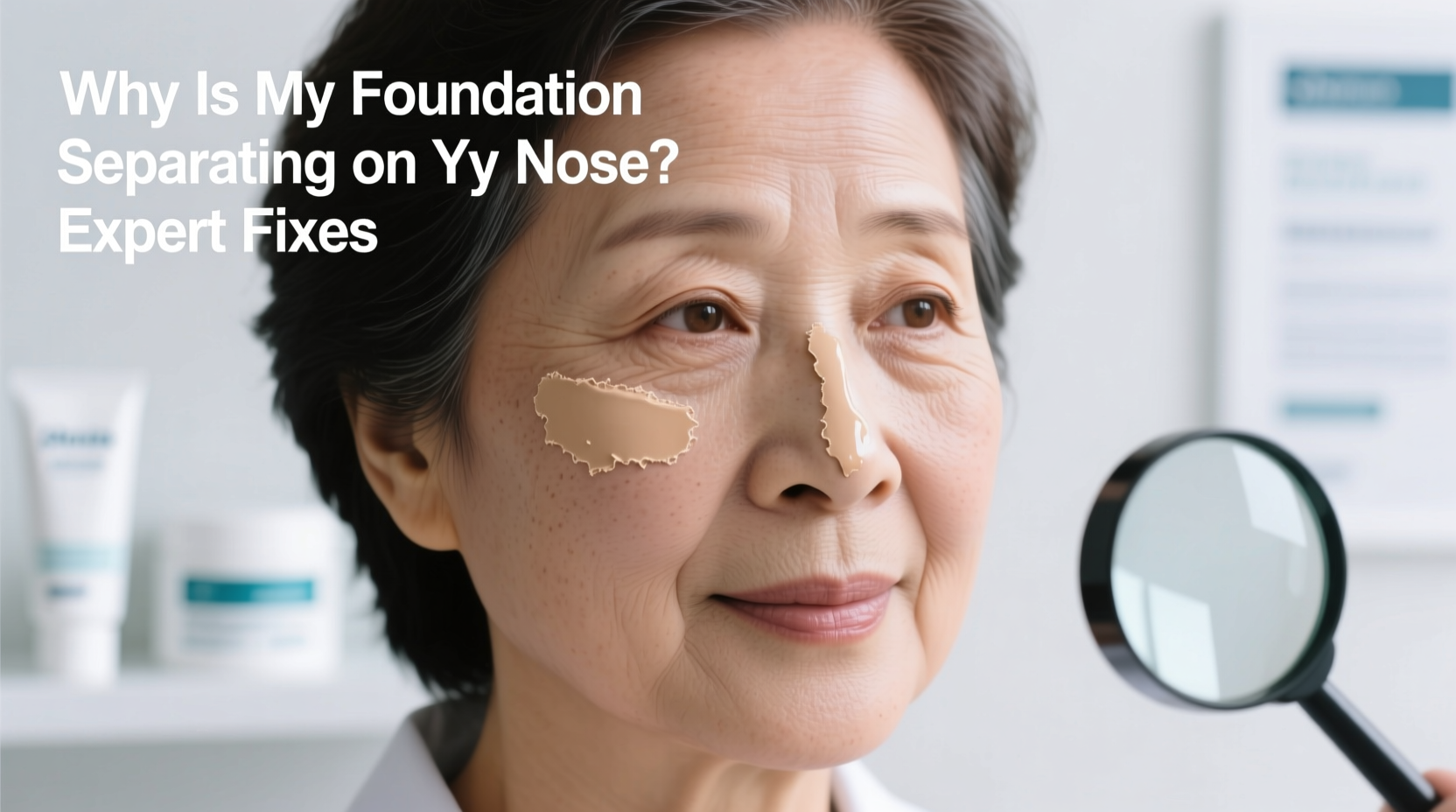
The nose sits at the center of the face and plays a critical role in facial symmetry, making any imperfection immediately noticeable. It's also biologically predisposed to interfere with makeup longevity. Several factors converge here:
- High sebum production: The nose contains more sebaceous (oil) glands than most other facial areas. This natural oil breaks down foundation over time, causing it to lift, slide, or separate.
- Texture irregularities: Enlarged pores, blackheads, or subtle bumps on the nose create uneven surfaces where product can pool or crack.
- Muscle movement: Frequent facial expressions—smiling, squinting, adjusting glasses—create micro-movements that stress foundation layers.
- Over-application: Applying too much product in an attempt to cover redness or pores increases the likelihood of creasing and pilling.
According to celebrity makeup artist Lana Jenkins, “The nose is a hotspot for failure if you don’t respect its unique conditions. It’s not about using heavier coverage—it’s about strategic layering and balance.”
“The nose has up to five times more oil glands than the cheeks. That’s why even matte foundations can break down there within hours.” — Dr. Nina Patel, Board-Certified Dermatologist
This biological reality means that simply reapplying foundation won’t solve the problem. You need a holistic approach starting with skincare and ending with precision finishing techniques.
Step-by-Step Guide to Prevent Foundation Separation
Fixing foundation separation isn't just reactive—it's proactive. Follow this detailed routine to build a lasting base that resists breakdown on the nose.
- Cleanse with a pH-Balanced Wash
Start with a gentle cleanser that removes excess oil without stripping the skin. Harsh soaps trigger rebound oiliness, worsening the problem. Rinse with lukewarm water and pat dry—never rub. - Exfoliate 2–3 Times Weekly
Use a chemical exfoliant containing salicylic acid (0.5%–2%) or glycolic acid to clear clogged pores and smooth texture. Physical scrubs can irritate and inflame the nose, increasing redness and flakiness under makeup. - Apply a Mattifying Primer Strategically
Choose a silicone-based or pore-blurring primer designed for oily zones. Apply only a pea-sized amount and focus solely on the nose and surrounding T-zone. Let it set for 60 seconds before moving to foundation. - Use a Lightweight, Long-Wear Foundation
Opt for a fluid or serum foundation with buildable coverage instead of thick, full-coverage formulas. Apply with a damp sponge for sheer, even distribution. Avoid layering excessively on the nose. - Bounce, Don’t Drag
When applying foundation around the nose, use a stippling motion with your brush or sponge. Dragging pulls product into crevices and encourages uneven settling. - Set Immediately with Translucent Powder
After foundation, lightly dust a translucent setting powder over the nose using a small fluffy brush or folded tissue. Press—don’t swipe—for maximum adherence. - Lock It In with Setting Spray
Finish with a mattifying setting spray held 8–10 inches from the face. Close your eyes and mist in an “X” and “T” pattern for complete coverage.
Common Mistakes That Worsen the Problem
Even with quality products, incorrect habits sabotage results. These are the most frequent errors that lead to foundation separation on the nose:
| Mistake | Why It’s Harmful | Solution |
|---|---|---|
| Skipping primer | Foundation adheres directly to oily skin, accelerating slippage | Use a mattifying or grip-enhancing primer only on the T-zone |
| Applying too much product | Excess foundation cracks as skin moves and oils rise | Build coverage gradually; use concealer only where needed |
| Using expired or incompatible products | Old formulas degrade and react poorly with new layers | Check expiration dates; avoid mixing silicone and water-based layers |
| Touching the face throughout the day | Fingers transfer oil, dirt, and bacteria | Carry blotting papers instead of touching |
| Setting with too much powder | Creates a chalky layer that cakes and flakes | Use a light hand and blend edges seamlessly |
Avoid layering multiple heavy products unless necessary. Each additional layer increases the chance of interaction and breakdown—especially when heat and oil enter the equation.
Real Example: How Sarah Fixed Her Midday Meltdown
Sarah, a 32-year-old marketing executive, struggled with her foundation separating on her nose within two hours of application. She worked in a warm office, wore glasses, and often reached up to adjust them—unknowingly transferring oils and disrupting her makeup.
After consulting a professional makeup artist, she revised her routine:
- Switched from a creamy full-coverage foundation to a lightweight, oil-free liquid.
- Started using a salicylic acid toner every evening to reduce congestion.
- Applied a gripping primer only on her nose and forehead each morning.
- Blotted instead of powdering during the day.
- Cleaned her glasses daily with alcohol wipes.
Within a week, her foundation stayed intact for over eight hours. “I finally feel confident in back-to-back meetings,” she said. “It wasn’t about using more product—it was about being smarter with what I used.”
Expert-Approved Product & Technique Checklist
Follow this checklist to ensure every step supports long-wearing, seamless foundation on the nose:
- ✅ Skin is clean and slightly damp before priming
- ✅ Exfoliated 2–3 times per week (chemical exfoliant)
- ✅ Used a mattifying or silicone-based primer on the nose only
- ✅ Chose a non-comedogenic, oil-free foundation
- ✅ Applied foundation with stippling—not dragging—motions
- ✅ Set with a light layer of translucent powder using a press-and-roll technique
- ✅ Finished with a mattifying setting spray
- ✅ Carried blotting papers (not powder) for touch-ups
- ✅ Cleaned glasses and phone screen regularly
- ✅ Avoided touching face throughout the day
Frequently Asked Questions
Why does my foundation separate only on my nose and not elsewhere?
The nose has a higher concentration of sebaceous glands and experiences more friction from glasses, hands, and facial movements. Combined with its convex shape, these factors make it uniquely prone to separation compared to flatter, less oily areas like the cheeks.
Can skincare really affect how my foundation wears?
Absolutely. Dehydrated skin produces more oil to compensate, leading to increased shine and breakdown. Conversely, overly stripped skin triggers irritation and flaking. A balanced routine with gentle cleansing, hydration, and regular exfoliation creates a stable canvas for makeup.
Should I use a different foundation on my nose?
No—but you can apply it differently. Use the same formula but apply less product and layer strategically. Some artists recommend using a color-correcting concealer under foundation to neutralize redness without adding thickness.
Final Fixes: Advanced Tips for Stubborn Cases
If you’ve followed all the basics and still experience separation, consider these advanced interventions:
- Try a Makeup Grip Serum: Products like Milk Makeup Hydro Grip or MAC Prep + Prime Fix+ offer enhanced adhesion. Apply a thin layer before foundation for improved staying power.
- Layer With a Cream-to-Powder Transition: After foundation, lightly press a cream contour or tinted balm onto the sides of the nose, then immediately set with powder. This locks the base underneath.
- Consider Professional Treatments: Monthly facials with extractions or mild chemical peels can reduce pore congestion and oiliness over time. Consult a licensed esthetician for personalized recommendations.
- Switch to a Mineral Foundation: For extremely oily skin, loose mineral foundations (like bareMinerals) can provide breathable, buildable coverage that resists melting.
Remember: consistency beats intensity. Small, repeated improvements in your routine yield better long-term results than drastic changes that disrupt your skin barrier.
Conclusion: Take Control of Your Base
Foundation separation on the nose isn’t a flaw in your beauty skills—it’s a signal that your routine needs refinement. By addressing the interplay of oil, texture, and technique, you can transform a problem zone into a polished focal point. The solution lies not in more product, but in smarter preparation, precise application, and mindful maintenance.
You don’t need expensive tools or a dozen layers to achieve a flawless look. You need understanding, discipline, and the willingness to adapt. Start tonight: clean your brushes, check your product expiry dates, and plan tomorrow’s routine with intention. One thoughtful change can make all the difference by noon.




 浙公网安备
33010002000092号
浙公网安备
33010002000092号 浙B2-20120091-4
Comments
No comments yet. Why don't you start the discussion?