
Foundation separation—especially across the nose—is one of the most common frustrations in makeup wear. You spend time applying a flawless base, only to notice within hours that your nose looks patchy, shiny, or visibly cracking. This issue doesn’t mean you’re doing anything wrong; it’s often the result of skin type, product mismatch, environmental factors, or application technique. The good news? With the right understanding and adjustments, you can prevent and correct this problem quickly and effectively.
Why Foundation Separates on the Nose: The Science Behind the Breakdown
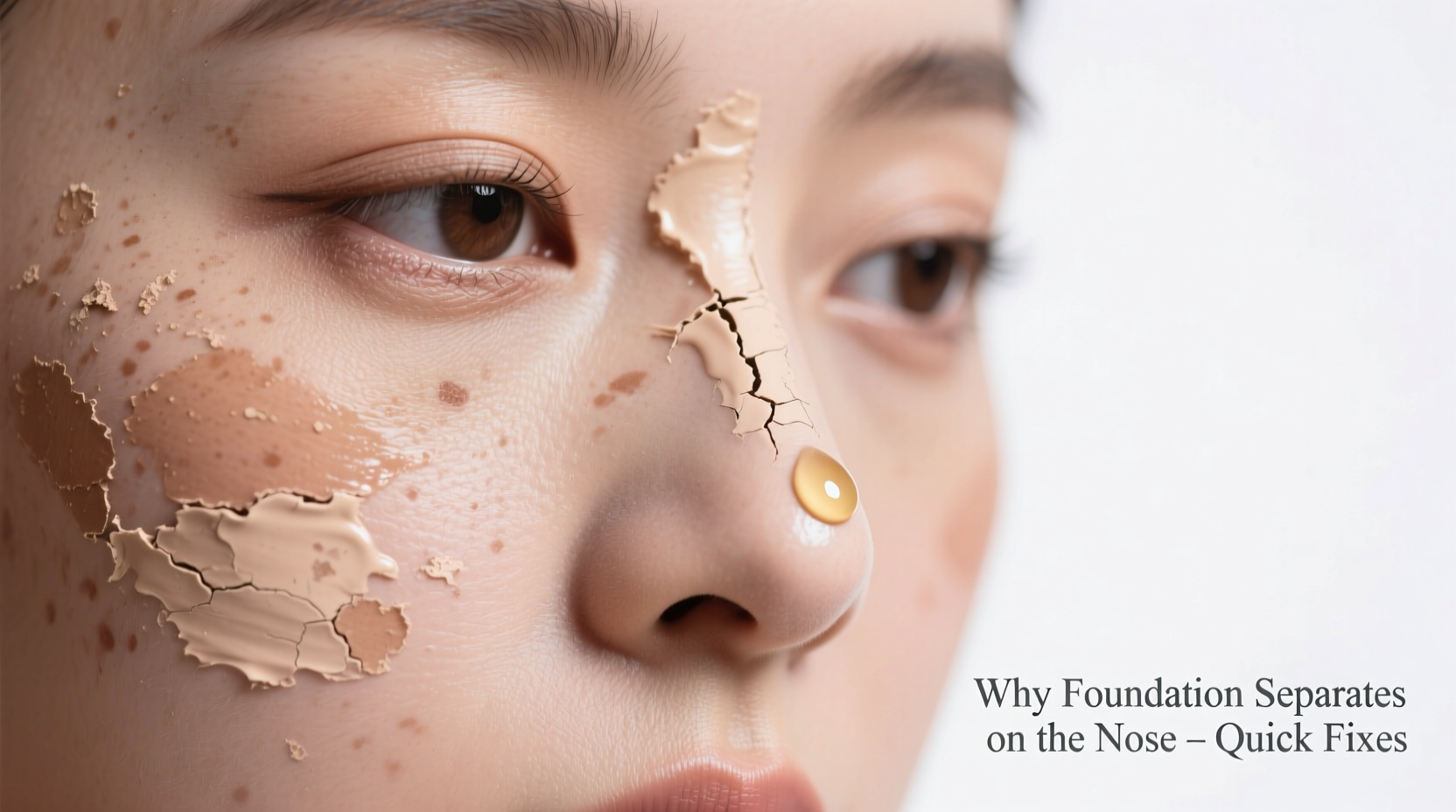
The nose is a unique area of the face. It has more sebaceous (oil-producing) glands than most other facial zones, making it naturally oilier. This increased sebum production creates an unstable surface for foundation, especially if the formula isn’t designed to withstand moisture. When oils rise through the pores, they interact with the foundation, breaking down its emulsion and causing it to separate, pill, or slide off.
Beyond oil, several other factors contribute:
- Dry patches under the surface: Dehydrated skin can flake beneath foundation, creating texture that disrupts smooth application.
- Pore size and texture: Larger pores trap product unevenly, leading to buildup and visible separation.
- Product incompatibility: Mixing silicone-based primers with water-based foundations—or layering incompatible formulas—can cause pilling.
- Over-application: Too much product increases the likelihood of movement and breakdown as layers shift throughout the day.
- Humidity and temperature: Hot, humid environments accelerate oil production and product oxidation, speeding up separation.
“Foundation separation on the nose is rarely about poor skill—it's usually a mismatch between skin needs and product behavior.” — Lila Chen, Celebrity Makeup Artist & Skincare Formulator
Quick Fixes for Patchy Makeup: Immediate Solutions On-the-Go
If you're already dealing with a patchy nose midday, don’t reach for more foundation. That will only make the problem worse. Instead, use these fast, non-disruptive techniques to refresh your base without starting over.
Step-by-Step Guide: Midday Rescue Routine
- Blot excess oil gently: Use a clean blotting paper or folded tissue to press—not rub—over the nose. This removes surface oil without disturbing makeup.
- Mist with a hydrating facial spray: A fine mist of thermal water or a glycerin-based facial spray helps rebalance the skin’s moisture and soften any cracking.
- Press, don’t swipe: Take a small amount of moisturizer or facial oil on your fingertip and gently press it into dry patches. Avoid dragging, which lifts foundation.
- Use a damp beauty sponge to blend: Lightly bounce a slightly damp sponge over the affected area to melt products back together and restore evenness.
- Set strategically: Apply a translucent powder *only* where needed using a small fluffy brush. Over-powdering leads to cakeiness.
Prevention Is Key: Long-Term Strategies for a Smooth Base
Fixing patchy makeup after it happens is helpful, but preventing it from occurring at all is the real goal. The foundation of long-lasting makeup lies in skincare, prep, and smart product choices.
1. Optimize Your Skincare Routine
Your makeup is only as good as the canvas beneath it. Focus on balance: neither too oily nor too dry.
- Cleanse gently twice daily with a pH-balanced cleanser.
- Exfoliate 1–2 times per week with a mild chemical exfoliant (like lactic or mandelic acid) to remove dead skin cells that cause flaking.
- Hydrate deeply with a lightweight serum containing hyaluronic acid before moisturizing.
- Use an oil-free moisturizer if you're prone to shine, or a nourishing balm in dry areas like the sides of the nose.
2. Prime Strategically
Not all primers are created equal. Choose based on your specific concern:
| Concern | Recommended Primer Type | Key Ingredients |
|---|---|---|
| Oily nose | Mattifying | Silica, niacinamide, clay |
| Dry patches | Hydrating | Hyaluronic acid, squalane, glycerin |
| Large pores | Pore-filling | Silicones (dimethicone, cyclomethicone) |
| Redness | Color-correcting | Green-tinted, niacinamide |
Apply primer only where needed. For example, use a mattifying primer just on the T-zone and a hydrating one on the cheeks.
3. Choose the Right Foundation Formula
Liquid foundations with a satin or natural finish tend to perform best on mixed or oily skin. Avoid overly matte or full-coverage formulas unless necessary—they often cling to dry spots. Look for words like “long-wear,” “transfer-resistant,” or “humidity-proof” on the label.
Also, consider your application method:
- Fingers: Warmth helps blend and adhere foundation, ideal for drier skin.
- Brush: Offers buildable coverage but can emphasize texture if not blended well.
- Sponge (damp): Provides the most seamless finish and presses product into the skin.
Mini Case Study: Sarah’s 9-to-5 Makeup Struggle
Sarah, a 32-year-old marketing executive, noticed her foundation always separated by noon, particularly around her nose. She’d reapply during lunch, only to end up with a cakey, uneven look by afternoon meetings.
After analyzing her routine, she discovered three issues: she was using a heavy matte foundation not suited to her combination skin, skipping moisturizer because she feared oiliness, and setting her entire face with powder.
She adjusted her approach:
- Switched to a hydrating, medium-coverage foundation with a natural finish.
- Added a lightweight gel moisturizer to her morning routine.
- Used a pore-minimizing primer only on her nose.
- Applied powder strictly in her T-zone, avoiding dry areas.
Within days, her foundation lasted eight hours without separation. Her confidence improved, and she no longer felt the need to carry a compact everywhere.
Do’s and Don’ts: Quick Reference Table
| Do’s | Don’ts |
|---|---|
| Hydrate skin before makeup | Apply foundation on dry, flaky skin |
| Use a targeted primer | Layer silicone and water-based products haphazardly |
| Blot oil instead of adding powder repeatedly | Rub or wipe your face when touching up |
| Set only oily zones with powder | Powder your entire face heavily |
| Carry a hydrating mist for touch-ups | Add more foundation to fix separation |
Expert Insight: What Professionals Do Differently
Professional makeup artists have systems to ensure longevity, especially under hot lights and long shoots.
“We don’t just apply makeup—we engineer it to last. That means prepping each zone of the face differently, using minimal product, and setting in layers. The nose gets special attention: prime, set lightly after foundation, then lock in place with a targeted spray.” — Marcus Reed, Editorial Makeup Artist
One pro technique is called “baking” the T-zone—but done correctly. After foundation, apply a thin layer of translucent powder only on the nose and under-eye areas. Wait 60 seconds, then gently dust off the excess. This sets the base without overdrying.
Frequently Asked Questions
Can I use setting spray to fix separation?
Yes, but timing matters. A setting spray applied immediately after makeup helps lock everything in place and create a cohesive film. If used later, mist from a distance and follow with a gentle press using a sponge to meld separated areas.
Does drinking more water really help with patchy makeup?
Indirectly, yes. Well-hydrated skin functions better, retains moisture more efficiently, and is less prone to flakiness. While drinking water won’t fix oiliness overnight, consistent hydration supports a smoother makeup application over time.
Is it better to use cream or liquid foundation on the nose?
Liquid foundations generally work better because they’re easier to blend and less likely to settle into pores. Creams can be too dense and may emphasize texture unless expertly applied with a damp sponge or brush.
Checklist: Prevent Foundation Separation on Your Nose
Follow this simple checklist every morning to minimize the risk of midday breakdown:
- ✅ Cleanse and tone with a gentle, non-stripping product
- ✅ Apply hydrating serum (hyaluronic acid recommended)
- ✅ Moisturize—even if you have oily skin
- ✅ Use a targeted primer on the nose (matte or pore-filling)
- ✅ Apply foundation with a damp sponge for seamless blending
- ✅ Set only oily areas with translucent powder
- ✅ Finish with a setting spray in a cross-motion (X, T, X)
- ✅ Pack blotting papers and a hydrating mist for touch-ups
Conclusion: Flawless Doesn’t Have to Be Fragile
Foundation separation on the nose is a common challenge, but it’s far from inevitable. By understanding your skin’s needs, choosing compatible products, and refining your technique, you can achieve a smooth, lasting base that holds up from morning meetings to evening plans. The key is balance—between oil and moisture, coverage and breathability, preparation and simplicity.




 浙公网安备
33010002000092号
浙公网安备
33010002000092号 浙B2-20120091-4
Comments
No comments yet. Why don't you start the discussion?