
A garage door that opens on its own is more than just a nuisance—it’s a serious safety and security concern. Whether it happens in the middle of the night or during the day with no one nearby, unexplained activation can leave homeowners anxious and confused. The good news is that most causes are diagnosable and fixable, often without requiring a full system replacement. Understanding the root causes—ranging from remote signal interference to mechanical wear—can help you take swift, effective action.
How Garage Door Openers Work: A Quick Overview
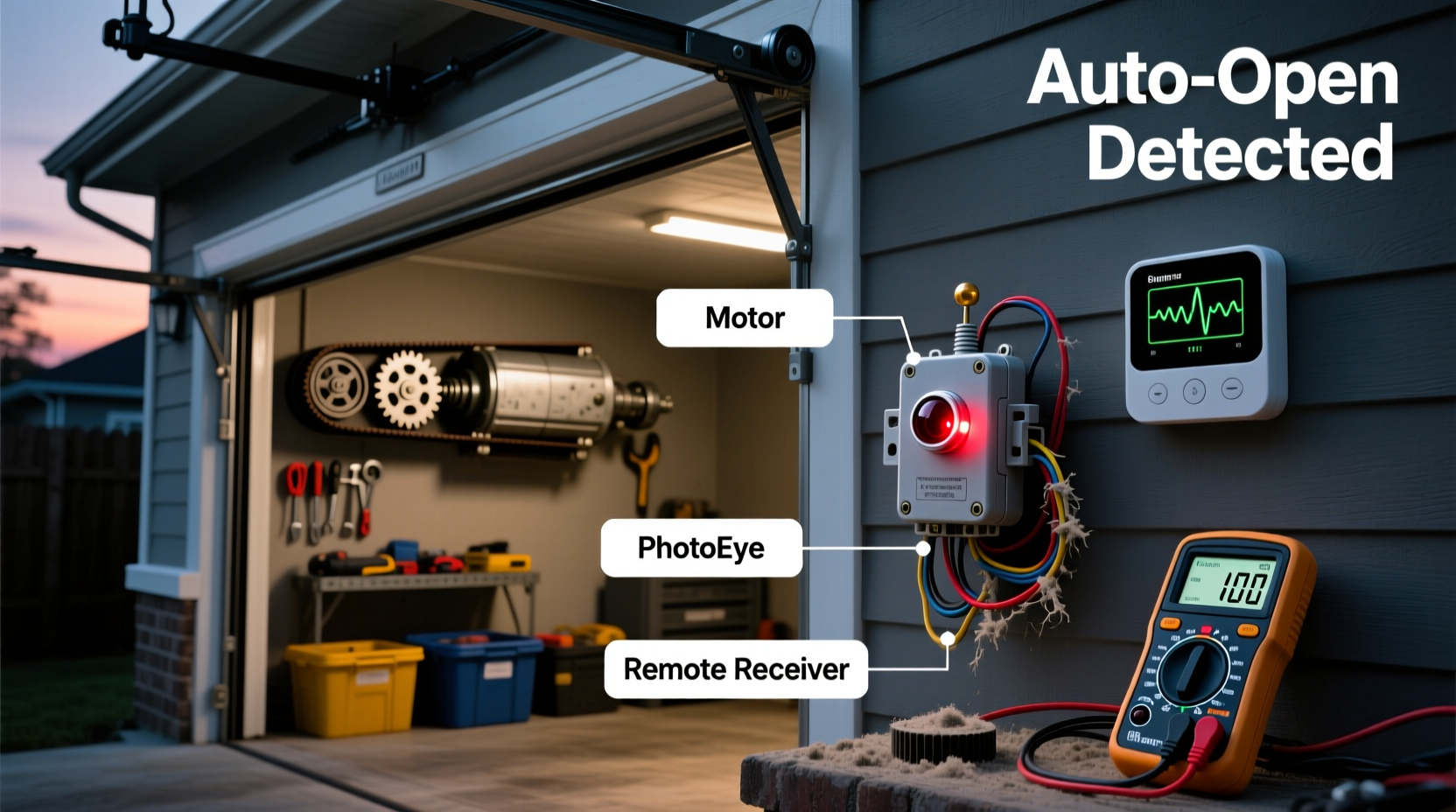
Modern garage door systems rely on a combination of mechanical components, electrical sensors, and wireless communication. When you press a button on a remote, wall switch, or smartphone app, a signal is sent to the opener’s motor unit. This unit then activates the trolley mechanism to lift or lower the door along tracks. Safety sensors located near the floor detect obstructions and reverse the door if something breaks the beam.
The system also uses limit switches to determine how far the door should open or close, and force settings to prevent excessive pressure during operation. Wireless signals operate on specific frequencies, typically 300–400 MHz, which can sometimes be vulnerable to interference or duplication.
When any part of this system malfunctions or receives an unintended signal, the door may activate unexpectedly. Identifying where the breakdown occurs is the first step toward resolution.
Common Causes of Unprompted Garage Door Activation
Several factors can lead to a garage door opening by itself. Some are simple oversights; others point to deeper mechanical or electronic issues.
1. Remote Control or Keypad Interference
One of the most frequent culprits is signal interference from nearby devices. Modern homes are filled with electronics emitting radio frequencies—Wi-Fi routers, baby monitors, cordless phones, and even LED lighting. In rare cases, these emissions can mimic the frequency used by your garage door opener, triggering a false activation.
Additionally, if a neighbor has a similar model opener and hasn’t changed the default code, their remote could accidentally open your door—a phenomenon known as “code grabbing” in older fixed-code systems.
2. Stuck or Faulty Wall Switch
The wall-mounted control panel inside your garage is wired directly to the opener. If the button becomes stuck due to dust, debris, or internal damage, it may continuously send an open signal. Even slight pressure from a swinging door or accidental bump can cause intermittent activation.
3. Failing Logic Board or Opener Malfunction
The logic board is the brain of your garage door opener. Over time, heat, moisture, or power surges can degrade its circuitry. A failing board may misinterpret signals or trigger operations without input. Older models (especially those over 10 years old) are more prone to such failures.
Symptoms include random cycling, delayed responses, or erratic behavior even after replacing remotes and checking wiring.
4. Sunlight Interfering with Safety Sensors
Safety sensors use infrared beams to detect obstacles. Intense sunlight, especially during sunrise or sunset, can flood the sensor lens and disrupt the beam. The opener interprets this as an obstruction and may reverse or reopen the door.
This issue often appears seasonal and correlates with sun angle changes, making it tricky to diagnose without consistent observation.
5. Power Fluctuations or Reboot Effects
After a power outage, some garage door openers reset and automatically perform a test cycle. In certain models, this can result in the door opening upon power restoration. While intended as a safety check, it can seem like spontaneous activation if you’re unaware of the feature.
Voltage spikes or unstable electrical supply can also cause micro-reboots, leading to unpredictable behavior.
Step-by-Step Troubleshooting Guide
Follow this systematic approach to identify and resolve the cause of your self-opening garage door.
- Observe the pattern: Note when the door opens—time of day, weather conditions, after power outages, etc. This helps narrow down environmental or electrical triggers.
- Inspect the wall switch: Press and release the button. Does it feel sticky? Remove the cover and clean around the mechanism. Consider disconnecting it temporarily to test.
- Check remote controls: Store all remotes away from the garage for 24 hours. If the door stops opening, one may be malfunctioning or transmitting erratically.
- Examine safety sensors: Look for dirt, spider webs, or misalignment. Clean lenses with a soft cloth. Ensure both indicator lights are steady, not flickering.
- Test for sunlight interference: During peak sun exposure, cover one sensor with your hand. If the door attempts to open, sunlight may be disrupting the signal.
- Reset the opener: Unplug the unit for 30 seconds, then reconnect. Reprogram remotes and recheck settings.
- Update or replace outdated equipment: If your opener uses fixed codes or is over a decade old, consider upgrading to a modern rolling-code model.
Prevention Checklist: Keep Your Garage Door Secure
Use this checklist to minimize future incidents and enhance overall garage security.
- ✅ Replace old fixed-code openers with rolling-code models
- ✅ Regularly clean and align safety sensors
- ✅ Inspect wall switch for stickiness or damage monthly
- ✅ Install a battery backup to prevent reboot anomalies
- ✅ Shield sensors from direct sunlight using small visors or brackets
- ✅ Change PINs on keypads periodically, especially after moving in
- ✅ Test door reversal mechanism weekly using a rolled-up towel
- ✅ Keep remotes away from heat sources and electromagnetic devices
Comparison: Common Opener Types and Vulnerabilities
| Opener Type | Signal Technology | Common Issues | Recommended Fix |
|---|---|---|---|
| Fixed-Code (Pre-1993) | Static frequency | Hackable, neighbor interference | Replace with rolling-code model |
| Rolling-Code (1993–Present) | Digital rolling code | Rare interference, sensor issues | Reprogram remotes, check sensors |
| Smart Openers (Wi-Fi/Bluetooth) | Internet-connected | Network glitches, app bugs | Update firmware, secure router |
| Belt Drive (Modern) | Rolling code + sensors | Logic board failure | Professional diagnosis |
Real-Life Example: The Case of the Midnight Openings
In suburban Ohio, homeowner Lisa M. noticed her garage door opening around 2:17 a.m. every few nights. No alarms were triggered, and the house was secure. She initially suspected a break-in attempt but found no signs of forced entry.
After reviewing her smart home logs, she discovered that her new Wi-Fi-enabled LED porch light was rebooting nightly due to a firmware bug. The power surge from the light’s restart was affecting the shared garage circuit, causing her 12-year-old garage opener to reset and initiate a partial open cycle.
She resolved the issue by installing a dedicated surge protector for the opener and updating the porch light’s firmware. The random openings ceased immediately.
This case illustrates how seemingly unrelated devices can interact in unexpected ways—especially in older homes with shared electrical circuits.
Expert Insight: What Industry Professionals Say
“Over half the calls we get for ‘haunted’ garage doors turn out to be either stuck wall buttons or aging logic boards. The newer smart openers are more reliable, but they introduce new risks if the home network isn’t secure.” — Carlos Mendez, Master Technician at ProLift Garage Systems
“Sunlight interference is wildly underestimated. I’ve seen homes where the door opens every morning at 7:12 a.m. sharp because the winter sun hits the sensor just right. A $2 plastic shield solves it.” — Dana Whitmore, Residential Automation Specialist
Frequently Asked Questions
Can someone hack my garage door opener?
While rare, it’s possible with older fixed-code systems. Modern rolling-code and encrypted smart openers are highly resistant to hacking. To stay safe, avoid using default PINs, enable two-factor authentication on smart apps, and update firmware regularly.
Why does my garage door open after a storm or power outage?
Many openers have a built-in safety reset that activates when power returns. Some units interpret the surge as a command signal. Installing a surge protector or battery backup can stabilize performance and prevent unwanted cycling.
Is it dangerous if my garage door opens by itself?
Yes. An uncontrolled door poses security, safety, and liability risks. It could allow intruders access, endanger pets or children, or lead to property damage. Address the issue immediately—do not delay repairs.
When to Call a Professional
While many issues can be resolved DIY-style, certain situations require expert intervention:
- Visible frayed wires or burnt smell near the opener
- Repeated failure after resetting and testing components
- Noise from the motor unit (grinding, clicking)
- Doors that reverse unpredictably or fail to close fully
A certified garage door technician can inspect electrical connections, test the logic board, and ensure compliance with safety standards. Most manufacturers void warranties if non-certified individuals perform internal repairs.
Final Thoughts and Action Plan
A garage door that opens by itself isn’t supernatural—it’s a mechanical or electronic symptom demanding attention. Ignoring it risks security breaches, equipment damage, and potential injury. The causes range from simple fixes like cleaning sensors to more involved upgrades like replacing outdated openers.
Start with observation and basic troubleshooting. Use the checklist to eliminate common culprits. If problems persist, don’t hesitate to upgrade aging systems or call in a professional. Modern garage door technology offers enhanced reliability, encryption, and integration with home automation—investing in an update pays off in safety and convenience.




 浙公网安备
33010002000092号
浙公网安备
33010002000092号 浙B2-20120091-4
Comments
No comments yet. Why don't you start the discussion?