
If you’ve noticed your houseplant stretching or tilting dramatically toward a window, you’re not alone. This common behavior affects countless indoor gardeners, from beginners to seasoned plant parents. While it may seem like a minor aesthetic issue at first, persistent leaning can signal deeper problems with light exposure, growth symmetry, and long-term plant health. The good news? It’s both natural and fixable. Understanding the science behind phototropism—how plants respond to light—and applying targeted care strategies can restore balance and encourage lush, even development.
Plants don’t have eyes, but they are remarkably sensitive to light direction. When positioned near a single light source—like a south-facing window—they naturally grow toward it to maximize photosynthesis. Over time, this leads to uneven stems, lopsided foliage, and weakened structural integrity. Left uncorrected, some plants may become so distorted that they struggle to support themselves or develop sparse lower leaves. But with consistent intervention, you can reverse the trend and cultivate stronger, more symmetrical houseplants.
The Science Behind Leaning: Phototropism Explained
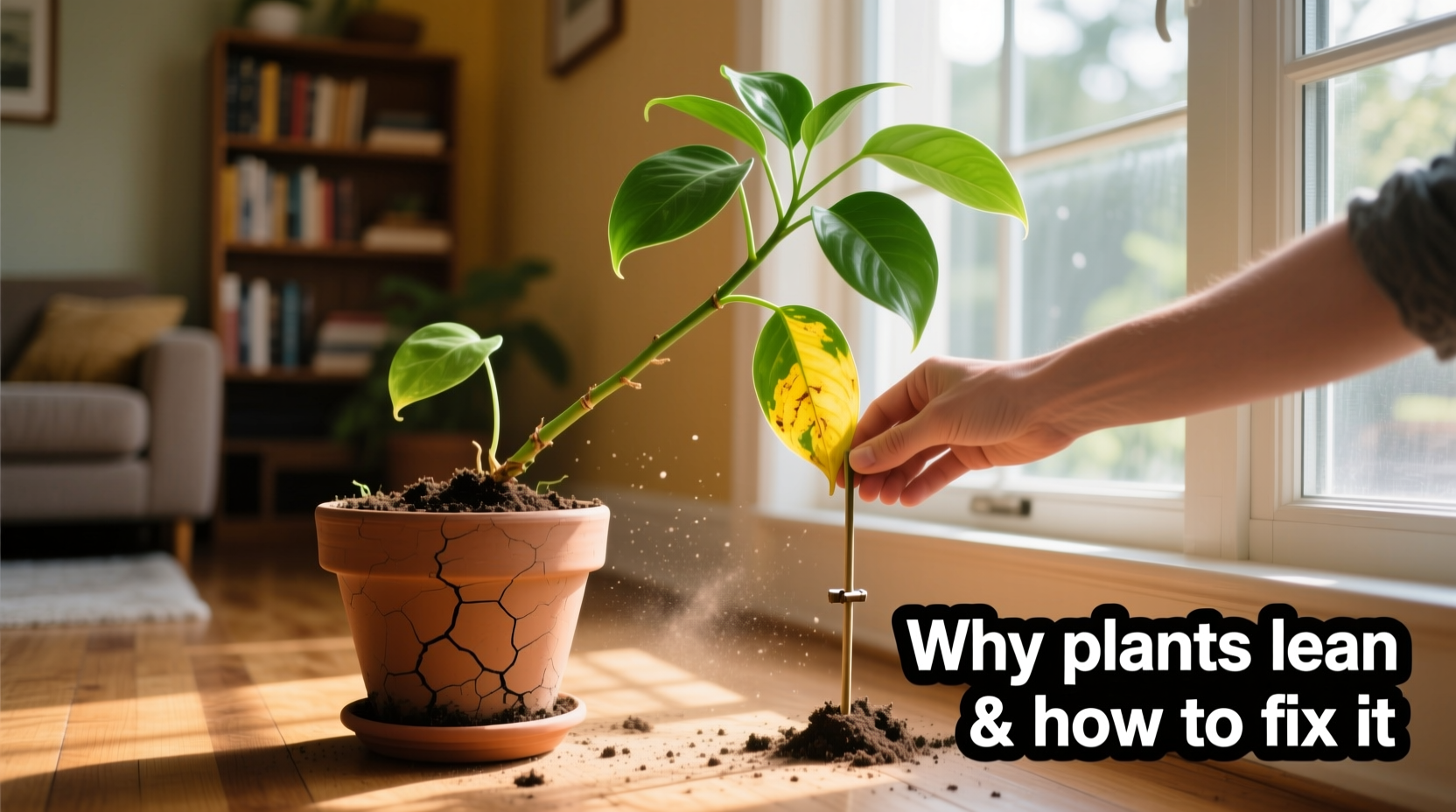
At the heart of your plant’s lean is a biological process called phototropism—the directional growth of a plant in response to light. This mechanism allows plants to optimize their access to sunlight, which fuels photosynthesis and drives growth. In nature, where light comes from above (the sun), plants grow upright. Indoors, however, most natural light enters from the side—through windows—causing plants to bend laterally toward the brightest point.
This bending occurs due to the redistribution of auxins, a class of plant hormones. When one side of a stem receives more light, auxins accumulate on the shaded side, stimulating cell elongation. As those cells stretch, the stem curves toward the light source. While this adaptation helps wild plants compete for sunlight, it creates imbalances in controlled environments like homes and offices.
Not all plants react the same way. Fast-growing species like pothos, spider plants, and fiddle leaf figs show visible leaning within weeks. Slower growers such as snake plants or ZZ plants may take months to display noticeable tilt. Still, even subtle shifts indicate uneven development that could affect overall vigor over time.
“Phototropism is a survival mechanism, not a flaw. The key is working with it—not against it—by rotating plants regularly and supplementing light when needed.” — Dr. Lila Nguyen, Botanist and Indoor Plant Physiologist
How to Fix a Leaning Houseplant: A Step-by-Step Guide
Correcting a leaning plant isn't about forcing it back into place overnight. It's a gradual process that involves adjusting its environment, supporting structure, and growth patterns. Follow these steps to restore balance and encourage even development:
- Assess the current lean: Determine how severe the tilt is. Gently straighten the plant and observe whether the soil loosens—if so, repotting may be necessary.
- Rotate the plant 90–180 degrees weekly: Turn the pot so the side facing away from the window now faces it. This evens out light exposure and prevents one-sided growth.
- Reposition if possible: Move the plant farther from the window or angle it slightly to reduce direct lateral light. Alternatively, place it in a location with more diffuse light, such as a few feet back from the sill.
- Support weak stems: Use stakes or moss poles for vining or top-heavy plants. Insert gently into the soil and loosely tie stems with soft plant ties to guide upright growth.
- Prune selectively: Trim longer, stretched stems just above a leaf node to encourage branching on the opposite side and improve symmetry.
- Monitor progress monthly: Take photos from the same angle each month to track improvements and adjust your approach as needed.
Prevention Strategies: Creating Balanced Growth Conditions
Once corrected, maintaining an upright posture requires ongoing attention. Preventive care ensures your plant grows evenly without constant correction. Consider these foundational practices:
- Regular rotation schedule: Make weekly rotation part of your plant care routine, ideally on the same day each week.
- Use reflective surfaces: Place white boards, mirrors, or light-colored walls behind plants to bounce light back onto shaded sides.
- Supplement with grow lights: Position full-spectrum LED grow lights above or beside the plant to provide balanced overhead illumination.
- Avoid overcrowding: Keep other objects—including furniture or other plants—from blocking indirect light flow around the foliage.
- Choose appropriate containers: Ensure pots are stable and weighted enough to prevent tipping, especially for tall or top-heavy varieties.
In multi-window rooms, experiment with seasonal placement. For example, during winter months when southern light is weaker, move shade-tolerant plants closer to the glass while reserving prime spots for high-light species. During summer, pull sensitive plants back to avoid scorching from intensified rays.
Do’s and Don’ts: Common Mistakes That Worsen the Lean
Missteps in care can accelerate leaning or undermine corrective efforts. Refer to the table below to avoid frequent errors and adopt best practices.
| Do | Don’t |
|---|---|
| Rotate your plant every 7–10 days | Leave the plant in the same orientation for months |
| Use a grow light to simulate overhead sun | Rely solely on a single window for directional light |
| Prune leggy growth to stimulate fuller shape | Cut randomly without understanding node placement |
| Stake leaning stems early before they flop |
| Affix supports too tightly, restricting growth |
Real Example: Reviving a Leaning Pothos in a Home Office
Sarah, a remote worker in Chicago, kept a golden pothos on her desk near a large east-facing window. Within three months, she noticed the vines stretching sharply toward the glass, creating a curtain-like effect on one side while leaving the interior bare. Concerned about aesthetics and plant health, she consulted a local horticulturist who recommended a four-phase plan:
- Rotation: She began turning the pot 180° every Monday morning.
- Pruning: She trimmed five of the longest runners just above nodes facing inward, encouraging bushier regrowth.
- Supplemental lighting: She added a small clip-on LED grow light above the plant, set on a timer for 12 hours daily.
- Support: She installed a lightweight trellis to train new growth upward rather than outward.
After ten weeks, Sarah observed significant improvement. New leaves emerged more uniformly, and the vine density increased across all sides. By week 14, the plant stood symmetrically, with no visible preference for the window. Her experience highlights how consistent, informed care can reverse even pronounced leans.
Frequently Asked Questions
Can I stop rotating my plant once it stops leaning?
No. Even after correcting the lean, continued rotation is essential. Plants will resume directional growth if exposed to unilateral light for extended periods. Make rotation a permanent habit, much like watering or fertilizing.
Will pruning harm my plant?
When done correctly, pruning strengthens your plant. Cutting just above a leaf node stimulates dormant buds and promotes branching. Avoid removing more than one-third of the foliage at once, and always use clean, sharp scissors to prevent infection.
Is leaning ever a sign of something worse, like root rot?
Leaning alone usually indicates light-seeking behavior. However, if accompanied by yellowing leaves, mushy stems, or foul soil odor, it could signal root issues. In such cases, remove the plant from its pot and inspect roots for browning or sliminess. Repot in fresh, well-draining soil if necessary.
Checklist: How to Keep Your Houseplants Growing Upright
Use this actionable checklist to maintain balanced growth and prevent future leaning:
- ☑ Rotate plant every 7–10 days
- ☑ Clean leaves monthly with a damp cloth
- ☑ Assess light distribution from all angles
- ☑ Install a grow light if natural light is directional
- ☑ Prune leggy or stretched stems seasonally
- ☑ Stake or trellis tall or vining plants
- ☑ Monitor for signs of stress (yellowing, drooping, thinning)
- ☑ Take monthly comparison photos to track symmetry
Conclusion: Cultivate Balance, Not Just Growth
A leaning houseplant isn’t a failure—it’s feedback. It tells you that your plant is actively responding to its environment, doing exactly what evolution has taught it to do. Your role isn’t to fight that instinct but to guide it. With mindful rotation, strategic pruning, and thoughtful lighting, you can transform a lopsided specimen into a thriving centerpiece.
Beyond appearance, balanced growth supports long-term health. Symmetrical plants photosynthesize more efficiently, resist pests better, and adapt more easily to environmental changes. They also bring greater visual harmony to your space, enhancing both mood and air quality.




 浙公网安备
33010002000092号
浙公网安备
33010002000092号 浙B2-20120091-4
Comments
No comments yet. Why don't you start the discussion?