
If you've noticed a fine white powder settling on furniture, shelves, or electronics near your humidifier, you're not imagining things—and it's not mold. This chalky residue is commonly known as \"white dust,\" and it’s a widespread issue among users of ultrasonic and cool-mist humidifiers. While not harmful in small amounts, the presence of white dust signals that minerals from your tap water are being dispersed into the air along with moisture. Over time, this can lead to mineral buildup inside the unit, reduced efficiency, and even damage to internal components like filters and sensors. Understanding the root cause and knowing how to manage it effectively ensures cleaner air, better performance, and a longer lifespan for your device.
What Causes White Dust from Humidifiers?
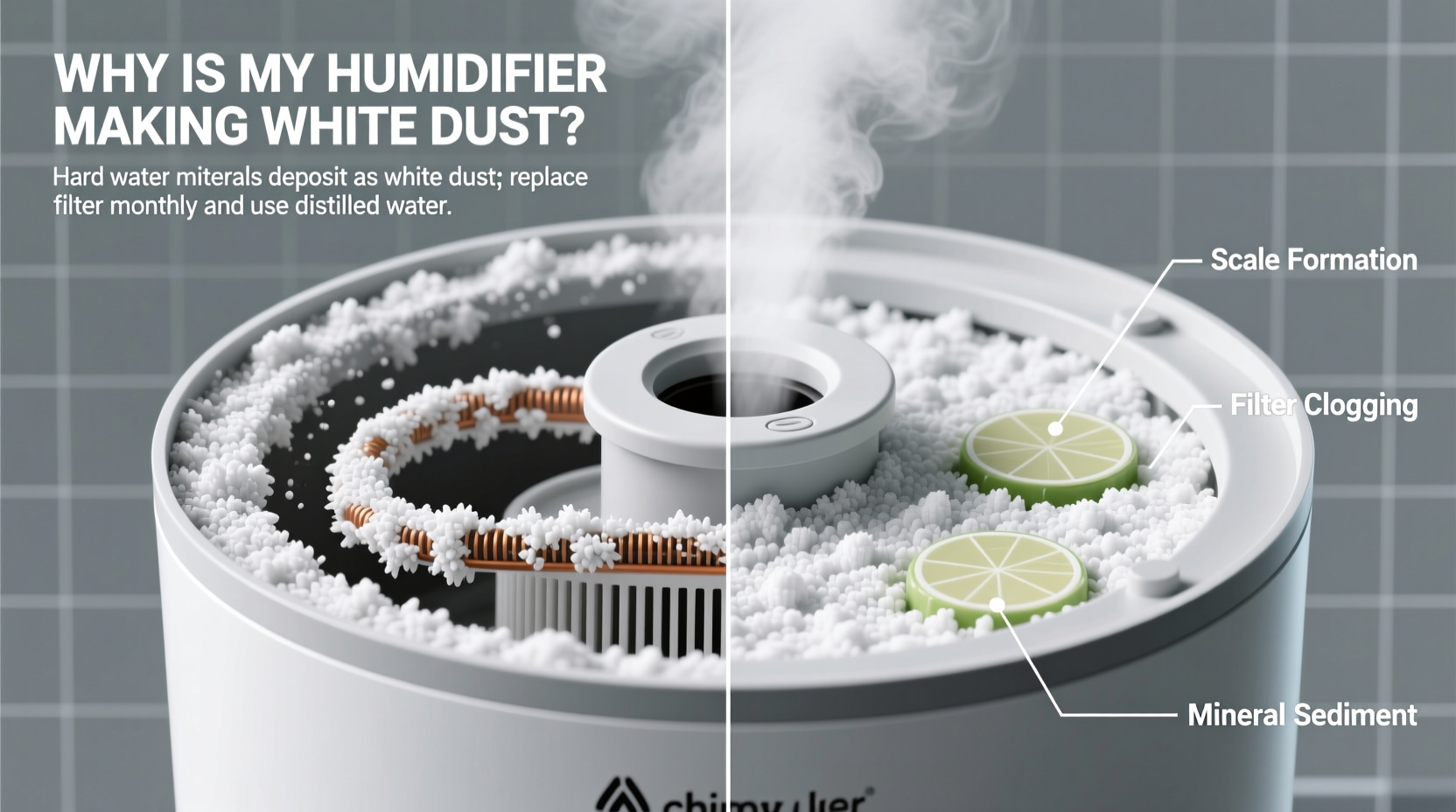
White dust isn’t generated by the humidifier itself but rather results from the type of water used. Most standard humidifiers, especially ultrasonic models, use high-frequency vibrations to break water into a fine mist. When tap water—rich in dissolved minerals like calcium, magnesium, and lime—is used, these minerals don’t evaporate. Instead, they remain suspended in the mist and settle as microscopic particles once the water evaporates.
This process is similar to what happens when hard water dries on glass surfaces, leaving behind limescale. In a humidifier, the same minerals become airborne and eventually land on nearby surfaces as a powdery film. The more minerals in your water supply, the heavier the dust output.
The problem is almost exclusive to ultrasonic and impeller humidifiers. Evaporative humidifiers, which use a wick filter and fan system, do not produce white dust because the minerals are trapped in the filter or remain in the water tank.
How Mineral Buildup Affects Your Humidifier’s Performance
Mineral accumulation doesn’t just create mess—it compromises your humidifier’s functionality. Over time, scale deposits form on critical parts such as the transducer (the component that creates vibrations), water level sensors, and internal tubing. These deposits act as insulators, reducing heat transfer and vibration efficiency, which means less mist output and inconsistent humidity levels.
Filters in evaporative units are particularly vulnerable. As hard water passes through the wick, minerals embed into the porous material, clogging airflow and reducing absorption capacity. A clogged filter forces the motor to work harder, increasing energy consumption and wear. Eventually, the filter may need replacement long before its expected lifespan.
“Mineral scaling is the leading cause of premature humidifier failure in households using untreated tap water.” — Dr. Alan Reeves, HVAC Systems Engineer
Beyond mechanical strain, mineral-laden mist may pose mild respiratory concerns for sensitive individuals. While the EPA considers white dust generally safe, people with asthma or allergies might experience irritation from inhaling fine particulate matter regularly.
Step-by-Step Guide to Preventing and Removing White Dust & Buildup
Preventing white dust starts with water quality and consistent maintenance. Follow this timeline-based routine to keep your humidifier running cleanly and efficiently.
- Daily: Empty and rinse the water tank after each use. Never let stagnant water sit overnight, as it encourages biofilm and mineral concentration.
- Every 3 Days: Clean the base and tank with a mixture of white vinegar and water (1:1 ratio). Let it sit for 20 minutes, then scrub gently with a soft brush to remove early scale deposits.
- Weekly: Inspect the filter (if applicable). Rinse under cool water if washable. Replace disposable filters every 1–2 months depending on usage and water hardness.
- Monthly: Perform a deep descaling. Fill the base with vinegar and run the unit for 5–10 minutes (without water in the tank). Turn off, let soak for 30 minutes, then flush thoroughly.
- Seasonally: Replace all consumable parts—filters, cartridges, or demineralization membranes—as recommended by the manufacturer.
After cleaning, always rinse components multiple times to remove residual vinegar, which can affect mist taste and odor if left behind.
Choosing the Right Water: Do’s and Don’ts
Your choice of water has the greatest impact on white dust production. Not all bottled or filtered water is created equal. Use the table below to make informed decisions.
| Water Type | Mineral Content | White Dust Risk | Recommended? |
|---|---|---|---|
| Tap Water (Hard) | High (10+ gpg) | Very High | No |
| Tap Water (Soft) | Low (under 3 gpg) | Moderate | Limited use |
| Distilled Water | Negligible | None | Yes – Best option |
| Reverse Osmosis (RO) Water | Very Low | Minimal | Yes |
| Bottled Spring Water | Variable (often high) | High | No |
| Demineralized Water | Low | Low | Yes |
Distilled water is the gold standard because it undergoes vaporization and condensation, removing nearly all impurities. While slightly more expensive than tap water, the cost is minor compared to frequent filter replacements or unit repairs.
Filter Fixes: Troubleshooting Common Issues
Filters are the frontline defense against mineral spread and microbial growth. But when improperly maintained, they become part of the problem. Here are common filter-related issues and how to resolve them:
- Clogged Filter Reducing Mist Output: Soak the wick filter in a vinegar solution for 30 minutes, then rinse. If the filter remains stiff or discolored, replace it immediately.
- Foul Odor from Unit: Bacteria thrive in damp, mineral-rich environments. Clean both the filter and tank weekly. Consider using hydrogen peroxide (1 tablespoon per quart of water) during cleaning for disinfection.
- Filter Drying Out Between Uses: Wick filters should remain slightly damp to maintain integrity. If they dry completely, they may crack or lose absorbency. Store the unit with the filter in a sealed bag if unused for over a week.
- Using Non-OEM Filters: Generic replacements may lack proper mineral-trapping technology. Stick to manufacturer-approved filters to ensure compatibility and performance.
Some advanced humidifiers include self-cleaning features or silver-ion filters designed to inhibit bacterial growth. While helpful, these technologies do not eliminate the need for regular manual cleaning.
Real Example: How One Homeowner Solved Chronic White Dust
Sarah M., a homeowner in Phoenix, Arizona, purchased an ultrasonic humidifier to combat dry winter air. Within weeks, she noticed a persistent white film on her nightstand, TV screen, and books. Concerned about air quality, she contacted a local indoor environmental specialist.
Testing revealed her tap water had a hardness level of 14 grains per gallon—well above average. The specialist advised switching to distilled water and implementing a bi-weekly vinegar cleaning cycle. Sarah also upgraded to a model with a built-in demineralization cartridge.
Within ten days, the white dust disappeared. Her humidifier ran more quietly and produced noticeably denser mist. She now keeps a case of distilled water on hand and marks her calendar for monthly maintenance. “It’s a small change,” she said, “but my air feels cleaner, and I’m not constantly wiping down surfaces.”
Expert Tips to Maximize Humidifier Longevity and Air Quality
Long-term success with any humidifier depends on proactive care. Integrate these expert-backed strategies into your routine:
- Use a hygrometer to monitor room humidity. Aim for 40–60%. Over-humidification promotes condensation and mold growth.
- Place the humidifier on an elevated, non-porous surface away from walls and furniture to minimize dust accumulation.
- Replace filters at least every 60 days, even if they appear clean. Hidden mineral saturation reduces efficiency.
- Consider a humidifier with a demineralization filter or cartridge if you prefer not to use distilled water exclusively.
- Never mix essential oils or additives unless the unit is explicitly designed for them. Many oils leave residues that trap minerals and degrade plastic components.
“The best humidifier is not the most powerful one, but the one that’s properly maintained and matched to your water quality.” — Lisa Tran, Indoor Air Quality Consultant
FAQ
Is white dust from humidifiers dangerous?
Generally, no. The dust consists of harmless minerals like calcium and magnesium. However, continuous inhalation may irritate sensitive individuals or those with respiratory conditions. Using distilled water eliminates the risk entirely.
Can I use a water softener with my humidifier?
No. Softened water replaces calcium and magnesium with sodium, which can still aerosolize and contribute to residue. It may also corrode internal components. Stick to distilled or reverse osmosis water instead.
Why does my humidifier stop producing mist even with water in the tank?
This often indicates heavy mineral buildup on the transducer or a clogged filter. Clean the unit thoroughly with vinegar and inspect the filter. If the problem persists, the transducer may be damaged and require replacement.
Conclusion: Take Control of Your Indoor Air Quality
White dust and mineral buildup are avoidable nuisances, not inevitable side effects of using a humidifier. By understanding the role of water quality and committing to simple, consistent maintenance, you can enjoy clean, comfortable air without the mess. Whether you choose to switch to distilled water, upgrade your unit, or refine your cleaning routine, each step brings you closer to optimal performance and healthier indoor breathing space.




 浙公网安备
33010002000092号
浙公网安备
33010002000092号 浙B2-20120091-4
Comments
No comments yet. Why don't you start the discussion?