
If you're brewing kombucha at home, seeing your SCOBY sink to the bottom of the jar can be alarming. After all, you've likely read that a healthy SCOBY floats proudly on the surface, forming a new layer with each batch. So when it drops, it's natural to wonder: has something gone wrong? Is my culture dying? Should I throw everything out?
The truth is, a sinking SCOBY is far more common—and less dangerous—than most beginners assume. In fact, it’s often a completely normal part of the fermentation process. Understanding why it happens, what factors influence it, and how to respond can save you from unnecessary stress and wasted batches.
This article dives deep into the biology of kombucha fermentation, explains the real reasons behind a submerged SCOBY, and provides practical steps to ensure your brew stays vibrant and safe.
What Is a SCOBY and How Does It Work?
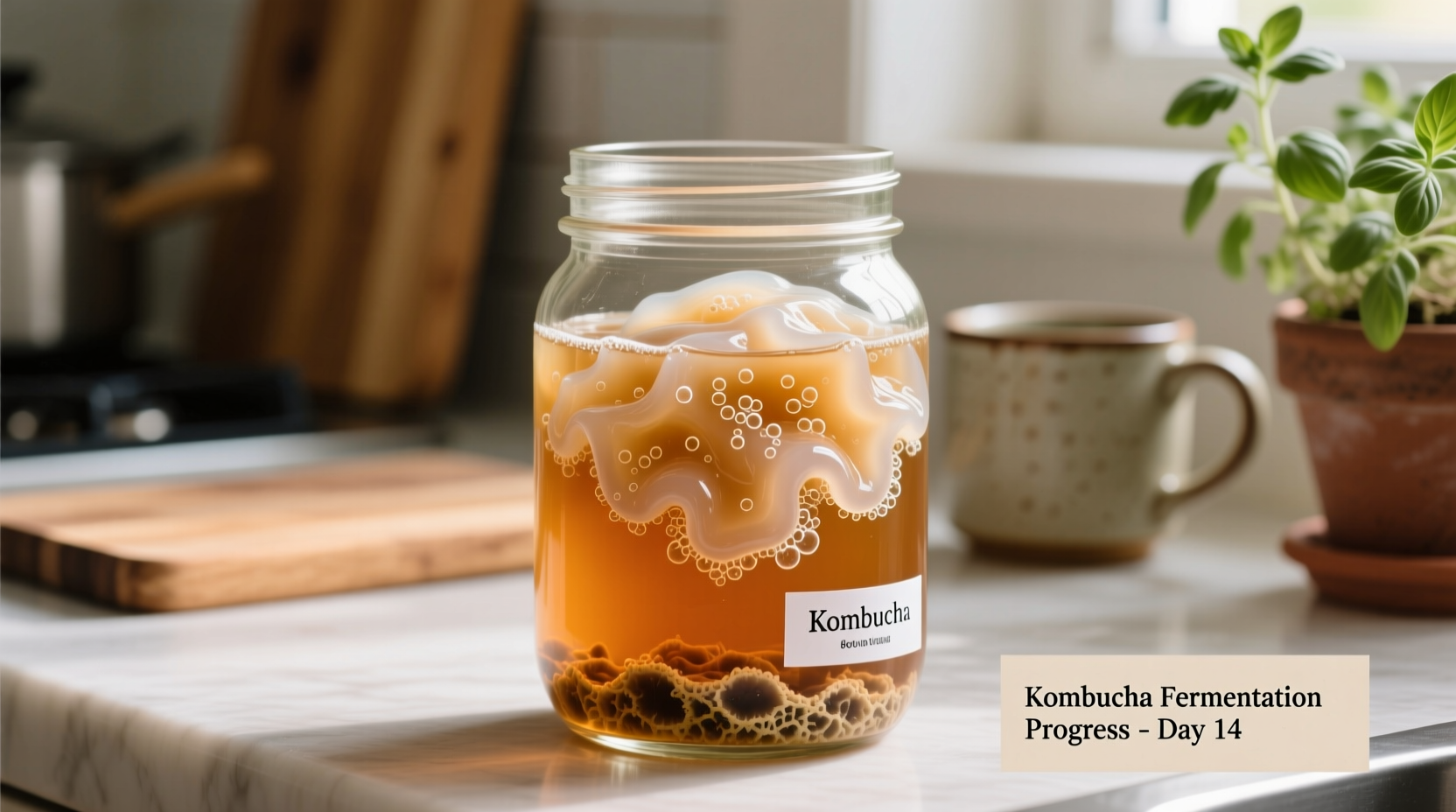
SCOBY stands for Symbiotic Culture Of Bacteria and Yeast. It’s a living biofilm composed primarily of cellulose, produced by acetic acid bacteria (mainly Gluconacetobacter xylinus). This rubbery disc acts as both a protective barrier and a fermentation engine, housing the microorganisms responsible for transforming sweet tea into tangy, effervescent kombucha.
The ideal environment for a SCOBY is warm (75–85°F or 24–29°C), slightly acidic, and oxygen-rich. The top layer of liquid provides optimal access to oxygen, which the bacteria need to thrive and produce acetic acid. That’s why a floating SCOBY is often seen as a sign of active fermentation—it’s positioned where oxygen exchange is highest.
But while floating is common, it isn’t mandatory. Many experienced brewers regularly observe their SCOBYs sinking, resting sideways, or even splitting into multiple layers—all without compromising the quality of the brew.
“Position doesn’t determine health. A sinking SCOBY isn’t dead—it might just be taking a break or adapting to its environment.” — Dr. Laura Chen, Microbiologist & Fermentation Scientist
Common Reasons Why Your SCOBY Sinks
A sinking SCOBY isn’t inherently bad. In fact, several perfectly normal conditions can cause this behavior. Here are the most frequent explanations:
- New or young SCOBY: Immature cultures may not have developed enough buoyant cellulose structure to float consistently.
- Temperature fluctuations: Cooler temperatures slow bacterial activity, reducing gas production that helps keep the SCOBY afloat.
- Density changes in the brew: As sugar is consumed and acids accumulate, the liquid becomes denser, altering buoyancy dynamics.
- Physical disturbance: Moving the jar, stirring, or adding flavorings can dislodge the SCOBY temporarily.
- Multiple SCOBY generations: Older, thicker pellicles may naturally sink as they grow heavier over time.
- Yeast dominance: Excess yeast can create uneven texture and affect floatation due to increased sediment.
In many cases, a sunken SCOBY will still ferment effectively. What matters more than position is the aroma, taste, and visual signs of microbial balance in your brew.
When a Sinking SCOBY Signals Trouble
While sinking alone isn’t a red flag, certain accompanying symptoms suggest deeper issues. Below is a checklist to help differentiate between harmless settling and potential contamination or failure.
Healthy Signs Despite a Sunk SCOBY
- Faint vinegar-like scent
- Slight fizz when opening
- New thin film forming at the surface
- No visible mold (fuzzy spots in green, black, or blue)
- Acidic but balanced taste after 7–10 days
Warning Signs That Require Action
- Foul, rancid, or alcoholic-overload odor
- Visible mold on the surface or edges
- Lack of acidity after 10+ days
- Excessive brown stringy yeast strands (possible overgrowth)
- Dark brown or black discoloration beyond normal tea staining
If your brew passes the healthy signs list, there’s no need to intervene. Even if the original SCOBY remains at the bottom, a new “baby” SCOBY often forms on the surface during fermentation—this is a strong indicator of ongoing microbial activity.
Step-by-Step Guide to Assessing and Responding to a Sinking SCOBY
Follow this timeline-based approach to evaluate your kombucha batch and decide whether to continue, adjust, or discard:
- Day 1–3: Observe initial changes. Bubbles around the SCOBY and slight cloudiness are good signs. If the SCOBY sinks now, don’t worry—it hasn’t fully activated yet.
- Day 4–6: Check for a new surface film. Even if the old SCOBY is submerged, look for a translucent, jelly-like layer forming on top. This means fermentation is progressing.
- Day 7: Perform a taste test. Draw a small sample using a clean straw or spoon. It should be noticeably tart, with diminishing sweetness. If still very sweet, let it go longer.
- Day 8–10: Evaluate overall condition. Smell the jar, inspect for mold, and note texture. If all seems well, proceed to bottle or refrigerate.
- After bottling: Monitor carbonation over 2–5 days. Proper fizz confirms viable cultures were present, regardless of SCOBY position.
If no new SCOBY forms and the liquid remains sweet with no sourness by day 10, consider starting over—especially if temperatures were below 70°F (21°C).
Do’s and Don’ts When Dealing With a Submerged SCOBY
| Do’s | Don’ts |
|---|---|
| Leave the SCOBY undisturbed during fermentation | Don’t remove or flip a sinking SCOBY |
| Keep the jar in a warm, stable environment | Don’t expose to drafts or direct sunlight |
| Use starter tea from a previous batch (or raw store-bought kombucha) | Don’t start with plain water and sugar only |
| Cover with breathable cloth secured by a rubber band | Don’t seal tightly with an airtight lid |
| Trust your senses—smell, taste, sight | Don’t rely solely on internet photos of \"perfect\" SCOBYs |
One of the biggest mistakes new brewers make is trying to “fix” a sunk SCOBY by lifting it back to the surface. This disrupts the microbial community and increases contamination risk. Let nature take its course—the bacteria and yeast will migrate to where they’re needed.
Mini Case Study: Sarah’s Winter Brew Woes
Sarah, a home brewer in Vermont, started making kombucha in October. Her first two batches floated beautifully and tasted great. But come December, she noticed her SCOBY sank within 48 hours of starting a new batch. Panicked, she nearly discarded the entire jar.
Instead, she checked temperature logs and realized her kitchen had dropped to 68°F overnight. She moved the jar to a warmer cupboard near the oven and waited. By day six, a new film began forming on the surface. At day nine, the brew was tart and lively—just like before.
Her mistake wasn’t the sinking SCOBY; it was assuming position equaled performance. Once she adjusted for ambient temperature, her next batches floated again—but she now knows that even if they don’t, her kombucha can still succeed.
Frequently Asked Questions
Can I still use a sunk SCOBY for future batches?
Absolutely. As long as the SCOBY shows no mold and the brew tastes properly fermented, it remains viable. You can use it as a starter for your next batch or store it in a SCOBY hotel.
Why did my SCOBY float before but sink this time?
Changes in room temperature, tea type, sugar concentration, or even seasonal humidity can affect buoyancy. Variability is normal—even with the same SCOBY. Consistency in results comes from controlling variables like temperature and starter tea ratio.
Should I add extra starter tea if my SCOBY sinks?
Not necessarily. Extra starter tea lowers pH quickly, which helps prevent mold, but won’t directly impact floatation. Use the standard 10–15% ratio unless brewing in cooler conditions, in which case increasing to 20% can boost early acidification.
Tips for Maintaining a Healthy, Active SCOBY
- Maintain a consistent brewing schedule. Long breaks can weaken the culture.
- Store backup SCOBYs in a “hotel”—a jar of sweet tea and kombucha kept at room temperature, topped off monthly.
- Avoid chlorinated tap water, which can harm sensitive microbes. Use filtered or boiled-and-cooled water instead.
- Clean equipment thoroughly but avoid antibacterial soaps near brewing tools.
- Label your batches with dates to track fermentation speed and flavor development.
Over time, you’ll learn your SCOBY’s unique rhythms. Some cultures consistently float; others prefer the bottom. What matters is function—not form.
Conclusion: No Panic Needed—Just Patience and Observation
A sinking kombucha SCOBY is rarely a cause for alarm. It’s a physical phenomenon influenced by biology, environment, and chance—not a verdict on your brewing skills. By understanding the role of temperature, fermentation progress, and microbial balance, you can confidently continue your batch even when the SCOBY disappears beneath the surface.
Trust your senses over appearances. Watch for signs of life—new film formation, tangy flavor, pleasant sourness—and resist the urge to interfere unnecessarily. Every batch teaches you more about your unique culture and your home’s microclimate.




 浙公网安备
33010002000092号
浙公网安备
33010002000092号 浙B2-20120091-4
Comments
No comments yet. Why don't you start the discussion?