
Kombucha, with its tangy effervescence and gut-friendly probiotics, has become a staple in health-conscious households. But when your batch starts tasting more like vinegar than a refreshing fermented tea, something’s off. While a slight acidity is normal — even desirable — excessive sourness can make the drink unpalatable. The good news: this issue is both common and fixable. Understanding the science behind over-fermentation and learning how to adjust your brewing process empowers you to consistently produce kombucha that’s balanced, flavorful, and enjoyable.
The Science Behind Kombucha Acidity
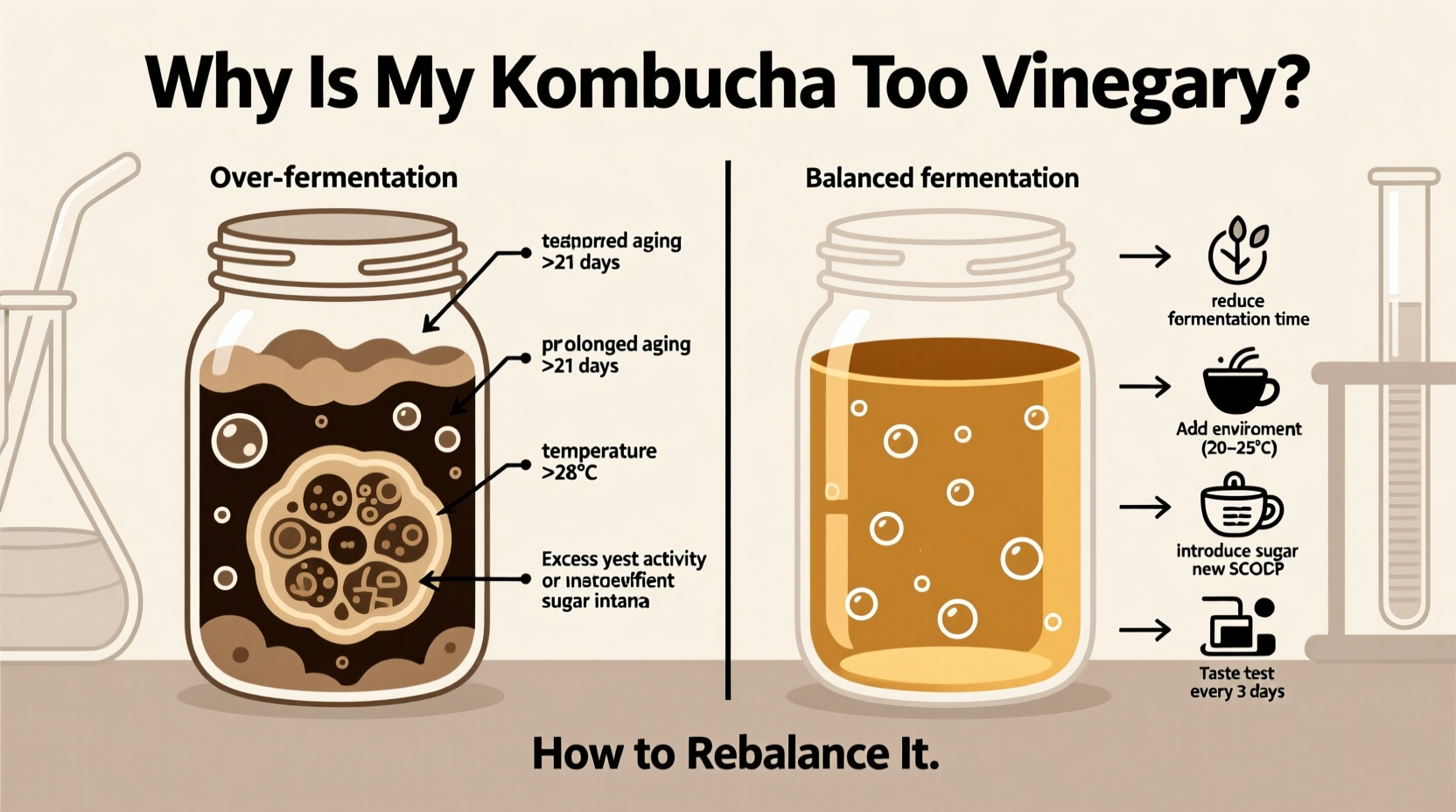
Kombucha’s signature tartness comes from acetic acid, produced by acetic acid bacteria (AAB) in the SCOBY (Symbiotic Culture of Bacteria and Yeast). As fermentation progresses, yeast convert sugar into alcohol, which AAB then transform into acetic acid. Over time, lactic acid bacteria may also contribute minor acidity, enhancing complexity. However, if fermentation continues unchecked, acetic acid accumulates, overwhelming other flavor notes and resulting in an overly sharp, vinegar-like taste.
This doesn’t mean your SCOBY is flawed or your brew is ruined. In fact, many experienced brewers intentionally create “vinegar batches” for cleaning or culinary use. But if you're aiming for a drinkable kombucha with balanced sweetness and tang, controlling fermentation duration and environmental conditions is essential.
Common Causes of Overly Vinegary Kombucha
Several factors can accelerate acid production and lead to premature souring. Identifying these helps prevent future imbalances.
- Extended fermentation time: Leaving kombucha to ferment beyond 7–10 days (depending on temperature) often results in excessive acidity.
- High ambient temperature: Warm environments (above 80°F / 27°C) speed up microbial activity, shortening fermentation cycles and increasing acid output.
- Too much starter liquid: Using more than 10–15% starter tea from a previous batch introduces higher initial acidity, pushing pH down faster.
- Old or overused SCOBY: Mature SCOBYs may favor acid-producing bacteria over balanced fermentation, especially if not rotated regularly.
- Inadequate sugar levels: Too little sugar forces yeast to work inefficiently, sometimes allowing bacteria to dominate prematurely.
“Fermentation is a balance between yeast and bacteria. When one outpaces the other, flavor suffers.” — Dr. Lena Torres, Microbiologist & Fermentation Researcher
Step-by-Step Guide to Rebalancing Your Brew
If your current batch is already too sour, don’t discard it. You can rehabilitate it and adjust your process for the next round.
- Dilute and repurpose: Mix overly acidic kombucha with still water, fruit juice, or herbal tea to mellow the flavor. This makes a great base for mocktails or salad dressings.
- Shorten primary fermentation: For your next batch, begin tasting around day 5. Ideal kombucha typically reaches balance between day 6 and 8 at room temperature (~75°F).
- Control temperature: Keep your brewing vessel in a stable environment between 72–78°F (22–26°C). Avoid placing it near ovens, heaters, or direct sunlight.
- Adjust starter tea ratio: Use only 10% starter liquid (e.g., 1 cup per gallon). This maintains acidity without overwhelming the new batch.
- Monitor sugar concentration: Stick to ¾ to 1 cup of white sugar per gallon of tea. Raw honey or alternative sweeteners can disrupt SCOBY function.
- Introduce a younger SCOBY: If using an older culture, consider acquiring a fresh SCOBY or using a thinner, newer layer from your stack.
Mini Case Study: Recovering a Sour Batch
Sophie, a home brewer in Austin, Texas, noticed her summer batches turning sharply vinegary within six days. Her kitchen routinely reached 83°F due to afternoon sun. After testing pH (which read 2.8 — well below ideal), she diluted the batch 1:1 with peach nectar and carbonated it for a second ferment. The result was a fruity, fizzy drink her family enjoyed. For her next batch, she moved the jar to a cooler pantry and began tasting on day 5. By day 7, the pH was 3.2 — perfectly balanced. She now uses a thermometer strip on her jar and adjusts placement seasonally.
Do’s and Don’ts for Balanced Fermentation
| Do | Don't |
|---|---|
| Use filtered water to avoid chlorine exposure | Use chlorinated tap water — it harms SCOBY |
| Brew with black or green tea (caffeinated) | Use herbal-only teas — they lack nutrients for SCOBY |
| Cover with a tightly woven cloth or coffee filter | Seal with an airtight lid during primary fermentation |
| Store extra SCOBYs in a \"hotel\" with starter tea | Leave SCOBYs exposed to air or dry environments |
| Label batches with start date and temperature notes | Guess fermentation timelines without tracking |
Tips for Long-Term Balance and Flavor Control
Maintaining consistency requires attention to detail and small adjustments over time. These strategies help refine your brewing rhythm.
- Track your variables: Keep a log of brew date, room temperature, fermentation length, taste notes, and pH readings if possible.
- Rotate SCOBYs: Use the newest, thinnest layer from your SCOBY stack every few batches to maintain microbial vitality.
- Experiment with tea blends: Mixing black and green tea can soften acidity while providing adequate nutrients.
- Limit oxygen exposure post-ferment: Once bottled, store kombucha in the fridge to halt fermentation and preserve flavor.
- Use pH strips: Aim for a final pH between 2.9 and 3.5. Below 2.5 risks excessive acidity; above 3.8 increases contamination risk.
Checklist: How to Prevent Overly Sour Kombucha
- ✅ Begin tasting kombucha on day 5 of fermentation
- ✅ Maintain brewing temperature between 72–78°F (22–26°C)
- ✅ Use only 10–15% starter tea from a prior batch
- ✅ Stick to ¾–1 cup granulated sugar per gallon of tea
- ✅ Cover jar with breathable cloth secured by rubber band
- ✅ Transfer to bottles for second ferment after 6–8 days max
- ✅ Refrigerate finished kombucha to stop fermentation
- ✅ Clean equipment thoroughly between batches
Frequently Asked Questions
Can I still drink kombucha if it tastes like vinegar?
Yes, as long as there are no signs of mold or off-putting odors (such as rotten eggs or ammonia), vinegary kombucha is safe to consume. It simply has a lower pH and higher acetic acid content. Dilute it with juice or water, or use it as a probiotic-rich vinegar substitute in recipes.
How do I fix a batch that’s already too sour?
You can blend it with sweeter liquids like apple juice, coconut water, or herbal infusions. Try mixing 50% sour kombucha with 50% fruit juice and re-bottle with a tight lid for 2–3 days at room temperature to regain fizz. Alternatively, use it in marinades, sauces, or detox tonics.
Does refrigeration stop fermentation completely?
It drastically slows it down but doesn’t stop it entirely. Cold temperatures reduce microbial activity, preserving flavor and carbonation. For longer storage, ensure bottles are not overfilled and are kept upright to minimize pressure buildup.
Conclusion: Master Your Fermentation Curve
An overly vinegary kombucha isn’t a failure — it’s feedback. Each batch teaches you more about your SCOBY, your environment, and your preferences. By adjusting fermentation time, managing temperature, and refining ingredient ratios, you can consistently produce kombucha that’s crisp, balanced, and alive with beneficial cultures. Remember, fermentation is both a science and an art. Trust your palate, track your progress, and embrace the learning curve.




 浙公网安备
33010002000092号
浙公网安备
33010002000092号 浙B2-20120091-4
Comments
No comments yet. Why don't you start the discussion?