
Kombucha is a living beverage—a delicate balance of bacteria, yeast, sugar, tea, and time. When brewed well, it delivers a refreshing tang with subtle sweetness and effervescence. But when something goes awry, the most common complaint is: “It’s too vinegary.” While a slightly tart kombucha isn’t necessarily bad—acetic acid is one of its natural components—an overpowering vinegar taste often signals an imbalance in the brewing process.
This sharp, sour profile can discourage new brewers and frustrate even experienced fermenters. The good news? Vinegar-like kombucha doesn’t mean failure. It’s a symptom, not a sentence. By understanding what causes excessive acidity, you can adjust your method and reclaim balanced, delicious batches.
Understanding the Science Behind the Sourness
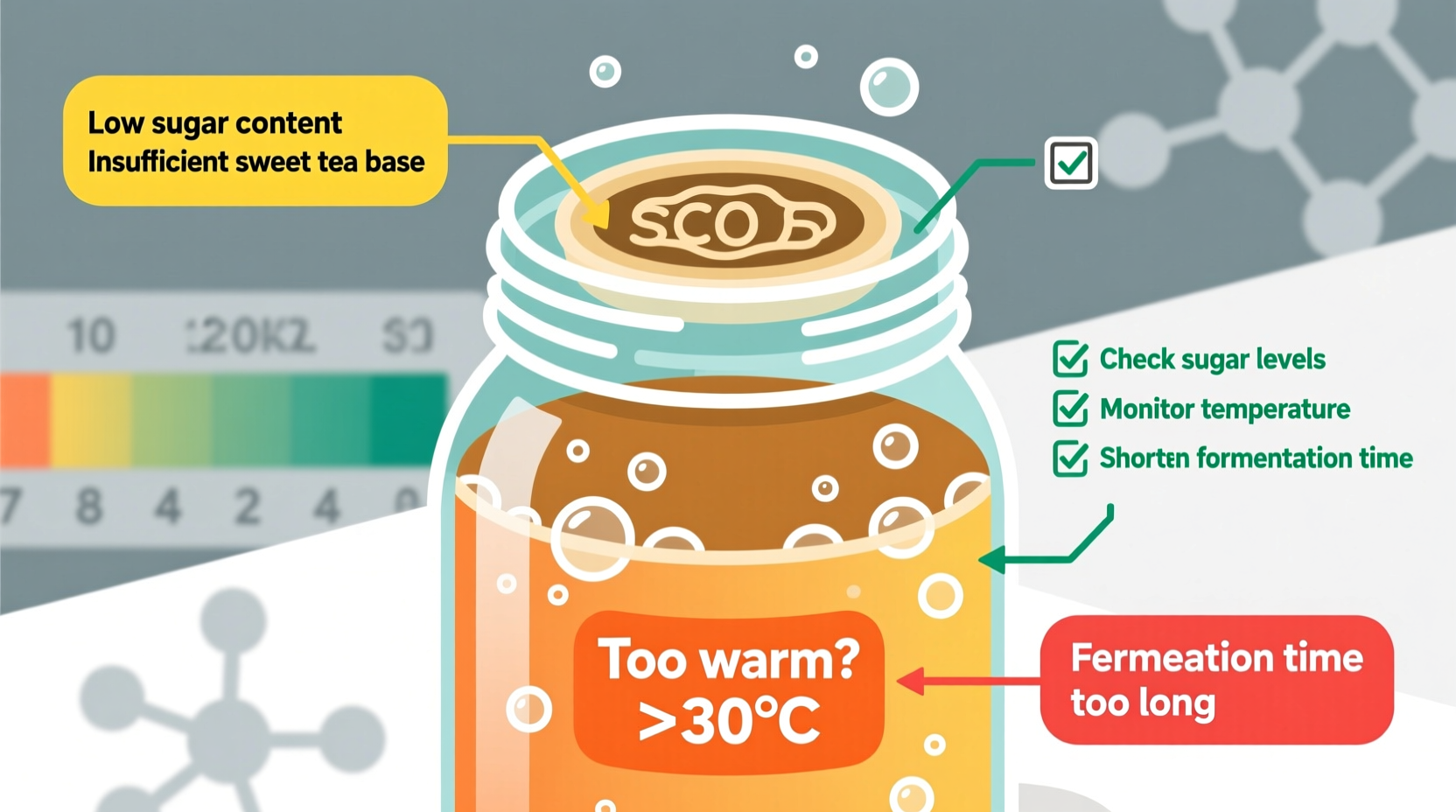
Kombucha’s signature tang comes from organic acids produced during fermentation. The primary players are acetic acid (the same acid found in vinegar), gluconic acid, and lactic acid. These compounds form as the SCOBY—Symbiotic Culture of Bacteria and Yeast—consumes sugar and converts it into beneficial acids, carbonation, and trace alcohol.
In the early stages of fermentation, yeast breaks down sucrose into glucose and fructose, producing ethanol. Then, acetic acid bacteria (primarily *Acetobacter* species) oxidize that ethanol into acetic acid. This two-step process is normal and essential. However, if the second phase dominates or lasts too long, acetic acid accumulates, overwhelming other flavors.
“Kombucha should have complexity—not just a punch of vinegar. Balance is key. Over-fermentation is the most frequent cause of excessive sourness.” — Dr. Lena Torres, Fermentation Microbiologist at the Institute for Probiotic Research
The ideal pH for finished kombucha ranges between 2.5 and 3.2. Below 2.5, it becomes sharply acidic; above 3.5, it risks contamination. Monitoring pH with test strips helps maintain control over acidity levels.
Common Causes of Overly Vinegary Kombucha
A vinegary batch rarely has a single cause. More often, it’s a combination of factors that tilt fermentation toward excess acidity. Identifying these variables allows you to make targeted adjustments.
- Over-fermentation: Leaving kombucha to ferment beyond 10–14 days significantly increases acid production, especially in warm environments.
- High ambient temperature: Fermentation speeds up in heat. At temperatures above 80°F (27°C), bacteria outpace yeast, accelerating acetic acid formation.
- Large or mature SCOBY: Thick, older SCOBYs contain more acetic acid bacteria and may dominate fermentation, reducing sweetness prematurely.
- Too much starter liquid: Excess acidic base lowers initial pH too quickly, favoring acid-producing bacteria from day one.
- Weak tea concentration: If there isn’t enough caffeine and tannins from black or green tea, yeast activity weakens, allowing bacteria to dominate.
- Low sugar content: Insufficient sugar limits yeast fermentation, reducing ethanol—which bacteria convert into acid—but paradoxically, low-sugar batches can still become overly acidic if fermentation continues too long.
Step-by-Step Guide to Troubleshooting Your Batch
If your latest brew tastes like apple cider vinegar, don’t pour it out. You can often rescue it—or at least learn from it. Follow this timeline-based approach to diagnose and correct the issue.
- Day 1–3: Assess setup conditions
Check room temperature (ideal: 72–78°F / 22–26°C). Ensure you used 6–8g of loose-leaf black or green tea per liter and 7–10% sugar by weight. Confirm you added 10–15% starter liquid (from a previous batch or raw store-bought kombucha). - Day 5 onward: Begin tasting
Start sampling daily using a clean straw. Look for a balance between sweetness and tartness. If it's already very sour by day 6–7, fermentation is progressing too fast. - Day 7–10: Evaluate progress
If the kombucha is too acidic, consider ending the primary ferment early. Bottle immediately to halt bacterial activity. You can dilute the finished batch with juice, fruit, or herbal tea to mellow the flavor. - After bottling: Adjust for next batch
Reduce fermentation time by 2–3 days. Move the jar to a slightly cooler spot. Consider using a younger SCOBY or reducing starter liquid to 10%. - Future batches: Implement controls
Keep a fermentation log: record start date, temperature, tea type, sugar amount, SCOBY age, and taste notes each day. This helps identify patterns across batches.
Tips and Best Practices for Balanced Flavor
Maintaining consistent, pleasant-tasting kombucha requires attention to detail. Small tweaks can yield dramatic improvements in flavor balance.
| Factor | Do’s | Don’ts |
|---|---|---|
| Fermentation Time | Ferment 7–10 days; taste daily after day 5 | Don’t leave unattended for 14+ days without monitoring |
| Temperature | Maintain 72–78°F (22–26°C) | Don’t place near heaters, ovens, or direct sunlight |
| Starter Liquid | Use 10–15% of total volume | Don’t exceed 20%—this over-acidifies the starter environment |
| SCOBY Size | Use a thin, active SCOBY (¼ to ½ inch thick) | Don’t stack multiple thick SCOBYs unless controlling time/temp carefully |
| Sugar & Tea | Use 1 cup sugar and 4–8 tea bags per gallon | Don’t use herbal teas alone—they lack nutrients for yeast |
Real Example: Recovering a Vinegar-Heavy Batch
Samantha, a home brewer in Phoenix, Arizona, noticed her summer batches were consistently too sour. Despite using the same recipe, her kombucha turned sharply acidic by day 6. She was about to give up until she tracked her kitchen temperature—it averaged 84°F (29°C) during fermentation.
She moved the jar to a cooler interior closet and began tasting on day 4. By day 6, it was pleasantly tart with residual sweetness. She bottled it immediately. For flavor, she mixed half the batch with mango juice and mint, creating a drinkable, probiotic-rich beverage. The remaining half she repurposed as a salad dressing base—turning a “failed” batch into two useful products.
Her takeaway: Environmental control matters more than recipe perfection. Once she adjusted for heat, her batches improved dramatically.
What to Do With Overly Acidic Kombucha
Don’t discard vinegary kombucha—it’s still safe and useful. Here are practical ways to repurpose it:
- Blend into smoothies: Its tang complements fruit and greens. Use ¼ cup per serving.
- Dilute as a drink: Mix 1 part kombucha with 2 parts water or juice for a gentler flavor.
- Use in dressings: Combine with olive oil, mustard, honey, and herbs for a zesty vinaigrette.
- Create shrubs: Simmer with fruit and sugar to make a drinking vinegar syrup.
- Clean surfaces: Its acidity makes it a natural, eco-friendly cleaner for countertops and glass.
- Feed plants (diluted): 1 part kombucha to 4 parts water can mildly acidify soil for acid-loving plants like blueberries.
“I’ve turned dozens of ‘too sour’ batches into gourmet shrubs and marinades. Sometimes the best recipes come from mistakes.” — Chef Rafael Nguyen, Fermented Foods Advocate
Prevention Checklist for Future Batches
To avoid repeating the vinegar trap, follow this actionable checklist before starting your next ferment:
- ✅ Measure room temperature and choose a stable location between 72–78°F
- ✅ Use fresh, high-quality black or green tea (avoid flavored or decaf)
- ✅ Add exactly ¾ to 1 cup of granulated sugar per gallon of water
- ✅ Include 10–15% starter liquid from a balanced, not overly sour batch
- ✅ Use a healthy but not excessively thick SCOBY (ideally under 1 inch)
- ✅ Label your jar with the start date and set a reminder to begin tasting on day 5
- ✅ Keep pH strips on hand to monitor acidity progression
- ✅ Store extra SCOBYs in a “hotel” with starter liquid, away from the active brew
Frequently Asked Questions
Can I fix my current vinegary batch?
Yes. Dilute it with fruit juice, herbal tea, or water to reduce acidity. You can also blend it into recipes like salad dressings or marinades. If bottling now, add more sweet fruit to rebalance flavor during secondary fermentation.
Is vinegary kombucha safe to drink?
Absolutely. High acidity actually inhibits harmful pathogens. As long as there’s no mold, off smells (like rotten eggs), or signs of contamination, it’s safe. Some people even prefer strong, vinegar-like kombucha for digestive support.
How can I slow down fermentation without refrigerating?
Move the jar to a cooler area of your home—such as a basement or interior closet. You can also wrap the jar in a damp towel (evaporative cooling) or place it in a shallow tray of cool water. Avoid insulating wraps in hot climates, as they can trap heat.
Conclusion: Turn Acidity Into Advantage
An overly vinegary kombucha batch isn’t a failure—it’s feedback. It tells you that fermentation ran too long, the environment was too warm, or the microbial balance tipped toward acid production. With this knowledge, you’re not just fixing a problem—you’re deepening your understanding of fermentation dynamics.
Every brew teaches you something. Whether you adjust timing, relocate your jar, or repurpose a tart batch into something delicious, you’re building expertise. Don’t aim for perfection. Aim for awareness, consistency, and curiosity.




 浙公网安备
33010002000092号
浙公网安备
33010002000092号 浙B2-20120091-4
Comments
No comments yet. Why don't you start the discussion?