
Many people switch from traditional fabric softeners to natural or eco-friendly alternatives—like vinegar, baking soda, wool dryer balls, or essential oils—to avoid synthetic fragrances, chemicals, or environmental harm. While these swaps are often effective, some users find their clothes still come out of the wash feeling stiff, rough, or less than soft. This isn't just frustrating; it defeats the purpose of using a softening agent in the first place. The issue isn’t necessarily that the alternative doesn’t work—it’s often about how, when, and why it's being used. Understanding the root causes behind stiff laundry despite using substitutes can help you make smarter choices and achieve truly soft, comfortable clothing.
The Science Behind Fabric Softness
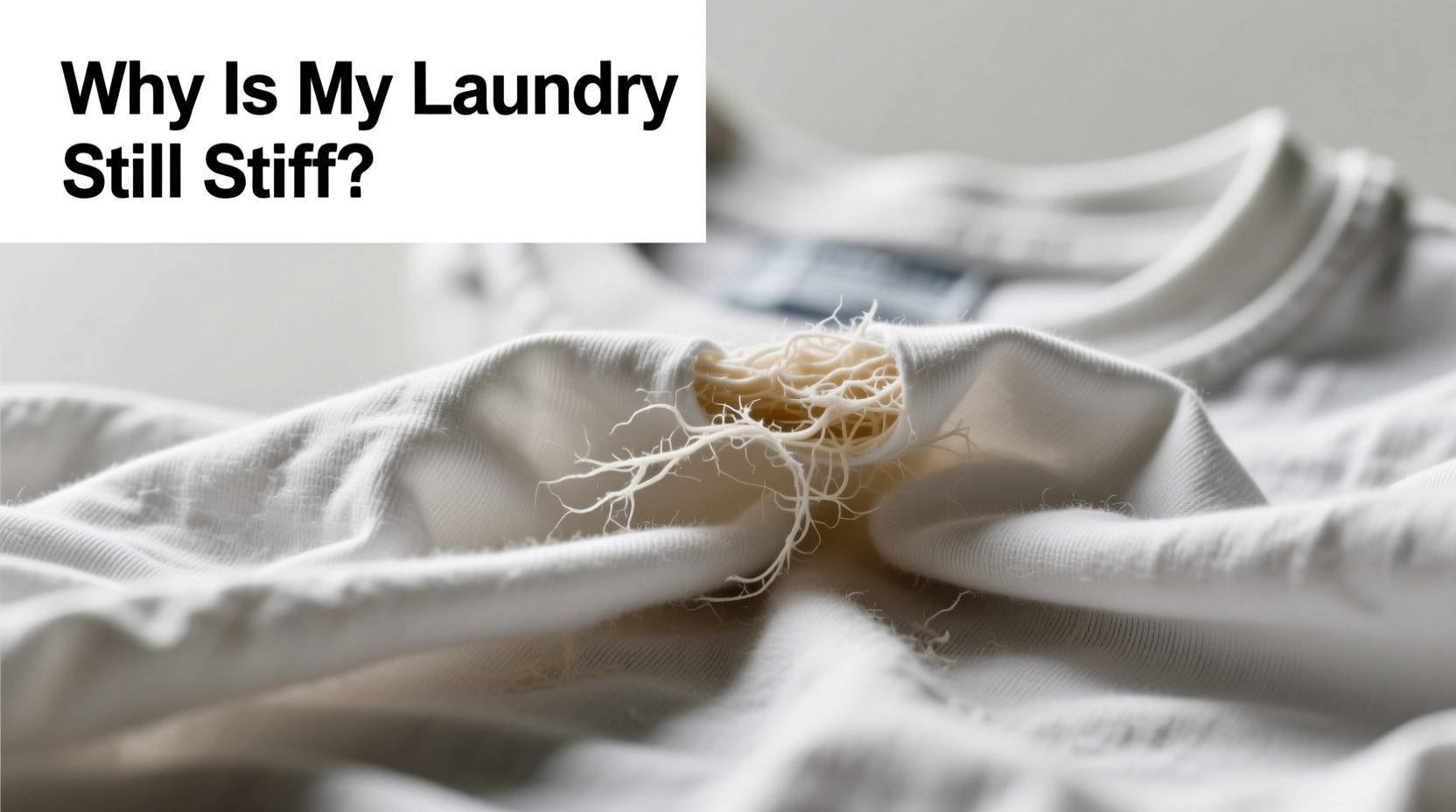
Fabric softness depends on fiber structure, water quality, detergent residue, and mechanical stress during washing and drying. Traditional fabric softeners contain cationic surfactants that coat fibers, reducing static and increasing smoothness. Natural alternatives work differently: they may neutralize alkaline residues, reduce friction, or separate clothes in the dryer—but they don’t always replicate the same coating effect.
For example, white vinegar (acetic acid) helps break down soap scum and mineral buildup by lowering the pH of rinse water. This can release trapped detergent and soften water, indirectly improving softness. However, vinegar does not leave a lubricating layer on fabrics like commercial softeners do. Similarly, baking soda boosts cleaning power but can contribute to stiffness if overused, especially in hard water areas where it reacts with minerals to form insoluble deposits.
“Natural alternatives can be effective, but they require precision. Unlike chemical softeners, they don’t mask problems—they respond to them.” — Dr. Lena Patel, Textile Chemist at Sustainable Home Labs
Common Reasons Laundry Stays Stiff After Using Alternatives
1. Overuse of Baking Soda or Washing Soda
Baking soda (sodium bicarbonate) is often added to laundry for odor control and pH balancing. However, excessive use—especially more than ½ cup per load—can lead to residue buildup. In hard water, this combines with calcium and magnesium to form chalky deposits that embed in fabric fibers, making them feel coarse and stiff.
2. Hard Water Interference
Hard water contains high levels of calcium and magnesium ions. These minerals bind with soap and detergents, forming insoluble curds that cling to fabric. Even when using vinegar, which helps dissolve some of these compounds, insufficient dosage or poor distribution may leave residues behind. Without proper chelation or water softening, natural agents struggle to perform.
3. Insufficient Rinsing Cycles
Top-loading machines, particularly older models, may not provide enough agitation or multiple rinses to fully flush out detergent and alternative additives. Front-loaders generally rinse more efficiently, but even they can fail if overloaded. When residues remain trapped in fibers, stiffness follows—regardless of what you add to the dispenser.
4. Incorrect Use of Vinegar
Vinegar must be used in the rinse cycle, not mixed directly with detergent. Mixing alkaline detergent with acidic vinegar mid-wash can neutralize both and create a cloudy precipitate that coats fabrics. Always add vinegar to the fabric softener dispenser or during the final rinse. Also, too much vinegar (over 1 cup) can degrade elastic fibers over time without improving softness.
5. Overdrying Clothes
Tumble drying for too long, especially on high heat, removes all moisture and can “bake” residual minerals and detergent into fabric. Natural fibers like cotton become crunchy when completely desiccated. Wool dryer balls help reduce drying time and soften clothes through physical agitation, but if the dryer runs an extra 20–30 minutes past dryness, their benefit is undone.
Do’s and Don’ts of Using Fabric Softener Alternatives
| Action | Do | Don't |
|---|---|---|
| Vinegar Use | Add ½ cup to rinse cycle via dispenser | Mix with detergent or exceed 1 cup per load |
| Baking Soda | Use ¼–½ cup with detergent for odor control | Combine with vinegar in same cycle |
| Wool Dryer Balls | Use 3–6 balls to reduce drying time and soften | Add essential oils excessively (can stain) |
| Water Quality | Test water hardness; use water conditioner if needed | Ignore mineral buildup in machine and fabrics |
| Drying | Remove clothes slightly damp; air-dry to finish | Overdry to ensure “bone dry” results |
A Step-by-Step Guide to Softer Laundry with Natural Alternatives
If your current routine isn’t delivering soft results, follow this optimized process designed for effectiveness with eco-friendly products:
- Assess Your Water Hardness: Use a test strip or contact your local utility for data. If hardness exceeds 7 grains per gallon (120 ppm), treat water with a chelator like citric acid (1 tablespoon per load) or a commercial eco-softener.
- Measure Detergent Accurately: Use only the recommended amount—even plant-based detergents can leave film if overused. Consider switching to a low-residue formula designed for HE machines.
- Add Baking Soda Early: Place ¼ cup baking soda in the drum before loading clothes. This boosts cleaning without contributing to stiffness when used moderately.
- Use Vinegar Correctly: Pour ½ cup distilled white vinegar into the fabric softener dispenser or during the final rinse. Never mix directly with detergent.
- Incorporate Wool Dryer Balls: Add 4–6 clean wool balls to the dryer. They separate clothes, improve airflow, and gently massage fibers. For scent, apply 1–2 drops of essential oil per ball (rotate weekly to prevent buildup).
- Avoid Overloading: Leave space for water and movement. Crowded loads trap dirt and detergent, reducing cleaning and rinsing efficiency.
- Run Extra Rinse Cycles: Especially for towels or workout clothes, add an extra rinse to flush out residues.
- Remove Promptly and Fold or Hang: Taking clothes out immediately prevents deep creasing and further drying in the machine, which increases stiffness.
Real-Life Example: Fixing Stiff Towels in a Hard Water Household
Sarah, a homeowner in Denver, Colorado, switched to vinegar and wool dryer balls to eliminate synthetic fragrances from her family’s laundry. Despite following online advice, her towels grew increasingly stiff over several months. She used 1 cup of vinegar and ½ cup of baking soda per load, believing “more is better.”
After consulting a local green cleaning expert, she learned that Denver has very hard water (12–18 gpg). The combination of baking soda and minerals was creating sodium carbonate scale in her fabrics. She adjusted her routine: reduced baking soda to ¼ cup, added 1 tbsp citric acid per load, cut vinegar to ½ cup in the rinse cycle, and started using an extra rinse setting. Within two washes, her towels regained softness—and stayed soft after repeated laundering.
This case illustrates that context matters. What works in soft water may backfire in hard water. Tailoring your approach to your environment is key.
Checklist: Troubleshoot Stiff Laundry
- ☐ Test your water hardness
- ☐ Reduce baking soda to ¼ cup or eliminate if not needed
- ☐ Use vinegar only in the rinse cycle, max ½ cup
- ☐ Clean your washing machine monthly (run hot cycle with 1 cup vinegar + ½ cup baking soda)
- ☐ Avoid overloading the washer or dryer
- ☐ Add an extra rinse cycle for bulky items
- ☐ Try air-drying clothes 50–75% instead of full tumble drying
- ☐ Replace old wool dryer balls every 6–12 months (they lose effectiveness)
- ☐ Switch to a low-suds, high-efficiency detergent
- ☐ Wash towels separately from clothes with heavy residues (e.g., lotions, oils)
Frequently Asked Questions
Can I use both vinegar and baking soda in the same laundry load?
No—not at the same time. When combined, vinegar (acid) and baking soda (base) react to form carbon dioxide and water, neutralizing each other’s benefits. Use baking soda in the wash cycle and vinegar in the rinse cycle to get the advantages of both without conflict.
Why do my clothes smell like vinegar after washing?
The smell usually dissipates once clothes are dry. If odor persists, you may be using too much vinegar or have mold in your machine. Try reducing to ¼ cup and running a maintenance cycle. Also, ensure clothes are dried promptly and completely—dampness traps odors.
Are there better natural softeners than vinegar?
Vinegar is effective for most, but alternatives include hair-rinse conditioners (diluted), Epsom salt (for fluffing towels), or commercial plant-based softeners made with biodegradable esters. Some users report success with bluing agents like Mrs. Stewart’s, which brighten and subtly soften without coating fibers.
Final Thoughts: Softness Is Achievable—With the Right Approach
Switching to fabric softener alternatives is a responsible choice for health and sustainability, but it requires understanding, not guesswork. Stiff laundry isn’t a failure of natural products—it’s often a mismatch between method and conditions. By addressing water quality, dosage, timing, and machine habits, you can achieve soft, fresh, chemical-free clothing without compromise.
Softness isn’t just about comfort; it reflects cleanliness, care, and attention to detail. When your clothes feel good against your skin, you’re more likely to wear them longer, reducing waste and supporting a mindful lifestyle.




 浙公网安备
33010002000092号
浙公网安备
33010002000092号 浙B2-20120091-4
Comments
No comments yet. Why don't you start the discussion?