
Have you ever stood in front of one mirror and seen a sharp, lifelike reflection, only to look into another and see a hazy, slightly distorted version of yourself? It’s not just your imagination—mirror clarity varies significantly based on multiple factors, including the type of glass used, the lighting conditions, and even the manufacturing process. While mirrors may seem like simple objects, the science behind their reflectivity and image quality is surprisingly complex. Understanding what influences clarity can help you choose better mirrors for your home, bathroom, or dressing area—and improve how you use them daily.
The Role of Glass Quality in Mirror Clarity
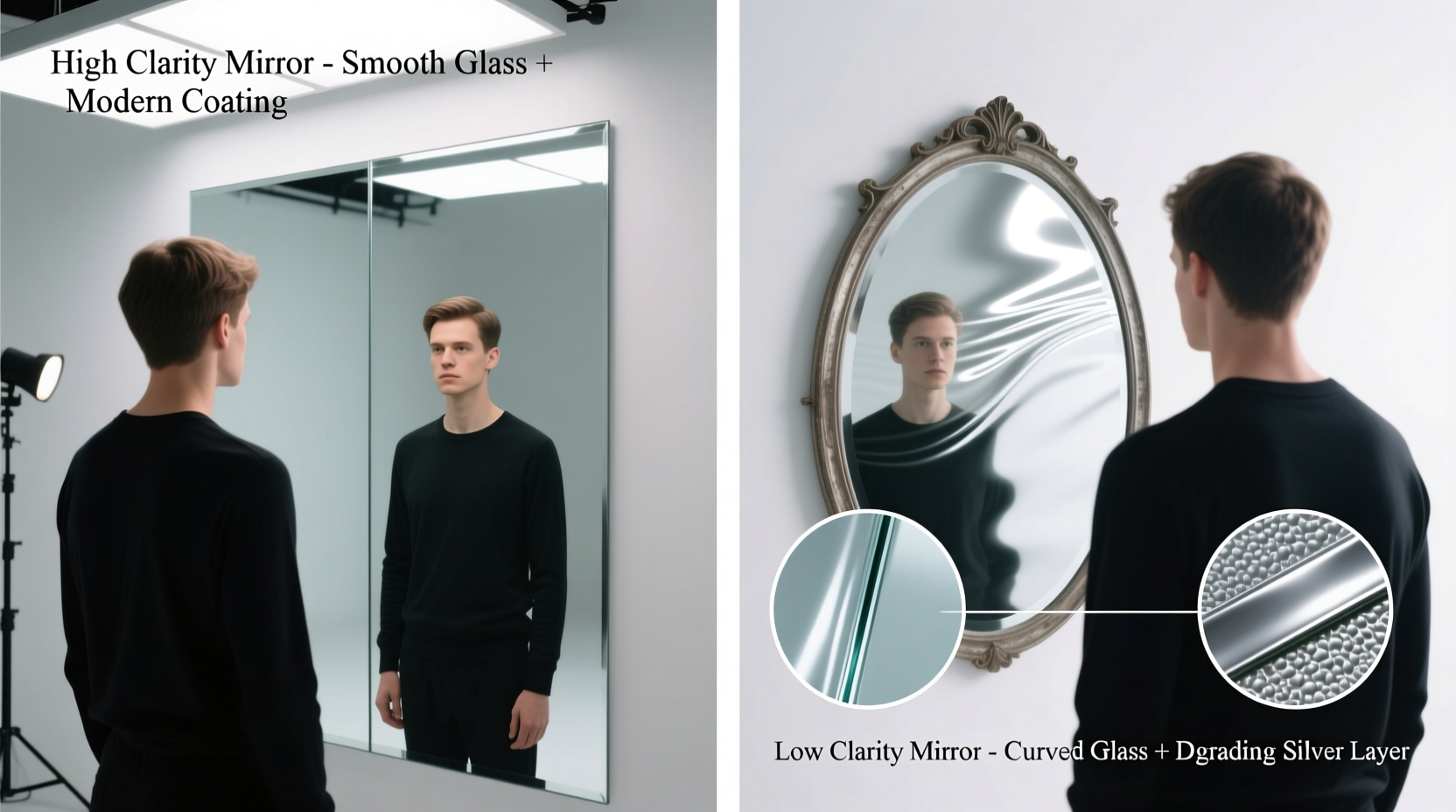
Not all glass is created equal. The foundation of any mirror is its glass substrate, and the purity, thickness, and flatness of this glass directly affect how clearly your reflection appears. High-quality mirrors are made from low-iron glass, which minimizes the greenish tint often visible along the edges of standard glass. This tint, caused by iron impurities, subtly distorts color and reduces transparency, making reflections appear less natural.
Thicker glass also contributes to clarity. Thin or warped glass can create optical distortions, especially when viewed from an angle. Premium mirrors typically use 6mm to 8mm thick glass, which resists bending and maintains a perfectly flat surface. In contrast, cheaper mirrors often use thinner, lower-grade glass that may ripple or bulge over time, leading to wavy or stretched reflections.
How Mirror Coating Affects Reflectivity
The reflective layer applied to the back of the glass is crucial to image quality. Most household mirrors use a silver or aluminum backing, but the application method and protective layers matter greatly. Silver coatings generally offer higher reflectivity (around 95%) compared to aluminum (about 85–90%), resulting in brighter, truer-to-life images.
However, silver is more prone to tarnishing if not properly sealed. Over time, moisture can seep through small cracks in the backing paint, causing dark spots or cloudiness—especially in humid environments like bathrooms. High-end mirrors include multiple protective layers, such as copper plating and waterproof sealants, to prevent degradation and maintain clarity for years.
Mirrors with poor coating adhesion may develop \"delamination,\" where the reflective layer peels away from the glass. This leads to patchy reflections and reduced visibility. Always inspect the edges and back of a mirror before purchase; consistent, smooth coating without bubbles or flaking indicates superior craftsmanship.
“Mirror longevity and clarity depend as much on the quality of the backing as on the glass itself. A well-sealed silver coating outperforms cheaper alternatives in both brightness and durability.” — Dr. Alan Reeves, Optical Materials Scientist
Lighting: The Hidden Factor Behind Clear Reflections
No matter how high-quality a mirror is, poor lighting can ruin its performance. Natural daylight provides the most balanced spectrum of light, allowing you to see accurate skin tones, colors, and fine details. This is why many people find their reflection clearer near windows during the day.
In artificial lighting, the color temperature and placement make all the difference. Lights measured in Kelvin (K) determine warmth or coolness: warm light (2700K–3000K) adds a yellow hue, while cool white (4000K–5000K) mimics daylight and enhances contrast. For the clearest reflection, especially for grooming tasks, experts recommend using lights around 4000K–5000K placed at eye level on either side of the mirror.
Front-facing overhead lighting creates shadows on facial features like the nose, chin, and eyes. In contrast, lateral (side-mounted) lighting eliminates these shadows, producing a more even and detailed reflection. Vanity mirrors with built-in LED panels often replicate this ideal setup, offering consistent illumination across the face.
| Light Type | Color Temp (K) | Effect on Reflection |
|---|---|---|
| Incandescent Bulbs | 2700K | Warm glow, hides blemishes but distorts color accuracy |
| Halogen Lights | 3000K–3200K | Brighter than incandescent, slight warmth |
| LED (Daylight) | 5000K–6500K | Very bright, excellent detail but can feel harsh |
| Optimal Vanity Lighting | 4000K–5000K | Clear, neutral, shadow-free reflection |
Types of Mirrors and Their Impact on Image Clarity
Different mirror types serve different purposes—and deliver varying levels of visual fidelity. Here's how common mirror designs influence what you see:
- Flat Wall Mirrors: Most common in homes. Clarity depends heavily on glass flatness and mounting stability. If mounted unevenly, they can produce subtle warping.
- Vanity Magnifying Mirrors: Often include 5x to 10x magnification for close-up views. While useful for makeup or shaving, they can exaggerate skin texture and require precise lighting to avoid glare.
- Beveled Mirrors: Feature angled edges that refract light. The bevel itself doesn’t affect the central reflection but can create prismatic effects around the frame under bright light.
- Anti-Fog Mirrors: Used in bathrooms, these have heated surfaces or hydrophobic coatings to prevent condensation. They maintain clarity post-shower, unlike standard mirrors that fog up instantly.
- First-Surface Mirrors: Used in scientific instruments, the reflective coating is on the front of the glass, eliminating secondary reflections from the glass layer. These provide the absolute clearest image but are delicate and expensive.
For everyday use, a well-made flat mirror with side lighting offers the best balance of clarity and practicality. Magnifying mirrors should complement—not replace—full-face viewing mirrors to avoid misjudging overall appearance.
Mini Case Study: Sarah’s Bathroom Mirror Dilemma
Sarah recently renovated her master bathroom and installed a large, frameless mirror above the vanity. Despite being new, she found her reflection looked dull and “off,” especially in the morning. Makeup appeared uneven once she left the house, and she couldn’t understand why.
After consulting an interior lighting specialist, she discovered two issues: First, the mirror was made with standard float glass that had a slight green tint. Second, her lighting consisted of a single ceiling fixture directly above the sink, casting shadows under her eyes and jawline.
She replaced the bulb with two wall-mounted sconces at 4500K color temperature, positioned at eye level on either side of the mirror. She also upgraded to a low-iron glass mirror. The difference was immediate—her reflection became brighter, more detailed, and truer to life. Makeup application improved, and she no longer needed touch-ups after leaving home.
This real-world example shows how both material quality and lighting work together to define mirror clarity.
Step-by-Step Guide to Optimizing Your Mirror Setup
To achieve the clearest possible reflection at home, follow this practical sequence:
- Assess your current mirror: Look at the edge of the glass. If it’s green-tinted, consider upgrading to low-iron glass for better clarity.
- Evaluate lighting direction: Stand in front of the mirror. If you see shadows under your eyes, cheeks, or chin, your light source is likely overhead or poorly positioned.
- Add lateral lighting: Install fixtures at eye level on both sides of the mirror. Use bulbs with a color temperature between 4000K and 5000K.
- Avoid glare: Ensure lights are diffused or shaded so they don’t reflect directly into your eyes. Frosted covers or downward-facing designs help.
- Check for distortion: Move side to side in front of the mirror. If vertical lines (like door frames) appear to bend or ripple, the glass may be warped or poorly mounted.
- Consider anti-fog options: In humid bathrooms, install a heated mirror or use a temporary anti-fog spray to maintain visibility after showers.
- Clean regularly with proper products: Use a microfiber cloth and ammonia-free glass cleaner. Harsh chemicals can degrade mirror backing over time.
Checklist: How to Choose a High-Quality Mirror
- ✅ Made with low-iron, thick (6mm+) glass
- ✅ Silver or high-grade aluminum backing with protective sealing
- ✅ No visible green tint at the edges
- ✅ Uniform reflective coating without bubbles or streaks
- ✅ Mounted securely on a flat surface to prevent warping
- ✅ Paired with 4000K–5000K side lighting for optimal visibility
- ✅ Includes anti-fog feature if used in a bathroom
Frequently Asked Questions
Why does my bathroom mirror fog up while others don’t?
Bathroom mirrors fog up when warm, moist air contacts the cooler glass surface, causing condensation. Mirrors without heating elements or anti-fog coatings are more prone to this. Some modern mirrors include built-in heaters or hydrophobic layers that prevent water droplets from forming.
Can a mirror lose clarity over time?
Yes. Poorly sealed mirrors can suffer from \"mirror rot,\" where the silver backing oxidizes due to humidity exposure. This appears as black spots or cloudy patches along the edges. Once degradation begins, it cannot be reversed, though it can be slowed by reducing bathroom humidity and avoiding direct water contact.
Are LED mirrors worth the investment?
For areas like vanities or dressing rooms, yes. LED mirrors combine high-quality glass with optimized lighting, often at adjustable color temperatures. They eliminate guesswork in lighting setup and provide consistent, clear reflections. While more expensive upfront, they enhance functionality and reduce the need for additional fixtures.
Conclusion: See Yourself Clearly
Your reflection is more than just a glance—it’s how you prepare for the day, assess your appearance, and build confidence. Yet many people overlook the critical role that mirror quality and lighting play in shaping that image. By choosing low-iron glass, ensuring proper backing, and installing balanced, daylight-mimicking illumination, you can transform any mirror into a tool of precision and clarity.
Don’t settle for fuzzy outlines or misleading hues. Take control of your space with informed choices that reflect reality accurately. Whether updating a bathroom, styling a bedroom, or designing a dressing area, prioritize both the mirror and its environment. The difference isn’t just visible—it’s empowering.




 浙公网安备
33010002000092号
浙公网安备
33010002000092号 浙B2-20120091-4
Comments
No comments yet. Why don't you start the discussion?