
Skin breakouts are frustrating enough when they stick to familiar zones like the forehead or chin. But when pimples start appearing in places you've never had issues before—your jawline, neck, chest, or even behind the ears—it’s natural to feel confused and concerned. Unlike occasional blemishes, sudden acne in unfamiliar regions often signals an underlying shift in your body, environment, or routine. The good news? These outbreaks are rarely random. With careful observation and a few strategic adjustments, you can pinpoint the cause and restore clarity to your complexion.
Hormonal Fluctuations: The Silent Instigator
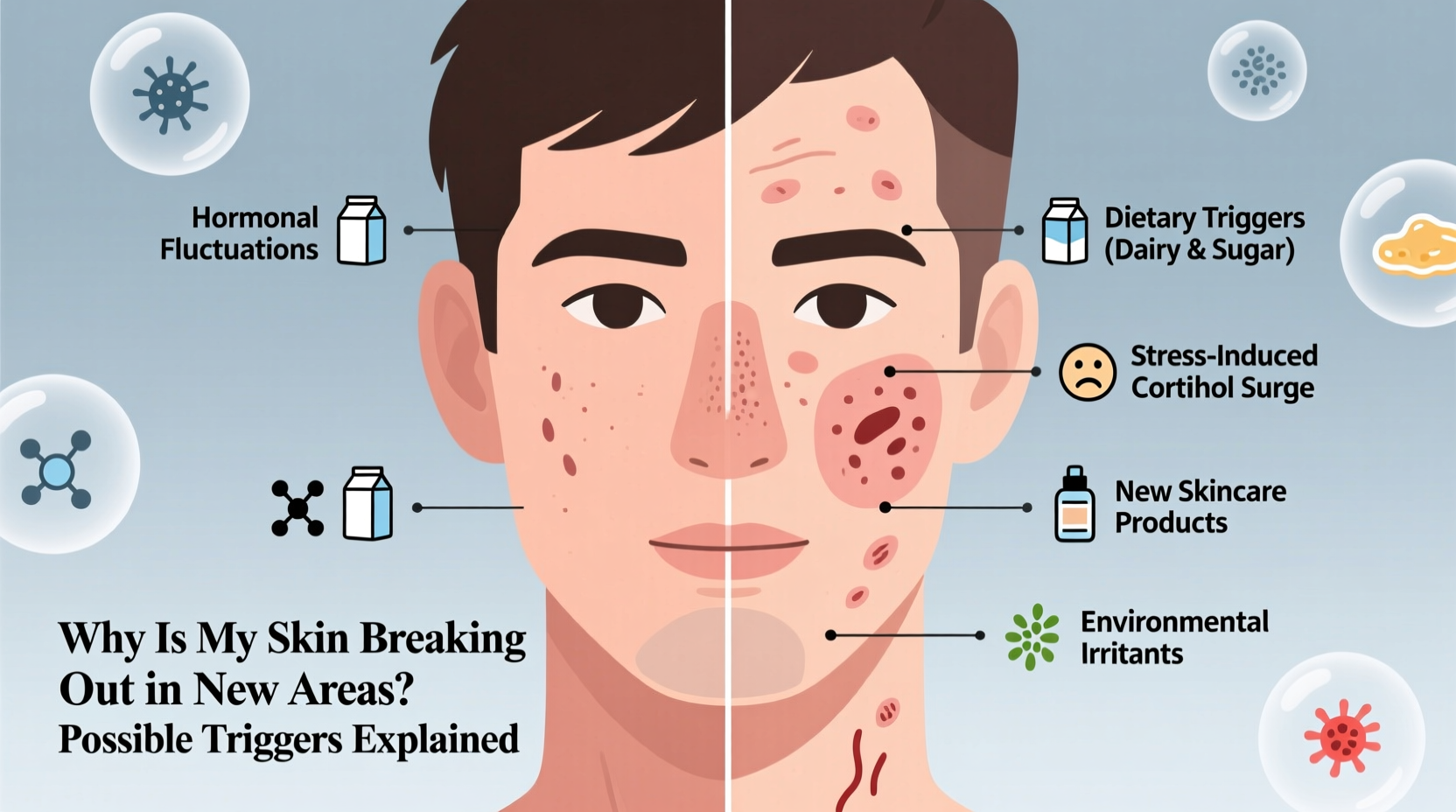
One of the most common reasons for breakouts in new areas is hormonal imbalance. Hormones like androgens stimulate oil production in sebaceous glands, which can clog pores and lead to acne. While hormonal acne typically affects the lower face—especially the jawline and chin—it can also manifest along the neck, back, and décolletage.
This type of breakout often follows a pattern tied to your menstrual cycle, stress levels, or major life changes such as pregnancy, perimenopause, or starting or stopping hormonal birth control. Polycystic ovary syndrome (PCOS) is another condition linked to persistent hormonal acne, particularly around the jaw and neck.
“Hormonal acne doesn’t just appear overnight—it’s usually a response to internal shifts that may have been building for weeks.” — Dr. Lena Torres, Board-Certified Dermatologist
If your breakouts coincide with your cycle or are accompanied by symptoms like irregular periods, hair thinning, or increased facial hair, hormonal evaluation by a healthcare provider may be necessary.
Skincare and Product Changes: When “Clean Beauty” Backfires
Switching products—even to ones marketed as non-comedogenic or natural—can trigger unexpected reactions. Ingredients once tolerated may become irritants due to changes in your skin’s barrier function or pH balance. Common culprits include coconut oil, shea butter, lanolin, and certain silicones, which are highly comedogenic and can clog pores, especially on sensitive or acne-prone skin.
New moisturizers, sunscreens, or haircare products (like conditioners or styling creams) can drip onto areas like the forehead, neck, or upper back during showers or while sleeping, leading to what dermatologists call \"acne mechanica\" or \"marginal acne.\"
Checklist: Evaluating Your Skincare Routine
- Have you introduced any new product in the last 4–6 weeks?
- Are you applying hair oils or heavy conditioners near your hairline or neck?
- Is your sunscreen or moisturizer labeled non-comedogenic?
- Are you double-cleansing properly at night?
- Have you changed laundry detergents or pillowcase materials?
It takes about 28 days for skin cells to turnover, so a breakout today could be the result of something you started using over a month ago. Consider reverting to a minimalist routine—cleanser, lightweight moisturizer, and sunscreen—for two weeks to see if your skin improves.
Lifestyle and Environmental Triggers
Your daily habits and surroundings play a bigger role in skin health than many realize. Stress, diet, sleep quality, and exposure to pollutants can all contribute to unexpected breakouts.
Stress and Cortisol Surges
Chronic stress increases cortisol, a hormone that boosts oil production and inflammation. This often results in deeper, more painful cysts along the jaw and neck—areas rich in androgen receptors. Students during exam season, professionals under tight deadlines, or anyone experiencing emotional strain may notice acne flare-ups in these zones.
Dietary Influences
While the link between diet and acne isn’t universal, research shows that high-glycemic foods (white bread, sugary snacks, soda) and dairy—especially skim milk—can worsen breakouts in some individuals. Insulin spikes from sugar-heavy meals increase IGF-1, a hormone that stimulates sebum production and cell growth in pores.
Pollution and Humidity
Urban environments expose skin to particulate matter and ozone, which generate free radicals and compromise the skin barrier. Combined with sweat and humidity, this creates a breeding ground for bacteria, especially on the chest and back—common sites for \"chest acne\" or fungal folliculitis.
| Trigger | Common Breakout Areas | Prevention Strategy |
|---|---|---|
| High-glycemic diet | Jawline, cheeks | Choose whole grains, reduce added sugar |
| Dairy consumption | Chin, lower face | Try unsweetened almond or oat milk alternatives |
| Stress | Jaw, neck, temples | Mindfulness, sleep hygiene, adaptogens |
| Pollution/humidity | Chest, back, shoulders | Double cleanse, use antioxidant serums |
| Hair product residue | Hairline, forehead, nape | Rinse thoroughly, avoid oil-based leave-ins |
Medications and Health Conditions
Sometimes, breakouts are a side effect of medications. Common offenders include:
- Antidepressants – Some SSRIs and mood stabilizers can alter hormone balance.
- Corticosteroids – Oral or inhaled forms may trigger acneiform eruptions.
- Lithium – Frequently associated with stubborn acne on the face and trunk.
- Supplements – High-dose B12 and whey protein powders have been linked to breakouts.
Additionally, underlying health conditions like thyroid disorders, insulin resistance, or gastrointestinal imbalances (such as SIBO) can manifest through skin issues. For example, persistent breakouts on the lower cheeks and jaw may reflect gut dysbiosis or liver congestion.
Mini Case Study: Sarah’s Neck Acne Mystery
Sarah, a 29-year-old graphic designer, began developing red, inflamed bumps along her neck and upper back. She hadn’t changed her skincare but had recently started taking a new multivitamin containing high levels of iodine and B12. After ruling out hormonal causes and confirming no recent product changes, her dermatologist suspected supplement-induced acne. Within three weeks of switching to a low-B12 formula, her breakouts subsided significantly. A patch test confirmed sensitivity to one of the inactive fillers in the original brand.
This case highlights how internal factors—not just topical ones—can drive breakouts in previously unaffected areas.
Step-by-Step Guide to Identifying and Resolving New Breakouts
When faced with unexplained acne, follow this methodical approach to uncover the root cause and take corrective action.
- Map the breakout zones: Note where the new blemishes appear. Jawline = hormonal? Chest/back = sweat and friction? Hairline = product runoff?
- Review recent changes: List all new products, supplements, medications, or lifestyle shifts in the past 4–8 weeks.
- Assess your routine: Are you over-exfoliating? Using comedogenic ingredients? Skipping sunscreen?
- Eliminate one variable at a time: Stop using a single suspect product for two weeks. If improvement occurs, you’ve likely found the culprit.
- Introduce actives cautiously: Once stabilized, reintroduce treatments like salicylic acid or benzoyl peroxide—one at a time—to prevent irritation.
- Consult a professional: If breakouts persist beyond 6–8 weeks or involve cysts/pain, see a dermatologist for prescription options like retinoids, spironolactone, or antibiotics.
Frequently Asked Questions
Why am I suddenly getting acne on my neck?
Neck acne is commonly linked to hormonal fluctuations, especially in women during their menstrual cycle or times of high stress. It can also result from hair products (like oils or gels) dripping down, friction from clothing or masks, or bacterial buildup from not cleansing the area thoroughly.
Can changing my shampoo cause breakouts on my forehead?
Yes. Conditioners, masks, and styling products containing oils, silicones, or butters can leave residues along the hairline. As these ingredients settle into pores during sleep or washing, they can trigger small, persistent pimples known as \"pomade acne.\" Switch to water-rinseable formulas and ensure thorough rinsing.
Is it normal for acne to move to new areas as you age?
Yes. As hormone levels shift with age—especially after 25—acne often migrates from the T-zone to the lower face and jawline. Adult acne tends to be deeper, more inflammatory, and hormonally driven, requiring different management than teenage breakouts.
Conclusion: Take Control of Your Skin’s Story
Sudden breakouts in new areas aren’t a life sentence—they’re signals. Your skin communicates what words sometimes cannot: stress, imbalance, or environmental overload. By approaching each breakout with curiosity rather than frustration, you gain insight into your body’s needs. Whether it’s simplifying your routine, adjusting your diet, or seeking medical advice, every step you take brings you closer to balanced, resilient skin.
You don’t need perfection—just consistency, awareness, and compassion for your body’s journey. Start today by identifying one potential trigger and testing a change. Small actions compound into lasting results.




 浙公网安备
33010002000092号
浙公网安备
33010002000092号 浙B2-20120091-4
Comments
No comments yet. Why don't you start the discussion?