
Succulents are celebrated for their resilience, low maintenance, and sculptural beauty. But when you notice the once-vibrant green tips of your plant turning brown, it’s natural to feel concerned. Browning tips aren’t just an aesthetic issue—they’re a signal. Your succulent is communicating stress, often due to environmental or care-related factors. The good news? In most cases, early intervention can reverse the damage and restore your plant’s health.
Unlike many houseplants, succulents store water in their leaves and stems, making them adapted to arid conditions. This unique physiology means they respond differently to overwatering, sunlight, and humidity than other indoor plants. Understanding these differences is key to diagnosing and correcting browning tips effectively.
Common Causes of Brown Tips on Succulents
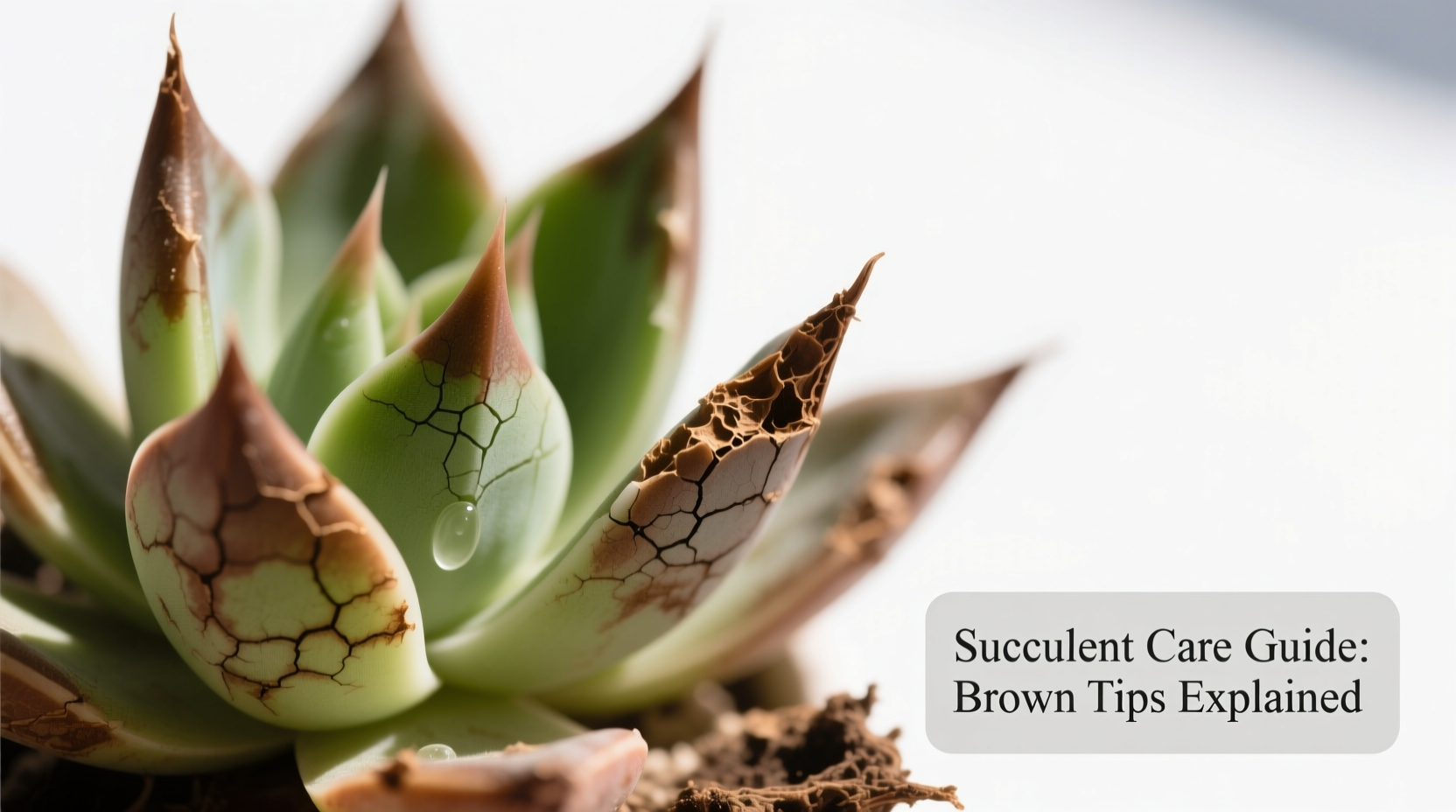
Brown leaf tips are rarely caused by a single factor. Instead, they typically result from a combination of cultural missteps. Identifying the root cause requires careful observation of your plant’s environment, watering habits, and growth patterns.
- Overwatering: The most frequent culprit. Excess moisture leads to root rot, which impedes nutrient uptake and causes cellular breakdown in leaf tissues.
- Underwatering: While less common, prolonged drought forces the plant to sacrifice outer tissue, starting at the tips.
- Excessive Sunlight (Sunburn): Direct, intense midday sun—especially through glass—can scorch delicate leaf edges.
- Poor Drainage: Soil that stays wet deprives roots of oxygen and promotes fungal growth.
- Low Humidity or Dry Air: Indoor heating or air conditioning can create excessively dry conditions, leading to tip desiccation.
- Nutrient Imbalance: Over-fertilizing or salt buildup from tap water can burn root tips, affecting foliage.
- Pests: Mealybugs, spider mites, or scale insects feed on sap, weakening the plant and causing discoloration.
How to Diagnose the Problem Accurately
Before taking corrective action, assess your plant holistically. A quick visual inspection combined with environmental evaluation can reveal the true cause.
- Examine the Leaves: Are the brown tips crispy or mushy? Crispiness suggests underwatering or dry air; soft, dark browning points to overwatering or rot.
- Check the Stem and Base: Soft, blackened stems indicate root rot. Firm, green bases suggest surface-level stress like sunburn.
- Feel the Soil: Is it soggy weeks after watering? That’s a red flag for poor drainage or overwatering.
- Review Light Exposure: Was the plant recently moved into direct sun? Or sitting near a south-facing window during peak summer?
- Inspect for Pests: Look under leaves and along stems for white cottony patches (mealybugs) or fine webbing (spider mites).
“Succulents thrive on neglect, not care. Most problems stem from doing too much—especially watering.” — Dr. Lena Torres, Botanist & Horticultural Consultant
Step-by-Step Guide to Reviving a Succulent with Brown Tips
Recovery depends on acting promptly and correctly. Follow this timeline to stabilize and rejuvenate your plant.
Week 1: Assessment and Immediate Action
- Remove the plant from its pot gently and inspect the roots. Trim any black, mushy roots with sterilized scissors.
- Replace old soil with a fast-draining mix (see table below).
- If sunburn is suspected, move the plant to bright indirect light for 7–10 days.
- Wipe leaves with a damp cloth to remove dust and pests.
Week 2–3: Adjust Care Routine
- Water only when the soil is completely dry—this may mean every 2–3 weeks indoors.
- Ensure the pot has drainage holes. Avoid saucers that trap water.
- Mist the air around the plant lightly if indoor humidity is below 30%, but never mist the leaves directly.
Week 4 and Beyond: Monitor and Maintain
- New growth should appear within 4–6 weeks if the plant is recovering.
- Gradually reintroduce to brighter light if moved from sunburn.
- Fertilize sparingly—once in spring and once in summer—with a diluted cactus formula (10-10-10 at half strength).
Soil and Potting: What Works Best for Succulents
The right growing medium is as important as watering. Standard potting soil retains too much moisture, creating a breeding ground for root rot.
| Component | Purpose | Recommended Ratio |
|---|---|---|
| Potting Soil | Provides base structure and some nutrients | 1 part |
| Perlite or Pumice | Improves aeration and drainage | 1 part |
| Coarse Sand or Grit | Prevents compaction and speeds drainage | 1 part |
You can also purchase pre-mixed cactus and succulent soil, but always verify it includes perlite or pumice. Avoid mixes with peat moss, which holds water and breaks down over time.
Real Example: Recovering a Stressed Echeveria
Sarah, a plant enthusiast in Denver, noticed her blue-gray Echeveria developing brown, crispy leaf tips shortly after repotting. Initially, she assumed it needed more water and increased her watering schedule to twice a week. The browning worsened.
After researching, Sarah realized she had used regular potting soil without amendments and placed the plant in a decorative pot without drainage. She followed the recovery steps: repotted into a terracotta container with a 1:1:1 mix of potting soil, perlite, and sand, trimmed damaged roots, and reduced watering to once every 18 days. Within six weeks, new rosettes formed, and no further browning occurred.
Her experience highlights a common mistake: assuming all soils work the same. The right mix made all the difference.
Do’s and Don’ts: Quick Reference Table
| Do’s | Don’ts |
|---|---|
| Use well-draining soil with perlite or pumice | Use standard potting soil |
| Water deeply but infrequently | Water on a fixed schedule regardless of soil moisture |
| Place in bright, indirect light or filtered sun | Expose to harsh midday sun, especially through glass |
| Allow soil to dry completely between waterings | Let the plant sit in standing water |
| Rotate the plant occasionally for even growth | Move the plant frequently or expose it to drafts |
Frequently Asked Questions
Can I cut off the brown tips?
Yes, you can trim brown tips with clean, sharp scissors. Cut at an angle following the natural shape of the leaf to avoid jagged edges. However, removal doesn’t fix the underlying issue—address the cause to prevent recurrence.
Will the brown leaves turn green again?
No. Once cells in the leaf tip die and turn brown, they cannot regenerate. The plant will eventually shed severely damaged leaves. Focus on promoting healthy new growth instead.
Is tap water bad for succulents?
Not necessarily, but tap water high in fluoride, chlorine, or minerals can contribute to tip burn over time. If your water is hard, consider using distilled, rainwater, or filtered water occasionally to flush out salt buildup.
Preventive Care Checklist
Stay ahead of problems with this simple monthly checklist:
- ✅ Check soil moisture before watering
- ✅ Inspect leaves and stems for pests or discoloration
- ✅ Ensure the pot has drainage and isn’t sitting in water
- ✅ Wipe dust off leaves to maximize light absorption
- ✅ Rotate the plant 90 degrees to promote even growth
- ✅ Assess light levels—adjust if signs of etiolation (stretching) or scorching appear
- ✅ Flush soil every 8–12 weeks to prevent mineral buildup
Final Thoughts: Healthy Succulents Start with Observation
Brown tips are not a death sentence for your succulent—they’re a call to refine your care approach. These plants thrive on simplicity: minimal water, maximum drainage, and consistent light. By learning to read their signals, you build a deeper connection with your green companions.
Remember, recovery takes patience. New growth is the best indicator of progress. Avoid the temptation to overcorrect—too many changes at once can compound stress. Stick to one adjustment at a time and monitor the results.




 浙公网安备
33010002000092号
浙公网安备
33010002000092号 浙B2-20120091-4
Comments
No comments yet. Why don't you start the discussion?