
Succulents are prized for their resilience, low maintenance, and sculptural beauty. But when the vibrant green leaves start fading to yellow, it’s a clear signal that something is off. While many assume pests or disease are the culprits, the truth is most yellowing stems from improper watering or inadequate lighting—two of the most common care mistakes among indoor gardeners.
Understanding the delicate balance these desert natives require can mean the difference between a thriving plant and one slowly declining on your windowsill. Unlike tropical houseplants that thrive on moisture, succulents evolved to survive long dry spells. When we treat them like typical potted plants, we risk drowning their roots or starving them of essential light. The good news? With a few adjustments, you can reverse yellowing and restore your succulent to full health.
Why Yellow Leaves Signal Trouble
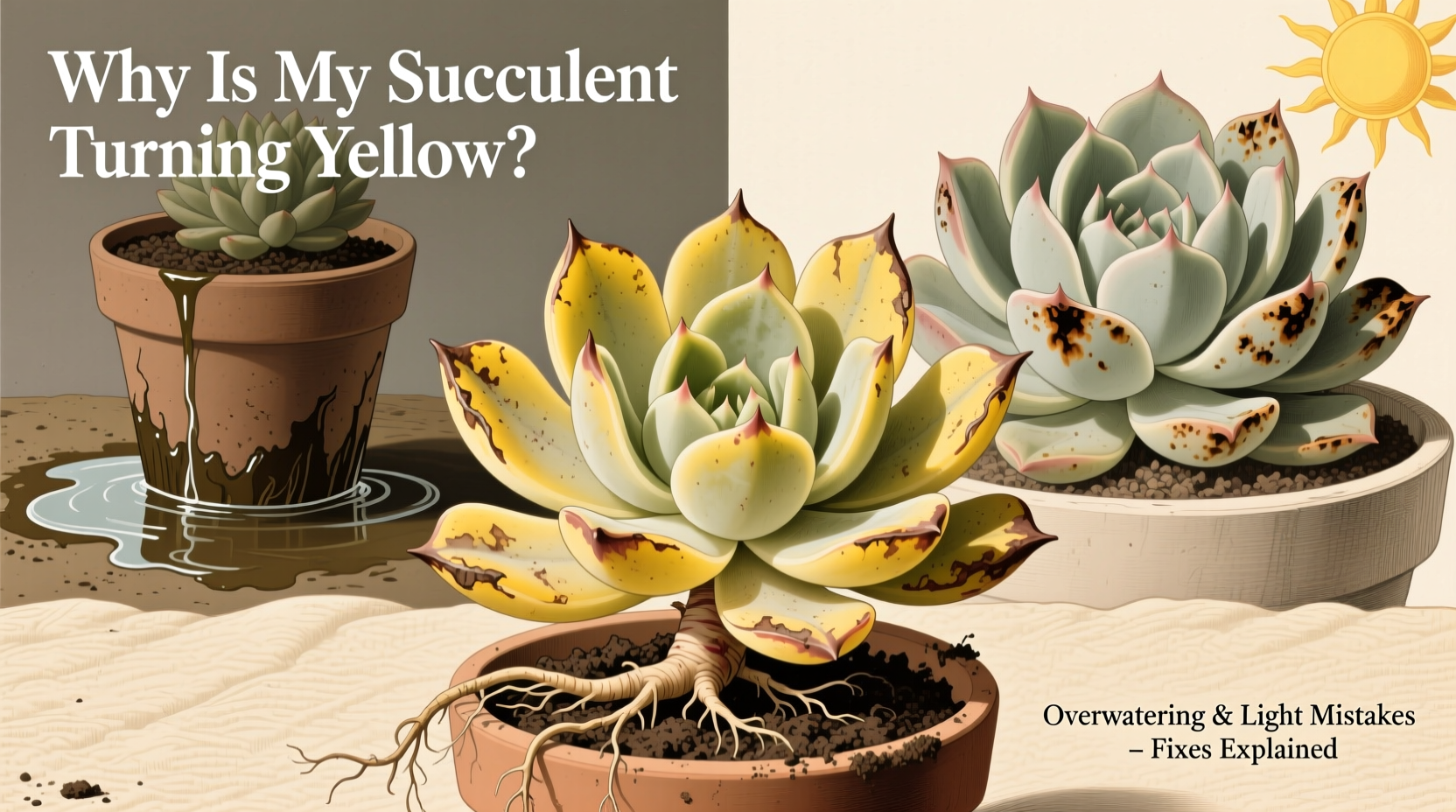
Yellowing in succulents isn’t a normal part of aging—it’s a stress response. Healthy succulents maintain firm, plump, brightly colored leaves. When leaves turn yellow, especially at the base or along the stem, it indicates physiological distress. This discoloration typically begins as pale green or yellow spots and progresses to full leaf collapse if unaddressed.
The two primary causes are overwatering and insufficient light, though nutrient imbalances, poor soil, or temperature extremes can also contribute. Because succulents store water in their leaves, they’re highly sensitive to excess moisture. Soggy soil leads to root rot, which prevents nutrient uptake and triggers chlorophyll breakdown—the process behind yellowing. Similarly, lack of adequate light causes etiolation (stretching) and weak growth, often accompanied by color loss.
Watering Mistakes That Cause Yellowing
Overwatering is the leading cause of death in succulents. Many well-meaning plant owners water on a schedule rather than observing the plant’s actual needs. In reality, succulents should only be watered when the soil is completely dry—sometimes once every 2–3 weeks, depending on climate and pot size.
When soil stays wet, oxygen is displaced from the root zone. Roots begin to suffocate and decay, making it impossible for the plant to absorb nutrients. As root function declines, the lower leaves turn yellow and become mushy. If left unchecked, the rot spreads upward, eventually collapsing the entire plant.
Underwatering can also cause yellowing, though it's less common. Prolonged drought forces the plant to break down chlorophyll in older leaves to redirect resources to new growth. These leaves turn yellow and dry out, but remain firm—unlike the soft, squishy texture seen with overwatering.
“Succulents don’t die from thirst—they die from mercy. Too much love in the form of water is their downfall.” — Dr. Laura Simmons, Horticulturist and Xeriscape Specialist
How to Water Succulents Correctly
The key is to mimic natural desert rainfall: infrequent but deep soaking. Here’s how to get it right:
- Check the soil first: Insert your finger or a wooden skewer 2 inches into the soil. Only water if it feels dry.
- Soak thoroughly: Water until it drains freely from the bottom. This ensures roots receive moisture.
- Empty the saucer: Never let the pot sit in standing water. Drainage is critical.
- Wait before watering again: Allow the soil to dry out completely—this may take days or weeks.
Light Fixes for Yellowing Succulents
Light is just as crucial as water. Most succulents need 4–6 hours of bright, indirect sunlight daily. Indoors, a south- or west-facing window is ideal. Without enough light, photosynthesis slows, causing leaves to lose pigment and stretch unnaturally toward the light source—a condition known as etiolation.
Etiolated succulents appear leggy, with increased spacing between leaves and a pale, washed-out color. The plant becomes top-heavy and unstable. While this doesn’t always cause immediate yellowing, weakened tissue is more prone to stress and discoloration, especially when combined with overwatering.
On the flip side, too much direct sun—especially through glass—can scorch leaves, leading to brown or bleached patches. However, sudden exposure to intense outdoor sun after being indoors can also trigger yellowing due to photodamage.
Optimal Light Conditions by Species
| Succulent Type | Recommended Light | Risk of Insufficient Light |
|---|---|---|
| Echeveria | 4–6 hrs bright indirect + some morning sun | Leaves flatten, center rosette opens, turns pale yellow |
| Haworthia | 3–4 hrs indirect light (east-facing) | Slow growth, translucent leaves turn dull yellow |
| Crassula (Jade Plant) | 5+ hrs of direct sunlight | Leggy stems, leaf drop, yellowing lower foliage |
| Sedum | Full sun to partial shade | Weak stems, faded color, reduced flowering |
Transitioning Succulents to Brighter Light
If your succulent has been in low light, don’t move it directly into full sun. Acclimate it gradually over 7–10 days:
- Start by placing it in bright indirect light for 2–3 days.
- Move it to morning sun (before 11 a.m.) for another 2–3 days.
- Gradually increase exposure to midday sun, monitoring for signs of burn.
- After a week, it should tolerate 4–6 hours of direct light.
This slow transition allows chloroplasts to adjust and build protective pigments, reducing the risk of yellowing or scorching.
Real Example: Reviving a Yellowing Echeveria
Sarah, an apartment dweller in Chicago, noticed her blue-gray Echeveria ‘Lola’ was turning yellow at the base. She had been watering it every Saturday without checking the soil. The pot lacked drainage, and the plant sat near a north-facing window with limited light.
After researching, she repotted the succulent in a terracotta container with cactus mix, trimmed any mushy roots, and moved it to a south-facing sill. She stopped watering on a schedule and instead waited until the soil was bone dry. Within three weeks, new pink-tinged growth emerged, and no further leaves yellowed. The plant began compacting its rosette again, signaling recovery.
Sarah’s experience highlights how combining proper watering with improved light can reverse decline—even when damage seems advanced.
Essential Care Checklist
Use this checklist to diagnose and correct yellowing in your succulent:
- ✅ Check for mushy, yellow lower leaves—sign of overwatering
- ✅ Confirm your pot has drainage holes
- ✅ Test soil moisture before watering—never water on a schedule
- ✅ Use fast-draining cactus or succulent soil mix
- ✅ Place near a bright window (south or west-facing preferred)
- ✅ Rotate the pot weekly for even light exposure
- ✅ Remove any yellow or dead leaves to prevent rot spread
- ✅ Avoid misting—succulents do not like humidity on leaves
- ✅ Keep away from cold drafts or heating vents
Frequently Asked Questions
Can a yellow succulent turn green again?
Once a leaf turns yellow, it won’t revert to green. However, the plant can produce new healthy growth if the underlying issue—such as overwatering or poor light—is corrected. Focus on saving the rest of the plant rather than reviving damaged leaves.
Should I remove yellow leaves from my succulent?
Yes, gently remove yellow or mushy leaves to improve airflow and prevent fungal infections. Use clean fingers or sterilized tweezers. If the leaf pulls easily, it’s ready to come off. Don’t force it, as this can damage healthy tissue.
How often should I water succulents in winter?
In winter, most succulents enter dormancy and require even less water. Depending on your home’s humidity and temperature, watering every 3–6 weeks may be sufficient. Always confirm the soil is dry before watering, and reduce frequency as daylight shortens.
Preventing Future Problems
Long-term success with succulents comes down to consistency and observation. Instead of following rigid rules, learn to read your plant’s signals. Plump, firm leaves indicate good health. Wrinkled leaves suggest thirst. Soft, yellowing leaves point to overwatering.
Invest in quality supplies: well-draining soil, breathable pots, and a moisture meter if you're unsure about soil conditions. Group succulents with similar light and water needs together to simplify care. And remember—less is more. These plants thrive on neglect, not constant attention.
Conclusion: Restore Health and Prevent Recurrence
Yellowing succulents aren’t a lost cause—they’re calling for help. By addressing the root causes of overwatering and inadequate light, you can revive your plant and foster stronger, more vibrant growth. Start by evaluating your current routine: Is the soil staying too wet? Is the light sufficient? Make small, informed changes, and monitor the results over time.
Every succulent tells a story through its leaves. Learn to listen, and you’ll not only save your current plant but gain the confidence to grow many more. Share your journey, ask questions, and celebrate each new rosette—because even the smallest green victory is worth tending to.




 浙公网安备
33010002000092号
浙公网安备
33010002000092号 浙B2-20120091-4
Comments
No comments yet. Why don't you start the discussion?