
If you’ve ever turned on your shower only to hear your toilet gurgle or see bubbles rise in the bowl, you’re not imagining things—and it’s not normal. This unsettling phenomenon is more than just a quirk; it’s a clear signal that something is wrong with your home’s plumbing system. While it might seem harmless at first, ignoring this symptom can lead to slow drains, sewage backups, or even costly pipe damage down the line.
Toilet bubbling during shower use typically points to an air pressure imbalance in your drainage system. When water flows rapidly from the shower, it displaces air in the shared drain line. If there's a partial blockage or venting issue, that displaced air has nowhere to go but up through the toilet trap, causing the bubbling effect. Understanding the root cause is essential to choosing the right fix—whether it’s a quick DIY solution or a call to a licensed plumber.
How Your Drain System Works: The Basics
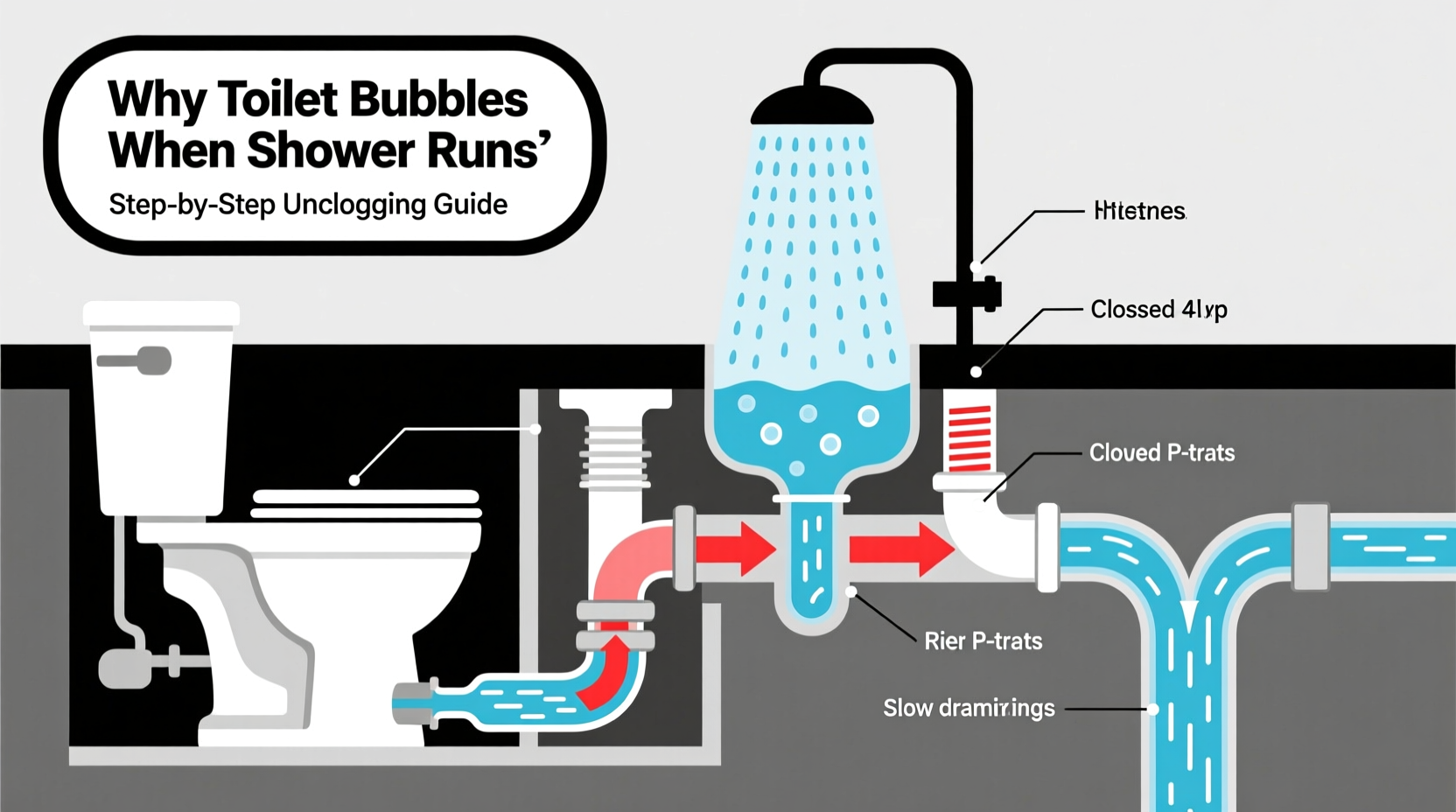
Your home’s plumbing isn’t just a collection of isolated pipes. It’s a carefully engineered network designed to move wastewater efficiently while preventing sewer gases from entering your living space. Central to this system are two key components: the drain-waste-vent (DWV) system and the P-trap under each fixture.
The DWV system ensures that water flows out smoothly while maintaining atmospheric pressure in the pipes. Vent pipes extend through your roof, allowing air to enter the system and prevent suction that could siphon water out of traps. Each fixture—including your toilet, shower, sink, and bathtub—has a P-trap, a U-shaped pipe that holds water to block noxious gases from rising into your home.
When the shower runs, water rushes down its drain, pushing air ahead of it. In a properly functioning system, this air escapes through the vent stack. But if the vent is blocked or the main drain line is clogged, the air seeks the path of least resistance—often backing up through the toilet, creating those telltale bubbles.
Common Causes of Toilet Bubbling During Shower Use
Bubbling toilets aren’t random. They stem from specific mechanical issues within your plumbing. Identifying the likely culprit helps determine whether you can fix it yourself or need professional help.
- Main Drain Partial Clog: Over time, hair, soap scum, grease, and debris accumulate in the main drain line. A partial blockage restricts airflow and water flow, forcing air to escape through nearby fixtures like the toilet.
- Blocked Vent Pipe: If the roof vent is obstructed by leaves, bird nests, or ice, air can't enter the system freely. This creates negative pressure, pulling air backward through the toilet.
- Cross-Connection Issues: In older homes, improper plumbing modifications may create shared drain paths that increase backpressure during high-flow events.
- Sewer Line Obstruction: Tree roots, collapsed pipes, or foreign objects in the sewer line can severely restrict flow, leading to multiple symptoms including bubbling, slow drains, and foul odors.
- Failing Sewer Ejector Pump (if applicable): Homes with basements below sewer level often use ejector pumps. A malfunction here can cause reverse flow and gurgling.
“Gurgling sounds are early warning signs of poor venting or blockages. Address them before they turn into full backups.” — Carlos Mendez, Master Plumber with 22 years of experience
Step-by-Step Guide to Diagnose and Unclog the System
Before reaching for chemical drain cleaners or calling a plumber, try this logical sequence of checks and fixes. Many cases resolve with simple tools and careful troubleshooting.
- Confirm the Pattern: Run the shower for 2–3 minutes and observe the toilet. Does it bubble immediately? After a delay? Only during heavy flow? Documenting timing helps pinpoint the issue.
- Check Other Fixtures: Flush the toilet while running the shower. If the toilet drains slowly or the shower backs up, the problem is likely in the main drain.
- Inspect the Roof Vent (Safely): Climb onto the roof (with proper safety gear) and examine the vent pipe. Look for debris, standing water, or obstructions. Use a garden hose to flush it downward—but only if you're confident in your access and balance.
- Use a Plunger on the Toilet: Even if the toilet seems fine, plunging can dislodge minor clogs in the branch line. Use a flange plunger and create a tight seal. Push down gently, then pull up sharply—repeat 15–20 times.
- Snake the Shower Drain: Remove the shower strainer and insert a hand-crank auger (drain snake) 15–20 feet into the pipe. Rotate clockwise while pushing forward to catch hair and sludge. Pull out debris and repeat until clean.
- Clear the Main Cleanout (If Accessible): Locate the main drain cleanout—usually a capped PVC or cast iron pipe near your foundation or basement. Open it carefully (wear gloves and eye protection). Insert a motorized drain snake (¼” to ⅜”) and feed it into the line, breaking up any obstruction.
- Flush with Hot Water and Dish Soap: After snaking, pour a gallon of hot (not boiling) water mixed with half a cup of degreasing dish soap down the shower and toilet. Let sit for 15 minutes, then flush with cold water.
Do’s and Don’ts: What to Avoid When Dealing with Bubbling Toilets
| Do’s | Don’ts |
|---|---|
| Use a plumbing snake or auger for physical removal of clogs | Use caustic drain cleaners regularly—they damage pipes over time |
| Inspect roof vents seasonally for debris buildup | Ignore repeated bubbling—it will not fix itself |
| Install drain strainers in showers to catch hair | Over-tighten fittings when reassembling drains |
| Hire a licensed plumber for camera inspections if problems persist | Run multiple water sources simultaneously during suspected clogs |
| Maintain regular drain maintenance every 3–6 months | Assume the problem is “just the toilet”—it’s part of a system |
Real Example: How One Homeowner Fixed a Persistent Bubbling Toilet
Mark T., a homeowner in Portland, Oregon, noticed his guest bathroom toilet began bubbling every time someone took a shower. At first, he dismissed it as quirky plumbing. But after two weeks, the shower started draining slowly, and a faint sewer smell appeared.
He tried plunging both the toilet and shower without success. Then, he removed the shower drain cover and snaked the line with a 25-foot hand auger. He pulled out a dense wad of hair and soap residue—common in households with long-haired occupants. After flushing the line with hot, soapy water, he tested the system. The bubbling stopped immediately, and both fixtures drained normally.
Mark later installed a fine-mesh drain screen and committed to monthly snaking. Two years later, he hasn’t had a recurrence. His experience shows that early intervention with basic tools can prevent expensive repairs.
When to Call a Professional Plumber
Some situations require expert assessment. Don’t hesitate to call a licensed plumber if you encounter any of the following:
- Multiple fixtures gurgle or back up simultaneously
- Foul sewage odors persist after cleaning
- Water pools near floor drains or in the basement
- You’ve snaked the lines but the issue returns within days
- You suspect tree root intrusion or pipe collapse
A professional can perform a **video drain inspection** using a waterproof camera fed through the pipes. This non-invasive method reveals exact blockage locations, pipe condition, and structural issues. According to industry data, nearly 30% of recurring drain problems are due to tree roots infiltrating aging sewer lines—something only hydro-jetting or pipe relining can resolve effectively.
Prevention Checklist: Stop Bubbling Before It Starts
Proactive care is far cheaper and easier than emergency repairs. Follow this checklist to maintain a healthy drain system:
- ✅ Install mesh strainers in all showers and tubs
- ✅ Snakе drains every 3–6 months, especially in high-use bathrooms
- ✅ Flush drains monthly with hot water and biodegradable enzyme cleaner
- ✅ Trim tree roots near sewer lines annually (or hire an arborist)
- ✅ Inspect roof vents in spring and fall
- ✅ Avoid flushing wipes, feminine products, or paper towels—even “flushable” ones
- ✅ Educate household members about proper drain usage
Frequently Asked Questions
Is a bubbling toilet dangerous?
While not immediately hazardous, a bubbling toilet can indicate a failing vent or serious clog. If sewer gases are escaping due to a dry trap or blocked vent, prolonged exposure can pose health risks. Additionally, untreated blockages may lead to overflow or pipe damage.
Can a clogged vent pipe cause other problems?
Yes. A blocked vent affects the entire drainage system. You may notice slow-draining sinks, gurgling noises from multiple fixtures, or water hammer sounds in pipes. In extreme cases, negative pressure can siphon water out of P-traps, allowing sewer gas into your home.
Will pouring vinegar and baking soda fix the issue?
This popular DIY method works well for minor organic buildup but won’t clear deep clogs or vent blockages. For systemic issues like bubbling toilets, mechanical removal (snaking) or professional cleaning is more effective.
Conclusion: Take Action Before Small Issues Become Emergencies
A toilet that bubbles when the shower runs isn’t just odd—it’s a message from your plumbing system. Whether it’s a simple hair clog or a hidden sewer line issue, addressing it promptly protects your home and prevents costly damage. With the right tools and knowledge, many homeowners can diagnose and resolve the problem themselves. But don’t underestimate the value of professional insight when symptoms persist.
Plumbing systems are only as strong as their weakest link. By staying alert to unusual sounds, maintaining drains proactively, and knowing when to call for help, you ensure smooth, silent operation for years to come. Don’t wait for a backup—act now, stay ahead of the problem, and keep your home’s waste system working exactly as it should.




 浙公网安备
33010002000092号
浙公网安备
33010002000092号 浙B2-20120091-4
Comments
No comments yet. Why don't you start the discussion?