
If you've recently received a call from someone claiming to be from NTDS, your first reaction might be confusion—especially if you're not familiar with the acronym. Unlike well-known government agencies or major corporations, \"NTDS\" doesn't immediately ring a bell for most people. This ambiguity opens the door to suspicion: Is this a legitimate organization trying to reach you? Or is it a cleverly disguised scam designed to extract personal information or money? The truth lies somewhere in between, depending on context, caller behavior, and verification steps.
Understanding whether an NTDS call is real or fraudulent requires careful analysis of red flags, knowledge of common scam tactics, and knowing how to verify unknown callers. This guide breaks down everything you need to know—from identifying potential impersonation attempts to confirming the legitimacy of the organization behind the call.
What Does NTDS Stand For?
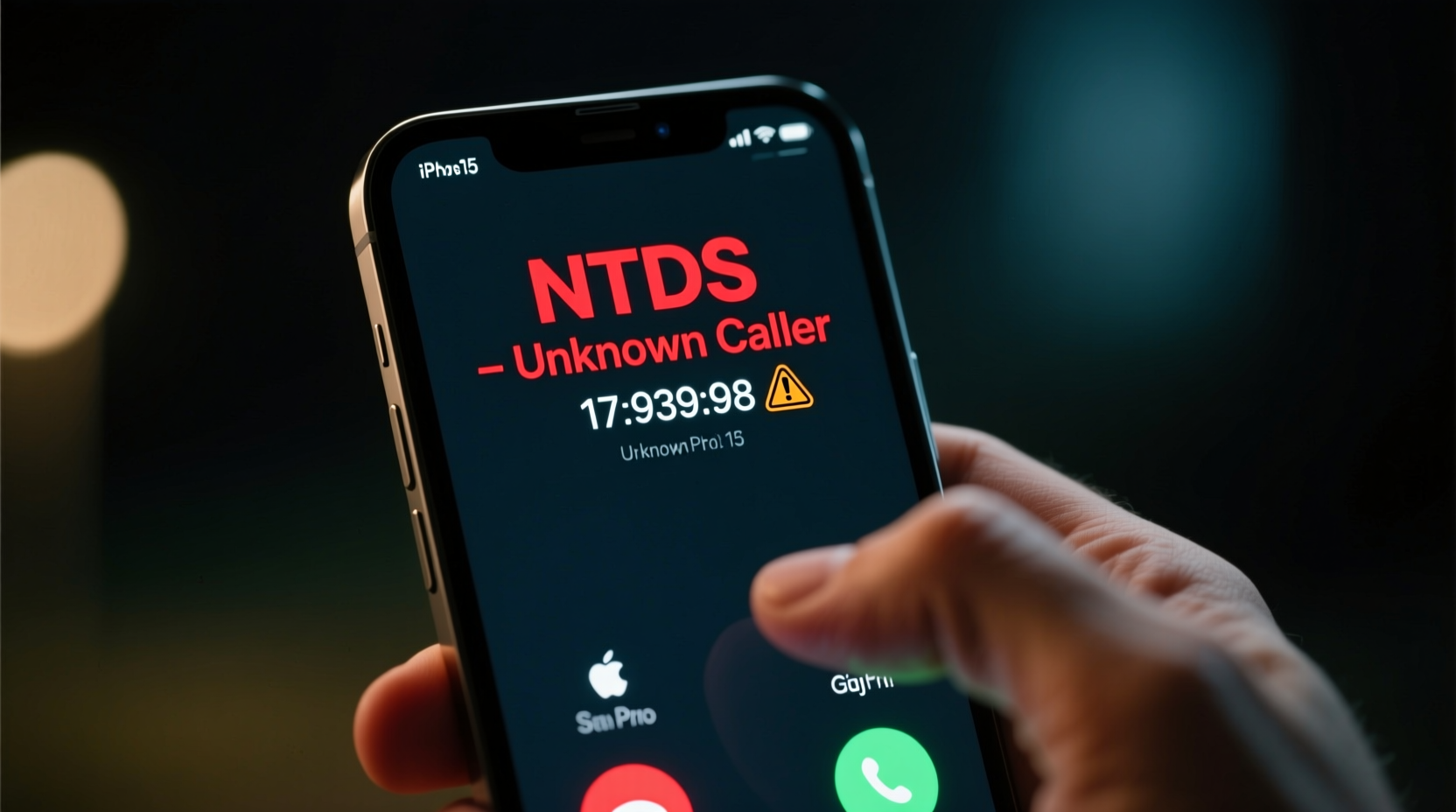
NTDS can refer to several different entities depending on the context:
- National Tongue Diagnosis Society – A niche holistic health group focused on alternative medicine practices.
- National Tracing Data System – Used in law enforcement or firearm tracking (though not widely public-facing).
- Networked Transaction Distribution System – A generic tech term used internally by some financial institutions.
- Nigerian Tax and Duty Service – Not officially recognized; often fabricated in international scams.
Crucially, **there is no widely recognized U.S.-based federal agency called NTDS**. If the caller claims to represent a government body with that name, proceed with extreme caution. Scammers frequently invent plausible-sounding acronyms to gain credibility.
Common Signs of an NTDS Scam Call
Fraudsters use urgency, fear, and authority to manipulate victims. When evaluating an unexpected NTDS call, watch for these telltale signs:
- Threats of arrest or legal action – “You owe back taxes to NTDS and will be arrested if you don’t pay now.”
- Demand for immediate payment – Requests for gift cards, wire transfers, or cryptocurrency are always red flags.
- Caller ID spoofing – The number may appear local or official but is easily faked using VoIP technology.
- Poor language quality – Heavy accents, scripted speech, or inconsistent details about the organization.
- Requests for sensitive data – Asking for your SSN, bank login, or credit card under the guise of “verification.”
The Federal Trade Commission (FTC) reports that impostor scams accounted for over $540 million in losses in 2023 alone. Many of these involved fake government agencies contacting individuals via robocalls or live operators.
Could It Be a Mistake?
While many NTDS calls are scams, some may result from genuine errors:
- Wrong number dialing – Automated systems sometimes misdial due to database inaccuracies.
- Debt collection mix-up – You may resemble someone else in a private company’s records.
- Internal corporate miscommunication – A vendor or third-party service might mislabel their outreach.
In one documented case, a retiree in Florida began receiving daily calls from “NTDS Collections” demanding $3,200 in overdue fees. After filing a complaint with the FCC, it was revealed the calls stemmed from a collections firm using outdated software that auto-generated misleading agency names. No such entity existed, and the calls ceased after regulatory intervention.
“Scammers thrive on ambiguity. When they use obscure acronyms like NTDS, they count on confusion to prevent victims from questioning legitimacy.” — Sarah Lin, Senior Fraud Analyst at CyberSafe USA
Step-by-Step Guide: What to Do When NTDS Calls
If you receive a call from NTDS, follow this timeline to assess and respond appropriately:
- Do not engage immediately – Avoid answering detailed questions or providing any personal information.
- Ask for identification – Request the caller’s full name, department, callback number, and reference ID.
- Hang up and verify independently – Use a search engine or official directory to look up the organization. Do not use contact info provided by the caller.
- Check the number – Enter the phone number into sites like WhoCalledMe.com or Truecaller to see if others have reported it.
- Report suspicious activity – File a report with the FTC at reportfraud.ftc.gov and the FCC.
This process helps separate legitimate outreach from fraud. Most scammers cannot withstand independent verification.
Do’s and Don’ts When Handling Unknown Calls
| Do’s | Don’ts |
|---|---|
| Let unknown numbers go to voicemail initially | Call back a number left in a suspicious voicemail |
| Use reverse lookup tools to investigate | Share your date of birth or account numbers |
| Contact official organizations through verified channels | Press buttons to “speak to a representative” on robocalls |
| Register your number with the National Do Not Call Registry | Threaten or argue with the caller—just hang up |
How to Protect Yourself Long-Term
Prevention is the best defense against scam calls. Implement these strategies to reduce future risks:
- Enable spam protection – Most smartphones offer built-in filtering (e.g., iOS Silence Unknown Callers, Android Call Screen).
- Use third-party apps – Apps like Hiya or RoboKiller block known scam numbers in real time.
- Avoid sharing your number publicly – Minimize exposure on social media, forums, or unsecured websites.
- Freeze your credit – Prevents identity thieves from opening accounts in your name even if they obtain partial data.
FAQ: Common Questions About NTDS Calls
Can NTDS legally collect debts?
Only if NTDS refers to a licensed debt collection agency registered in your state. However, no nationally accredited agency currently operates under that exact name. Always request written validation of any claimed debt before acknowledging it.
I keep getting calls even after saying I’m not the person they want. What should I do?
Repeated misdirected calls may violate the Telephone Consumer Protection Act (TCPA). Document each call (date, time, number) and send a cease-and-desist letter. If harassment continues, consult a consumer rights attorney.
Is there any legitimate reason NTDS would call me?
Possibly—if you’re involved in specialized medical research, network security testing, or international trade compliance. But even then, legitimate organizations will never demand instant payments or threaten penalties over the phone.
Conclusion: Stay Informed, Stay Safe
Receiving a call from NTDS doesn’t automatically mean you’re targeted by a scam—but it strongly suggests caution. With phone fraud growing more sophisticated every year, relying solely on caller ID or verbal claims is dangerously insufficient. Verification, skepticism, and proactive protection are essential.
You have the right to privacy, accurate information, and freedom from intimidation. By understanding how scammers operate and taking control of your communication boundaries, you reduce risk and empower yourself against deception. If you’ve been contacted by NTDS, take action today: report the call, secure your personal data, and share this knowledge with friends and family who may also be vulnerable.




 浙公网安备
33010002000092号
浙公网安备
33010002000092号 浙B2-20120091-4
Comments
No comments yet. Why don't you start the discussion?