
In the past five years, pickleball has transformed from a backyard novelty into a national sensation. Once played primarily by retirees on forgotten tennis courts, it now dominates recreation centers, schools, and even professional sports networks. Participation in the U.S. has surged from 4.2 million players in 2020 to over 36 million in 2024, according to the Sports & Fitness Industry Association (SFIA). This meteoric rise isn’t just about fitness or competition—it reflects deeper cultural shifts around connection, inclusivity, and accessible recreation. So what exactly makes pickleball so popular all of a sudden?
The Perfect Storm: Why Now?
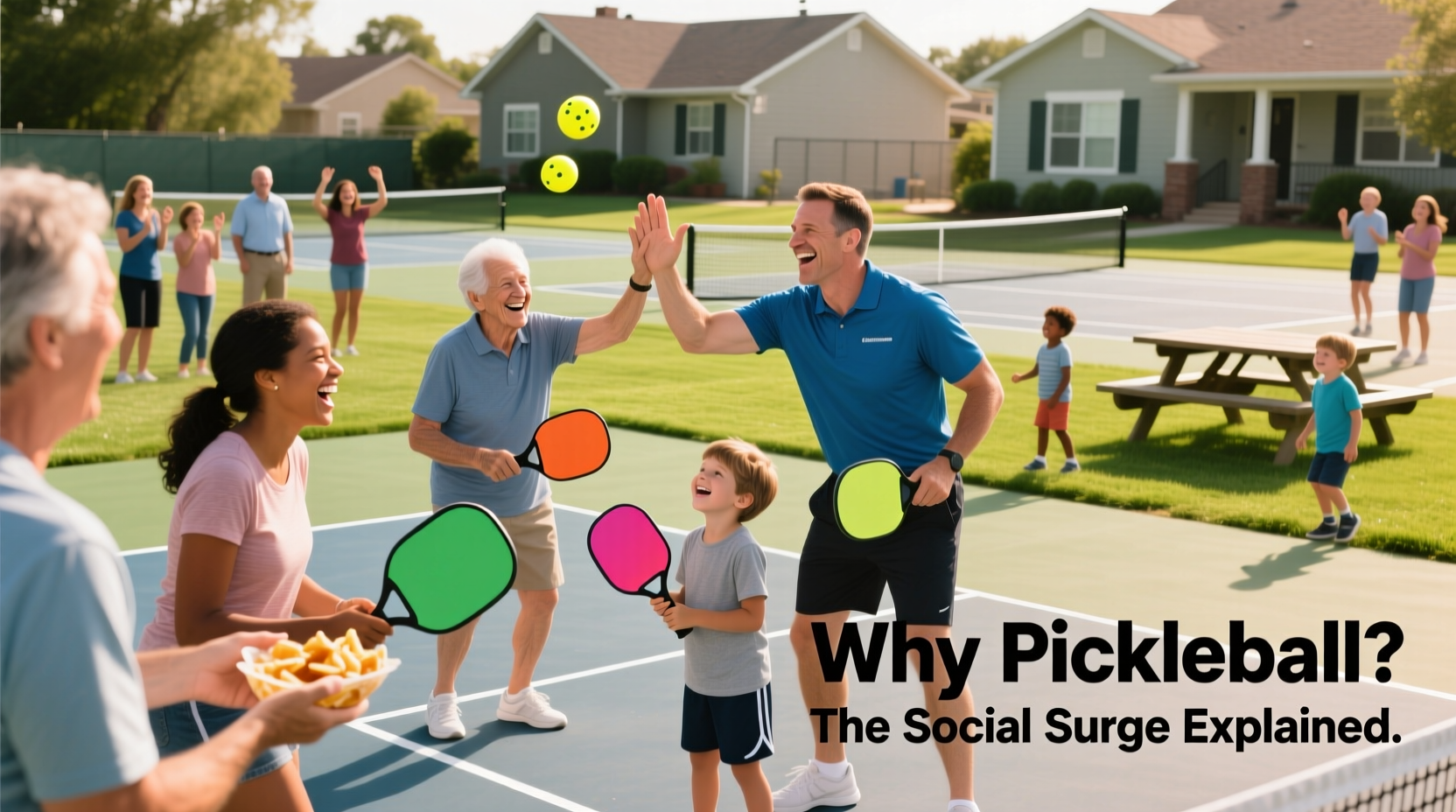
Pickleball’s timing couldn’t have been better. Emerging from pandemic-era isolation, people craved safe, outdoor activities that allowed for social interaction without physical proximity. Pickleball filled that gap perfectly. Unlike team sports requiring large groups or complex logistics, pickleball can be played with as few as two people and learned in under an hour. Its compact court size—about a quarter of a tennis court—meant cities could convert underused spaces quickly.
Additionally, baby boomers, who make up a significant portion of early adopters, found the sport ideal for staying active without high impact. But younger demographics soon followed, drawn not just by the game itself but by the vibrant communities forming around it. Local leagues, drop-in clinics, and “pickleball mixers” became social hubs, especially in suburban neighborhoods and retirement communities.
“Pickleball is less about winning and more about showing up. It’s the first sport where I’ve made real friends just by playing once a week.” — Diane R., 58, community player in Tucson, AZ
Accessibility Is Everything
One of the most compelling reasons for pickleball’s rapid adoption is its low barrier to entry. You don’t need elite athleticism, expensive gear, or years of training to enjoy it. A beginner-friendly learning curve means new players can rally within minutes and compete casually within days.
- Affordable equipment: Paddles range from $30 to $120, and balls cost less than $5 per pack.
- Minimal space required: Courts fit in schoolyards, parking lots, and multi-sport facilities.
- All-age appeal: Children as young as 8 and adults over 80 regularly play together.
- Low injury risk: The smaller court reduces sprinting and joint strain compared to tennis or basketball.
This inclusivity extends beyond age and ability. Cities like Orlando, Seattle, and Austin have installed public pickleball courts in underserved neighborhoods, promoting equity in recreational access. Community centers report higher engagement among women and older adults—groups often underrepresented in traditional sports.
Social Connection in a Disconnected World
In an era dominated by screens and digital communication, pickleball offers something rare: face-to-face interaction built into the activity. Games are typically doubles, encouraging conversation and teamwork. Scoring requires calling out numbers together, creating rhythm and shared focus. Even during competitive matches, etiquette emphasizes respect, self-officiating, and friendly banter.
Many players describe the “pickleball effect”—a sense of belonging that develops quickly, even among strangers. Weekly games become rituals. Players carpool, grab coffee after matches, and organize social events. For retirees adjusting to life after work or remote workers lacking office camaraderie, this structure provides emotional stability and routine.
“We started playing because my husband retired. Now we have dinner parties with three other couples we met on the court. It’s our tribe.” — Linda M., 71, Naples, FL
The sport’s culture actively discourages elitism. There’s no dress code, no requirement to keep score formally, and no expectation of silence during play. Laughter is encouraged. Mistakes are shrugged off. This anti-intimidation ethos stands in stark contrast to sports like golf or tennis, where unspoken rules can deter newcomers.
From Backyard Game to Big Business
What began as a DIY project on Bainbridge Island, Washington in 1965—created by three dads looking to entertain their kids—is now a billion-dollar industry. Major brands like Selkirk, Paddletek, and Onix dominate the market, while athletic giants such as Nike and Franklin have entered the space. ESPN now broadcasts professional tournaments, and pickleball was featured at the 2023 Pan American Games.
Local economies are feeling the impact too. Towns hosting pickleball tournaments see spikes in hotel bookings, restaurant traffic, and retail sales. Cedar City, Utah, for example, reported a $3.2 million economic boost from a single regional tournament in 2023. Municipalities are investing heavily: Phoenix plans to spend $18 million upgrading courts by 2026.
| Factor | Tennis | Pickleball |
|---|---|---|
| Learning Curve | Moderate to steep | Gentle, immediate playability |
| Equipment Cost (avg) | $100–$250 | $40–$100 |
| Court Size | 78 x 27 ft (singles) | 44 x 20 ft |
| Social Emphasis | Variable | Core component of culture |
| Median Player Age (2024) | 48 | 55 (declining due to youth programs) |
Schools are introducing pickleball into physical education curricula, citing its adaptability for different skill levels. Colleges are launching club teams, and some, like Texas State University, now offer varsity-level coaching. The Professional Pickleball Association (PPA) reports a 70% increase in tournament viewership year-over-year.
How Communities Are Adapting (and Sometimes Resisting)
Not everyone welcomes the pickleball boom. In some neighborhoods, residents have pushed back against noise from popping paddles and ball bounces, particularly near residential areas. Early-morning play has sparked disputes, leading some cities to impose sound barriers or time restrictions.
Yet solutions are emerging. Acoustic fencing, rubberized court surfaces, and designated quiet hours help mitigate concerns. Many parks now use convertible courts—marked for both tennis and pickleball—which maximize utility without sacrificing space.
“Conflict usually comes from misunderstanding. Once neighbors come watch a game, they see how friendly and inclusive it is. Most end up signing up for a beginner class.” — Carlos Navarro, Parks Director, Portland, OR
Mini Case Study: The Revival of Maplewood Park
Maplewood Park in Akron, Ohio, had been neglected for years. Two cracked tennis courts sat unused; vandalism was common. In 2021, a group of local seniors petitioned the city to convert one court into four pickleball courts. They raised $12,000 through crowdfunding and volunteered labor for line painting.
Within six months, daily attendance grew from zero to over 60 players. The city added lighting and seating, then expanded to include adaptive pickleball for people with mobility challenges. Crime in the surrounding area dropped by 22%, and nearby businesses reported increased foot traffic. Today, Maplewood hosts intergenerational tournaments and summer youth camps.
This transformation illustrates how pickleball can act as a catalyst for broader community revitalization—not just physically, but socially and economically.
Getting Started: A Step-by-Step Guide
Curious but unsure how to begin? Here’s a practical path to becoming part of the movement:
- Find a court near you: Use apps like PicklePlay or USA Pickleball’s court locator to find public or indoor facilities.
- Grab basic gear: Buy or borrow a beginner paddle and outdoor pickleballs (perforated plastic).
- Take a clinic: Many YMCAs and rec centers offer free or low-cost intro sessions.
- Learn the rules: Focus on the double-bounce rule (both serve and return must bounce) and the non-volley zone (“kitchen”) near the net.
- Join a social play session: Look for “open play” or “dink and drink” events—low-pressure environments perfect for beginners.
- Practice consistency: Aim for controlled dinks and placement over power. Precision wins points.
- Embrace the culture: Introduce yourself, call your own faults, and celebrate others’ good shots.
Checklist: Launch Your Pickleball Journey
- ✅ Locate a nearby court using USA Pickleball’s online map
- ✅ Purchase or rent a beginner-friendly paddle (look for medium weight, ~8–8.5 oz)
- ✅ Attend an introductory class or watch tutorial videos on official rules
- ✅ Bring water, sunscreen, and comfortable athletic wear
- ✅ Sign up for a “no-pressure” open play session
- ✅ Introduce yourself to at least two players during your first visit
- ✅ Follow local etiquette: honor self-calls, avoid loud distractions, clean up trash
Frequently Asked Questions
Is pickleball only for older people?
No. While initial growth was driven by adults over 50, youth participation is rising rapidly. Schools, colleges, and family recreation programs are adopting the sport due to its ease of play and fun factor. Kids pick it up quickly, and mixed-age games are common.
Do I need to be athletic to play?
Not at all. Pickleball rewards strategy, hand-eye coordination, and patience more than speed or strength. Many players with limited mobility thrive using smart shot placement. Adaptive versions exist for wheelchair users and those with balance concerns.
Can I play pickleball indoors?
Yes. Indoor pickleball uses slightly different balls (softer, less bouncy) and is growing in popularity year-round, especially in colder climates. Many gyms and recreation centers now dedicate space to indoor courts.
Conclusion: More Than Just a Game
Pickleball’s sudden popularity isn’t a fluke. It’s the result of a deeply human need—for movement, connection, and joy—meeting a uniquely accessible format. In a world where loneliness is classified as a public health crisis and physical inactivity contributes to chronic disease, pickleball offers a simple yet powerful antidote.
It doesn’t demand perfection. It doesn’t exclude based on age, fitness, or experience. It turns strangers into teammates and neighbors into friends. Whether you're looking to stay active, meet people, or simply try something new, pickleball invites you in—with a smile, a paddle, and a ball full of possibility.




 浙公网安备
33010002000092号
浙公网安备
33010002000092号 浙B2-20120091-4
Comments
No comments yet. Why don't you start the discussion?