
If you’ve found yourself staring at a spinning wheel while trying to load a webpage or buffer a video, you’re not alone. Many T-Mobile users occasionally experience frustratingly slow internet speeds. While 5G promises lightning-fast connectivity, real-world performance can vary due to network congestion, device settings, signal interference, or even local outages. The good news: most slowdowns are temporary and often within your control to fix. Understanding the root causes—and knowing what steps to take—can get your connection back on track in minutes.
Common Causes of Slow T-Mobile Internet
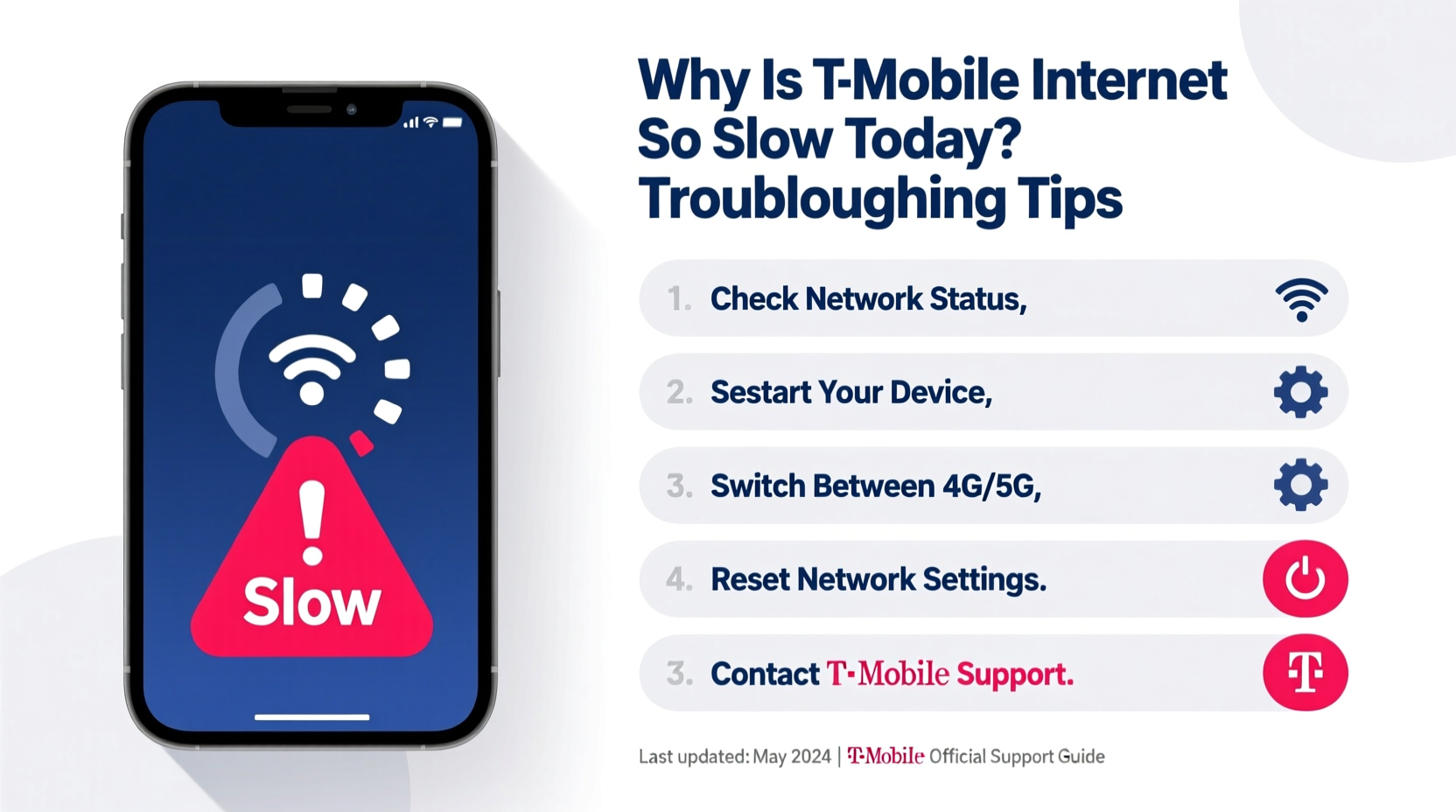
Before diving into fixes, it’s important to understand why your T-Mobile internet might be slow. Several factors can contribute:
- Network Congestion: During peak hours (typically evenings and weekends), many users access the network simultaneously, reducing available bandwidth per user.
- Weak Signal Strength: Being far from a cell tower, inside thick-walled buildings, or underground can degrade signal quality.
- Outdated Device Software: Older operating systems or firmware may not support the latest network optimizations.
- Background Apps: Applications syncing data, updating, or streaming in the background consume bandwidth without your knowledge.
- Carrier Outages or Maintenance: T-Mobile sometimes performs network upgrades or faces regional outages that affect service.
- Data Throttling: After reaching a certain data threshold on unlimited plans, T-Mobile may deprioritize your traffic during busy times.
“Network performance isn’t just about coverage maps—it’s also about timing, location, and device compatibility.” — Raj Patel, Senior Wireless Analyst at Connectivity Insights Group
Step-by-Step Troubleshooting Guide
Follow this logical sequence to identify and resolve the issue efficiently.
- Check for Network Outages
Visit T-Mobile's outage map to see if there’s a known issue in your area. Enter your ZIP code to get real-time updates. - Restart Your Device
A simple reboot clears temporary glitches and refreshes network connections. Hold the power button, select “Restart,” and wait 30 seconds before turning it back on. - Toggle Airplane Mode
Turn on Airplane Mode for 15 seconds, then turn it off. This forces your phone to reconnect to the nearest tower with a fresh handshake. - Forget and Reconnect to Wi-Fi (if applicable)
If you're switching between Wi-Fi and cellular, cached network settings can cause confusion. Go to Settings > Wi-Fi, tap the network, and select “Forget.” Reconnect manually. - Update Carrier Settings
On iPhones: Settings > General > About. If an update is available, a prompt will appear. On Android: Open the Carrier Settings app or check under Settings > System > Advanced > Carrier Settings. - Reset Network Settings
This erases saved Wi-Fi passwords, Bluetooth pairings, and APN settings but often resolves deep-seated connectivity issues. Found under Settings > General > Reset > Reset Network Settings (iOS) or Settings > System > Reset Options > Reset Wi-Fi, mobile & Bluetooth (Android). - Test Speed on Multiple Devices
If only one device is slow, the problem is likely device-specific. If all devices on your line are affected, it’s probably network-related.
Do’s and Don’ts When Facing Slow Speeds
| Do’s | Don’ts |
|---|---|
| Use speed test apps like Ookla Speedtest or Fast.com to measure actual download/upload speeds. | Assume the problem is always T-Mobile—first rule out your device or environment. |
| Move near a window or go outside to improve signal reception. | Run multiple large downloads or streams simultaneously when speeds are already low. |
| Enable 5G if your phone and plan support it (Settings > Cellular > Cellular Data Options > Voice & Data). | Ignore software updates—they often include critical network improvements. |
| Contact T-Mobile support with specific details: time, location, device, and test results. | Yell at customer service. Polite, informed inquiries get faster resolutions. |
Real-World Example: Sarah’s Home Office Struggle
Sarah, a freelance graphic designer in Seattle, relied on her T-Mobile hotspot for remote work. One Tuesday morning, her uploads stalled, video calls froze, and file transfers timed out. She assumed the worst—until she ran through a quick checklist. First, she restarted her hotspot device. No change. Then she checked T-Mobile’s outage page and saw no alerts. Next, she moved the hotspot from her basement office to a window-facing shelf upstairs. Instantly, her signal jumped from one bar to four. A speed test confirmed her download speed had increased from 3 Mbps to 47 Mbps. The culprit? Concrete walls blocking the signal. She later invested in a $50 signal amplifier, which stabilized her connection permanently.
When to Consider Hardware or Plan Upgrades
Sometimes, the solution isn’t a tweak—it’s an upgrade. Not all phones handle modern networks equally. Older models may only support LTE, missing out on faster 5G bands. Similarly, budget hotspot devices may lack advanced antenna technology.
T-Mobile’s Ultra Capacity 5G relies on mid-band spectrum (2.5 GHz), which offers the best balance of speed and range. But to access it, your device must support Band 41 and have updated modem firmware.
If you're consistently experiencing sub-10 Mbps speeds in areas with reported 5G coverage, consider:
- Upgrading to a newer smartphone or hotspot model certified for T-Mobile’s 5G network.
- Purchasing a signal booster like the weBoost Home Room or SureCall Flare, especially if you work from home.
- Switching to a Magenta MAX plan if you're on an older unlimited plan—Magenta MAX includes priority data and higher hotspot limits.
Frequently Asked Questions
Does T-Mobile throttle internet after a certain data limit?
Yes, but only during periods of network congestion. On most unlimited plans, once you reach 50GB of high-speed data in a billing cycle, your data may be deprioritized. Magenta MAX customers receive full-speed priority data with no deprioritization cap.
Why is my hotspot so slow even with good phone signal?
Hotspot performance depends on both signal strength and the number of connected devices. Each additional device splits bandwidth. Also, older hotspot hardware or outdated firmware can bottleneck speeds regardless of signal.
Can a SIM card cause slow internet?
Rarely, but yes. Damaged, old, or improperly seated SIM cards can disrupt communication with the network. Try reseating the SIM or requesting a replacement from T-Mobile—often free of charge.
Final Checklist: Restore Your T-Mobile Speed in 10 Minutes
- ✅ Run a speed test (record baseline).
- ✅ Restart your phone or hotspot.
- ✅ Toggle Airplane Mode on and off.
- ✅ Move to a better signal location (near a window or outdoors).
- ✅ Check for carrier or OS updates.
- ✅ Reset network settings if problems persist.
- ✅ Verify with T-Mobile’s outage map.
- ✅ Contact support with speed test results and troubleshooting steps taken.
Conclusion: Take Control of Your Connection
Slow T-Mobile internet doesn’t have to derail your day. Most issues stem from fixable conditions—not permanent network failures. By systematically testing your device, location, and settings, you can often restore full speed within minutes. Remember: your phone is only as strong as its signal and configuration. Stay proactive with updates, understand your plan’s limitations, and don’t hesitate to upgrade hardware when needed. With these strategies, you’ll spend less time waiting and more time doing what matters.




 浙公网安备
33010002000092号
浙公网安备
33010002000092号 浙B2-20120091-4
Comments
No comments yet. Why don't you start the discussion?