
The sight of a U.S. soldier in uniform with the American flag sewn onto their right shoulder often raises a question: Why does it look like the flag is displayed backwards? To the untrained eye, the stars appear to be trailing behind rather than leading forward. But this is not an error—it’s intentional, steeped in tradition, and governed by strict military protocol. Understanding this practice reveals more than just a design choice; it reflects the nation’s values of movement, honor, and symbolism.
The \"backward\" flag is not about aesthetics or oversight. It is a deliberate representation of forward motion—specifically, the idea that the flag never retreats. This article explores the reasoning behind this unique display, traces its origins, explains current regulations, and clarifies common misconceptions surrounding the placement of the American flag on uniforms and other moving platforms.
The Symbolism Behind the “Backward” Flag
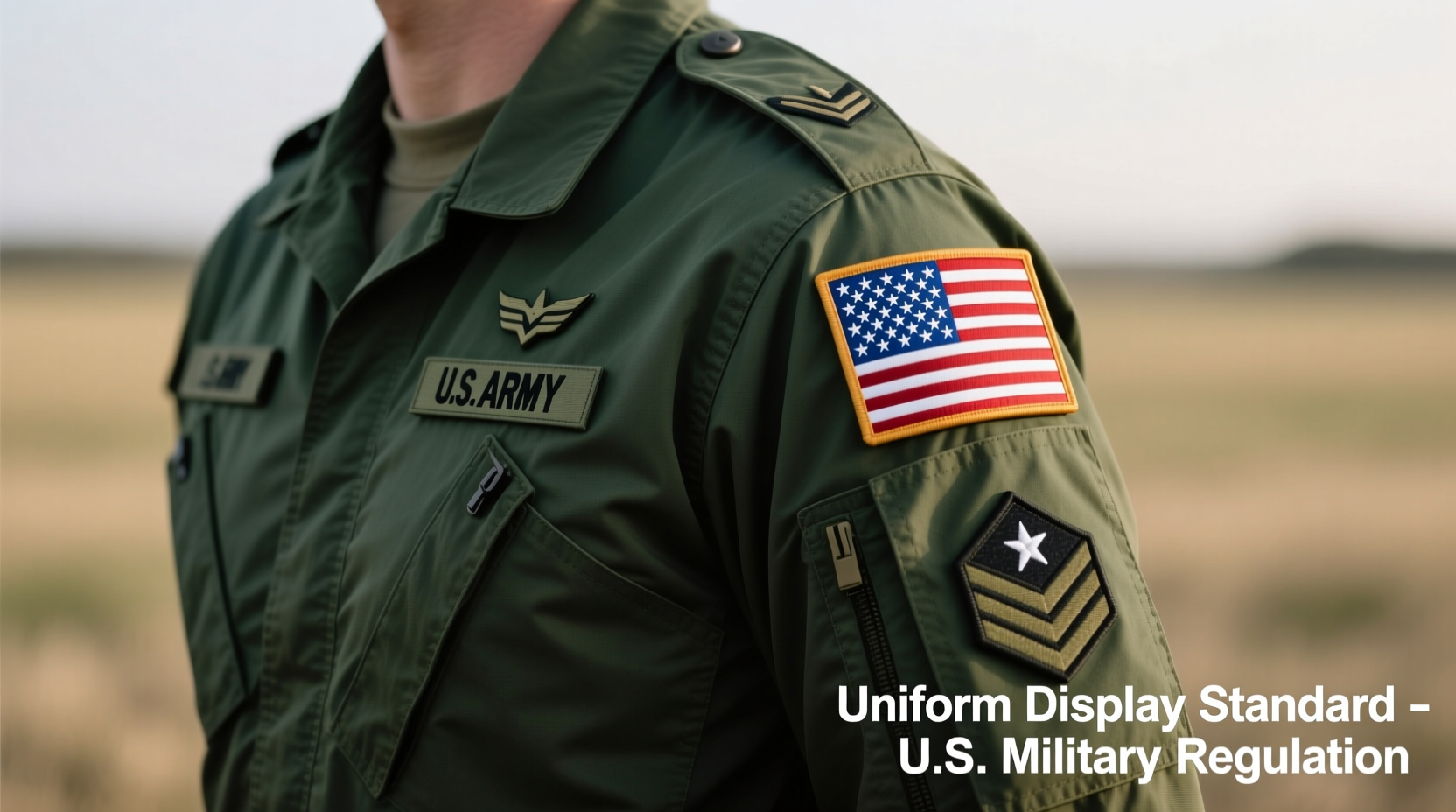
When viewed on the right sleeve of a military uniform, the American flag appears reversed because the union—the blue field with white stars—is positioned toward the front of the wearer’s body. On a standard flagpole display, the union is always on the viewer’s left. When affixed to a moving object like a person, vehicle, or aircraft, the flag must give the impression that it is flying in the breeze as the individual advances forward.
In essence, the flag is not actually backward. It is oriented so that the union leads the way, symbolizing progress and forward momentum. Imagine a soldier charging into battle: the flag streams behind them, fluttering in the wind. The stars should be at the forefront, never trailing. To achieve this visual effect when the flag is stitched flat onto fabric, the design must be mirrored on the right arm.
“Soldiers don’t carry the flag—it carries them. And it always moves forward.” — Major General James L. Terry, U.S. Army (Ret.)
Military Uniform Regulations and Historical Origins
The modern use of the reversed flag on uniforms can be traced back to the 19th century during the American Civil War. Cavalry units were among the first to adopt the practice. As soldiers rode into battle on horseback, regimental flags attached to their gear needed to appear as though they were blowing in the wind. When mounted on the right side of a rider, the flag would naturally stream backward—but only if the union was positioned forward.
This concept evolved into formal regulation. Today, the U.S. Department of Defense governs flag placement through Army Regulation 670-1 and similar directives across branches. According to these standards:
- The flag patch on the right shoulder must have the union (blue field) forward.
- The flag on the left shoulder displays the union to the observer’s left, consistent with traditional static display.
- The purpose is to simulate the flag flying in the wind as the service member moves forward.
Do’s and Don’ts of Flag Patch Placement
| Do’s | Don’ts |
|---|---|
| Position the union forward on the right sleeve (stars facing forward). | Place a standard flag patch on the right arm without mirroring. |
| Ensure the top edge of the patch is parallel to the shoulder seam. | Rotate the flag diagonally or upside down unless for distress signaling. |
| Use authorized flag patches approved by branch-specific regulations. | Decorate personal gear with altered or stylized versions that disrespect protocol. |
| Align the flag so it reads correctly when viewed from the front. | Display the flag inverted except in cases of extreme emergency. |
Real-World Example: A Soldier’s First Deployment
Private Daniel Reyes joined the U.S. Army Infantry in 2021. During basic training, he received his combat uniform and noticed the flag patch on his right shoulder looked “wrong.” He asked his drill sergeant, who paused the formation to explain the symbolism. “Son,” the sergeant said, “this flag isn’t backward. You are the wind. Every step you take, the flag flies ahead of you. It means we never go backward—we only move forward.”
Daniel carried that lesson throughout his deployment to Eastern Europe. Whenever fatigue set in during long patrols, he glanced at the flag on his shoulder. It became more than a patch; it was a reminder of purpose and direction. His experience underscores how deeply symbolic details can impact morale and identity in military culture.
Step-by-Step Guide to Proper Flag Patch Application
For veterans, first responders, or civilians wishing to wear flag patches respectfully on jackets, bags, or tactical gear, follow these steps to ensure correct placement:
- Determine the mounting location: Left arm = standard orientation. Right arm = reversed (union forward).
- Select the correct patch: Purchase a \"right-arm\" or \"combat\" version designed to be mirrored.
- Align the patch: Position it so the blue union is closest to the center of the body on the right arm.
- Sew or attach securely: Use durable stitching or Velcro backing to prevent shifting.
- Verify visibility: From the front, the flag should appear to be streaming backward as if blown by wind during forward motion.
- Inspect regularly: Replace worn or faded patches to maintain dignity of the symbol.
Frequently Asked Questions
Is it disrespectful to wear a \"backward\" flag?
No. Wearing a reversed flag on the right shoulder is not disrespectful when done according to military standards. It is a sign of respect and adherence to tradition. Misuse occurs only when the flag is intentionally inverted, defaced, or displayed incorrectly out of ignorance.
Can civilians wear the reversed flag patch?
Yes, civilians may wear the reversed flag patch, especially on apparel associated with patriotism, law enforcement, or veteran support. However, they should do so with understanding and respect for its meaning. Using it purely as fashion without awareness can diminish its significance.
Why isn’t the flag reversed on both sleeves?
The left sleeve follows traditional display rules—the union is on the observer’s left, as if viewing a flagpole. The right sleeve mimics motion. Having both sides reversed would break protocol and misrepresent the symbolism. Only the right-side patch is mirrored to convey forward movement.
Expert Insight on National Symbols
The treatment of national symbols reflects a society’s values. Dr. Laura Simmons, a historian specializing in American military traditions, explains:
“The reversed flag isn’t an exception to the rule—it’s an extension of it. The U.S. Flag Code doesn’t account for dynamic displays because it was written for stationary use. The military adapted the code’s spirit to mobile contexts. That adaptation honors the flag’s intent: to represent courage, continuity, and unwavering progress.” — Dr. Laura Simmons, Historian & Author, “Symbols of Service”
Conclusion
The American flag on a uniform is not backwards—it is engineered for meaning. Its placement on the right shoulder, with stars leading the way, embodies the principle that the United States moves forward, never retreats. This small detail carries immense weight, connecting today’s service members to generations of those who came before them.
Understanding this practice deepens appreciation for the care taken in military customs and the enduring power of symbolic language. Whether you’re a veteran, a family member, or a citizen honoring those who serve, recognizing the intention behind the reversed flag transforms a simple observation into a moment of reflection.




 浙公网安备
33010002000092号
浙公网安备
33010002000092号 浙B2-20120091-4
Comments
No comments yet. Why don't you start the discussion?