
The Academy Award statuette—commonly known as the Oscar—is one of the most coveted honors in the entertainment industry. Yet few people know how this golden figure earned its now-iconic nickname. While many assume the name was chosen formally or carries a symbolic meaning, the truth is far more whimsical and human. The story behind the name \"Oscar\" blends coincidence, humor, and a touch of serendipity that reflects the very spirit of Hollywood.
The Official Name vs. The Nickname
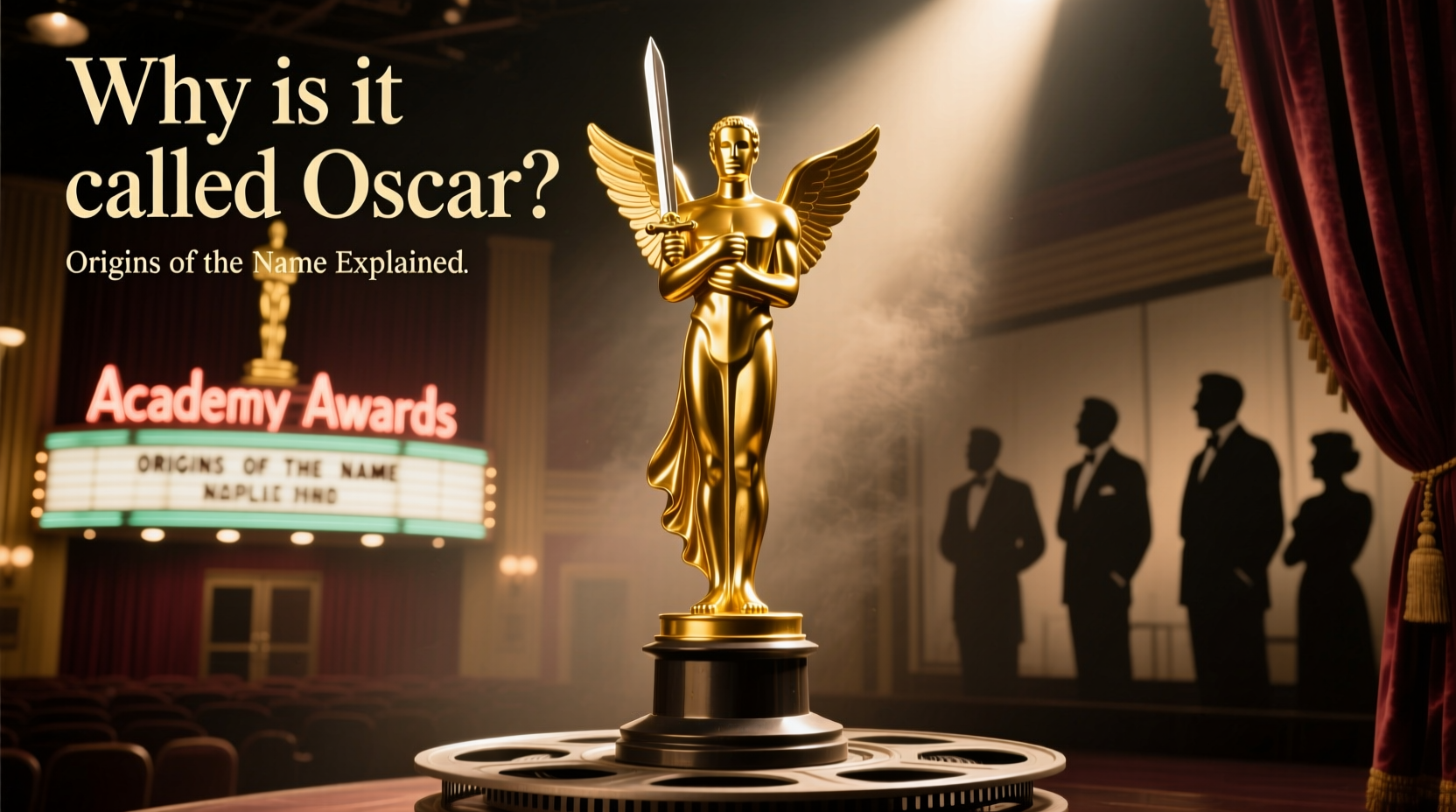
Officially, the award is called the Academy Award of Merit. It was first presented in 1929 by the Academy of Motion Picture Arts and Sciences (AMPAS) to recognize excellence in cinematic achievements. The statuette itself—a knight standing on a reel of film, holding a crusader’s sword—was designed by Cedric Gibbons, chief art director at Metro-Goldwyn-Mayer (MGM). But despite its grand design and formal title, it wasn’t long before the award picked up a much simpler, affectionate moniker: Oscar.
For decades, the origin of the name was shrouded in myth. Some believed it was named after a Scandinavian relative of an Academy member; others thought it honored a famous actor. In reality, the truth emerged through the recollections of those close to the early days of the Academy—and it all began with a librarian’s offhand comment.
The Margaret Herrick Story: The Real Origin
The most widely accepted and officially recognized origin traces back to Margaret Herrick, who joined the Academy in 1927 as a librarian and later became its executive director. Upon seeing the golden statuette for the first time, she reportedly remarked, “It looks just like my Uncle Oscar.”
This casual observation, made in the quiet confines of the Academy offices, eventually caught on among staff members. By the early 1930s, employees were informally referring to the award as “Oscar.” The nickname gained traction not through marketing or ceremony, but through word-of-mouth and insider familiarity.
“It looked like my uncle Oscar. I said so, and the name just stuck.” — Margaret Herrick, recounting her first impression of the statuette
In 1934, the name appeared in print for the first time when columnist Sidney Skolsky used it in his article about Katharine Hepburn winning her first Academy Award. Skolsky intentionally used “Oscar” instead of the formal title to sound more relatable and human. His choice marked a turning point—the nickname had entered public consciousness.
From Slang to Official Recognition
Despite its growing popularity, the Academy was initially reluctant to embrace the term. Officials preferred the dignified “Academy Award” and saw “Oscar” as too informal. For years, the organization avoided using the nickname in press releases or official communications.
That changed in 1939. When Bette Davis referenced “winning the Oscar” in her presidential address to the Academy, it signaled a shift in attitude. Over time, the charm of the name outweighed concerns about decorum. Finally, in 1945, the Academy formally acknowledged the nickname when its official magazine, *Scribbles*, began using “Oscar” in headlines and articles.
By 1949, the term was fully embraced. The Academy launched a trademark effort to protect the name “Oscar,” solidifying its place not just in popular culture, but in legal and institutional recognition.
A Timeline of the Oscar Name
The journey from obscure statuette to globally recognized symbol involved several key moments:
- 1929: First Academy Awards ceremony held; statuette has no nickname.
- Early 1930s: Margaret Herrick’s “Uncle Oscar” comment spreads within the Academy.
- 1934: Sidney Skolsky uses “Oscar” in a syndicated column, introducing it to the public.
- 1939: Bette Davis publicly refers to the award as “the Oscar” during her Academy speech.
- 1945: The Academy’s magazine begins using the term officially.
- 1949: AMPAS trademarks the name “Oscar,” cementing its legitimacy.
- Today: “Oscar” is used universally, including by the Academy itself in promotions and broadcasts.
Debunking Common Myths About the Name
Over the years, several alternative theories have circulated about the origin of the name “Oscar.” While imaginative, they lack credible evidence:
- Swedish Connection: Some claimed the award was named after Swedish actor Oscar A.C. Lund or even King Oscar II of Sweden, due to Academy founder Louis B. Mayer’s Scandinavian heritage. However, there’s no documentation linking any of these figures to the naming process.
- Military Inspiration: Another theory suggested the pose resembled a World War I soldier, nicknamed “Oscar” after the military phonetic alphabet. This postdates the nickname’s emergence and is considered retroactive speculation.
- Studio Politics: Rumors circulated that a rival studio coined the name mockingly, implying the statuette resembled a minor executive named Oscar. No records support this claim.
The Margaret Herrick account remains the only one substantiated by firsthand testimony and internal Academy records.
Why the Name Stuck: Simplicity and Humanity
Names matter—not just for identity, but for emotional connection. “Academy Award of Merit” is precise but impersonal. “Oscar,” on the other hand, is warm, memorable, and approachable. It transformed a gilded trophy into a character with personality.
Film historian Janice Dayle Cohen notes:
“The name ‘Oscar’ gave the award a soul. It stopped being just a symbol of achievement and became a companion in the storytelling journey—one that actors, directors, and audiences could relate to.” — Janice Dayle Cohen, Film Historian
The simplicity of the name also made it ideal for media use. Journalists, broadcasters, and fans adopted it quickly because it fit naturally into conversation. Unlike formal titles, “Oscar” rolls off the tongue and fits neatly into headlines, slogans, and social media.
Global Recognition and Cultural Impact
Today, “Oscar” is understood across languages and borders. Even in countries where the Academy Awards are less prominent, the word “Oscar” evokes prestige in cinema. Non-English media often retain the name rather than translate it, a testament to its global brand power.
The nickname has also influenced language beyond film. Phrases like “Oscar-worthy,” “Oscar bait,” and “snubbed by the Oscars” are embedded in cultural discourse. The statuette’s image—even without the base or inscription—is instantly recognizable worldwide.
FAQ: Common Questions About the Oscar Name
Was the statuette always called Oscar?
No. The nickname didn’t emerge until the early 1930s. Before that, it was simply referred to as the Academy Award or the statuette.
Did the Academy create the name?
No. The name originated informally with Margaret Herrick and was popularized by journalists and insiders before the Academy officially adopted it.
Is “Oscar” legally protected?
Yes. The Academy of Motion Picture Arts and Sciences owns the trademark to the name “Oscar” in relation to awards and entertainment services, ensuring exclusive use and preventing commercial misuse.
Checklist: Key Facts About the Oscar Name
- ✅ The nickname started with Margaret Herrick’s comment about her Uncle Oscar.
- ✅ First used in print by columnist Sidney Skolsky in 1934.
- ✅ Adopted officially by the Academy by 1945 and trademarked in 1949.
- ✅ Not derived from any formal naming process or tribute.
- ✅ Preferred over the formal title due to its warmth and accessibility.
- ✅ Universally recognized and used in over 100 countries.
Conclusion: A Legacy Born From a Simple Remark
The story of why the Oscar is called Oscar reminds us that some of the most enduring traditions begin not with fanfare, but with a quiet moment of recognition. A librarian’s nostalgic observation—that a golden statue reminded her of her uncle—became one of the most famous names in show business.
It’s a lesson in the power of humanity within institutions. Behind the glamour of red carpets and million-dollar campaigns lies a truth: connection matters more than perfection. The name “Oscar” endures because it feels personal, familiar, and real.




 浙公网安备
33010002000092号
浙公网安备
33010002000092号 浙B2-20120091-4
Comments
No comments yet. Why don't you start the discussion?