
When searching for retail stores in Spanish, many users type “Walmart” rather than a translated version like “Supermercado Walmart” or “Almacén Walmart.” This linguistic consistency isn’t accidental—it reflects deliberate branding, cultural adaptation, and the evolution of multinational corporations in global markets. Despite operating in Spanish-speaking countries and serving millions of bilingual or Spanish-dominant customers, Walmart maintains its original name across languages. Understanding why requires examining branding strategy, consumer behavior, linguistic practicality, and corporate identity.
The Power of Brand Consistency Across Languages
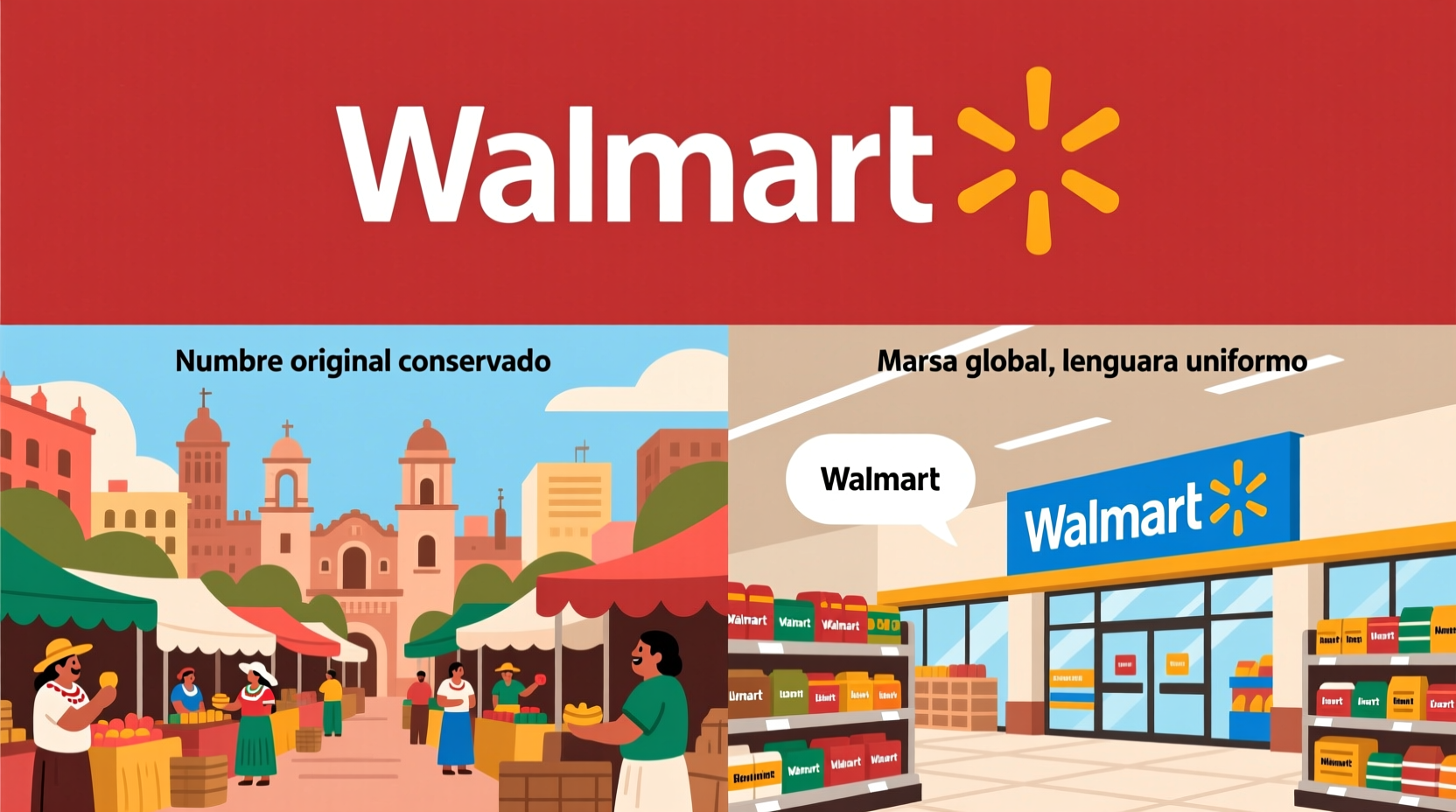
Global brands like Walmart, Coca-Cola, and Nike rarely change their names when entering non-English markets. The reason is simple: brand equity. A company’s name becomes more than just a label—it evolves into a symbol of trust, quality, and familiarity. Changing that name risks diluting recognition and confusing consumers.
Walmart has spent decades building a globally recognizable identity. From its signature blue square logo to the unmistakable “Save Money. Live Better.” slogan, every element is designed for instant recall. Translating “Walmart” into Spanish would not only disrupt this recognition but could also imply a different company altogether.
“Brand names are assets. Once they achieve global awareness, altering them—even linguistically—can cost more in lost trust than it gains in local relevance.” — Dr. Elena Mendez, International Marketing Professor at Universidad de las Américas Puebla
Linguistic Practicality and Consumer Behavior
In everyday usage, many Spanish speakers refer to international brands using their original names. Think of “Facebook,” “YouTube,” or “Netflix”—none of which are commonly translated, even in formal Spanish media. This phenomenon, known as lexical borrowing, occurs when a language adopts foreign words due to cultural influence or lack of equivalent terms.
Walmart benefits from this trend. When Spanish-speaking shoppers search online, they’re more likely to type “Walmart cerca de mí” than “tienda de descuentos americana.” Search engine data supports this: Google Trends shows consistent high-volume searches for “Walmart” in Spanish-speaking regions, including Mexico, Colombia, and Spain.
This behavior stems from practicality. Consumers know exactly what “Walmart” means—a large retail store with low prices and wide selection. Creating a new Spanish equivalent wouldn’t add clarity; it might actually slow down communication.
How Search Engines Reinforce the Original Name
Search algorithms prioritize user intent. If millions of Spanish speakers consistently type “Walmart” into Google, Bing, or Amazon, the system learns that “Walmart” is the dominant query—even in Spanish contexts. As a result, search engines optimize results around the original name, reinforcing its use through autocomplete suggestions, localized ads, and voice assistant responses.
This feedback loop ensures that both digital platforms and consumers continue using “Walmart” regardless of language settings.
Walmart’s Localization Strategy: Name Stays, Experience Adapts
While the name remains unchanged, Walmart heavily adapts its in-store experience for Spanish-speaking markets. In the U.S., many Walmart locations offer bilingual signage, Spanish-speaking staff, and culturally relevant product selections—from fresh tortillas to regional spices. In Latin America, subsidiaries like Walmart de México y Centroamérica operate with localized marketing while retaining the core brand name.
This hybrid approach allows Walmart to maintain global cohesion while respecting local preferences. The name acts as a universal anchor; everything else flexes to meet regional needs.
| Element | Global Standard | Local Adaptation |
|---|---|---|
| Name & Logo | Walmart (English) | No translation used |
| In-Store Signage | Primarily English | Bilingual labels in Hispanic-majority areas |
| Product Offerings | Standard inventory | Expanded Latin American food aisles |
| Advertising | English campaigns | Spanish-language TV and radio ads |
Historical Context: Why Walmart Never Changed Its Name
Founded in 1962 by Sam Walton in Rogers, Arkansas, the company was always named “Wal-Mart” (later stylized as “Walmart”). As it expanded internationally in the 1990s, particularly into Mexico through a joint venture with Cifra (now part of Wal-Mart de México), leadership made a strategic decision: keep the name consistent.
Unlike some companies that rebrand entirely abroad (e.g., “Target” becoming “Shōei” in early Japanese market tests, though never launched), Walmart saw value in leveraging its growing reputation. By the time it entered Mexico in 1991, the Walmart name already carried weight in border communities and among bilingual shoppers.
Over time, “Walmart” became naturalized in Spanish speech patterns. It’s pronounced “Val-mart” by many Spanish speakers, following phonetic rules of the language, yet spelled identically. This blend of pronunciation flexibility with spelling consistency further strengthens cross-linguistic usability.
Mini Case Study: Walmart in Monterrey, Mexico
In 2005, Walmart de México opened a supercenter in Monterrey, one of the country’s largest industrial cities. Initial marketing materials included taglines like “Tu Walmart, Tu Precio Bajo” (“Your Walmart, Your Low Price”)—a direct adaptation of the U.S. slogan. While all advertising was in Spanish, the store name remained “Walmart.”
Within six months, customer surveys showed that 94% of respondents referred to the store as “Walmart,” with only 3% using descriptive phrases like “la tienda grande de precios bajos.” Online searches from the region mirrored this trend. The success of the campaign reinforced the company’s decision to keep the name unchanged.
Common Misconceptions About Brand Translation
Some assume that translating a brand name increases accessibility. However, research shows the opposite: invented or translated names often require additional education and marketing spend to gain traction. For example, when KFC entered China, it briefly used “Kentucky Fried Chicken” in Chinese characters, but later shifted to the phonetic approximation “Ken De Ji” because it was easier to remember and brand.
Similarly, Walmart avoids confusion by not introducing a Spanish alternative. There’s no risk of misinterpretation, trademark conflict, or brand fragmentation. Whether you're in Dallas, Tijuana, or Madrid, “Walmart” means the same thing: affordable goods under one roof.
- Translation doesn’t always equal clarity.
- Familiarity reduces cognitive load for shoppers.
- Phonetic adaptation allows non-English speakers to use the name comfortably.
FAQ
Does Walmart have a Spanish name?
No, Walmart does not have an official Spanish name. It operates under the same name worldwide, though localized subsidiaries may include regional descriptors (e.g., “Walmart de México”).
Why don’t companies translate big brand names?
Translating established brand names can weaken recognition, increase marketing costs, and create legal complications. Most global brands opt for consistency to preserve equity and streamline operations.
Is “Walmart” grammatically correct in Spanish?
Yes. While not a traditional Spanish word, “Walmart” functions as a proper noun and follows standard rules for loanwords. It’s widely accepted in speech and writing, much like “iPhone” or “Google.”
Checklist: Keys to Successful Global Brand Naming
- Ensure the name is easy to pronounce across languages.
- Avoid meanings that could be offensive or confusing in other cultures.
- Test the name with native speakers before launch.
- Maintain visual and verbal consistency across markets.
- Leverage existing brand equity instead of reinventing the name.
- Adapt marketing content—not the core brand—to local audiences.
- Monitor search trends to understand how consumers reference your brand.
Conclusion
The persistence of “Walmart” in Spanish-language searches is not an oversight—it’s a calculated reflection of modern branding intelligence. Language evolves, but strong brand identities endure through consistency. Walmart understands that its name has transcended English to become a global symbol of affordability and convenience. Rather than fragmenting its identity with translations, it embraces linguistic diversity while keeping its name intact.




 浙公网安备
33010002000092号
浙公网安备
33010002000092号 浙B2-20120091-4
Comments
No comments yet. Why don't you start the discussion?