
Kevin De Bruyne has long been the heartbeat of Manchester City’s midfield—a player whose vision, passing range, and ability to dictate tempo transformed Pep Guardiola’s system into one of the most dominant forces in world football. But in recent seasons, fans have noticed a growing trend: De Bruyne is starting fewer games, often coming off the bench or being rested entirely. This shift has sparked widespread debate among supporters and pundits alike. What’s behind this change? Is it injury, age, tactical evolution, or something deeper? The answer lies in a combination of physical, strategic, and transitional factors that reflect both the realities of elite football and the careful management of a legendary career.
Injury History and Physical Load Management
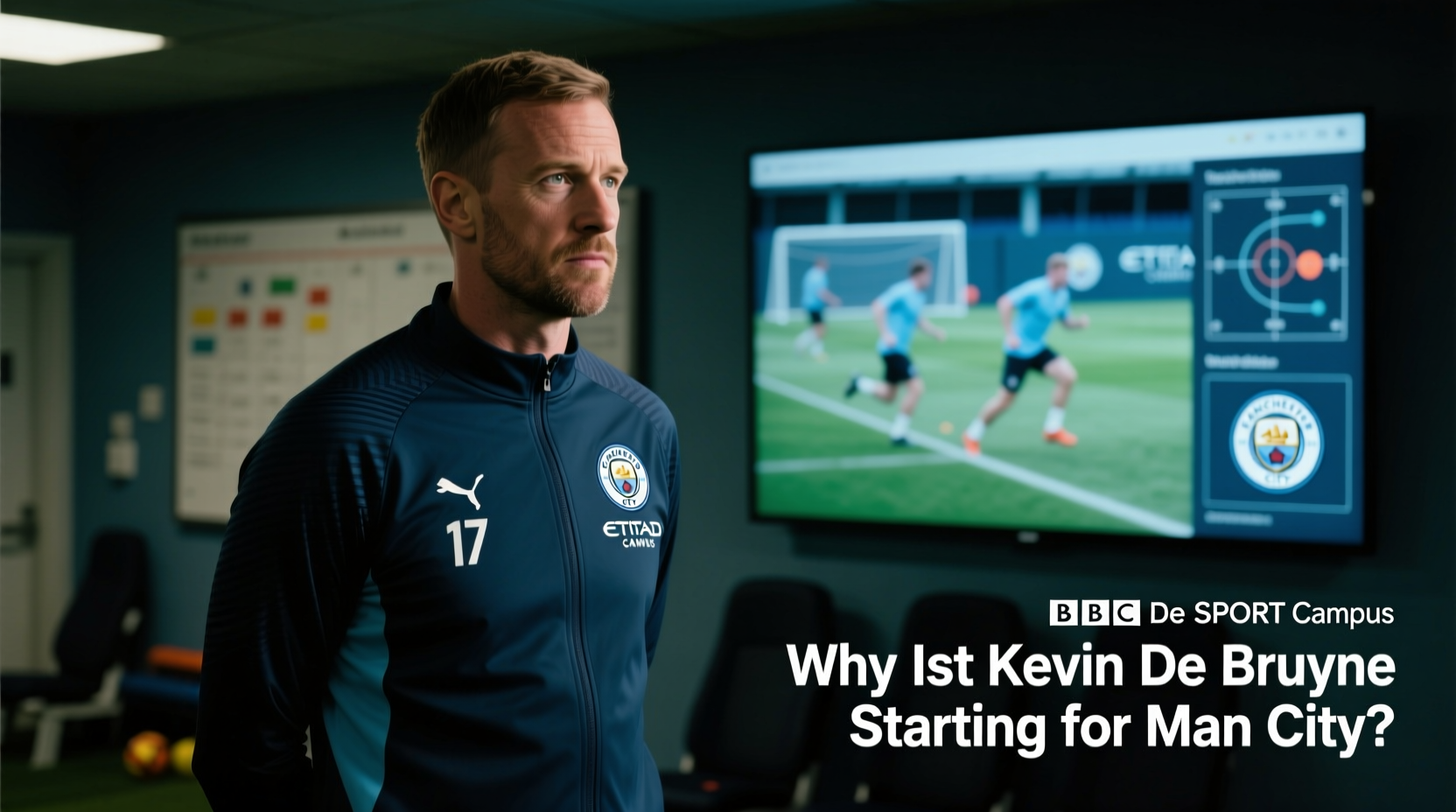
One of the most immediate reasons for De Bruyne’s reduced starting appearances is his injury history. Since 2020, he has faced recurring muscle issues—hamstring tears, calf strains, and fatigue-related setbacks—that have disrupted his consistency. In the 2022/23 season alone, he missed over two months due to a hamstring injury sustained during a Champions League clash with RB Leipzig.
At 32 years old (as of 2024), De Bruyne is no longer in the prime window where players can recover quickly from intense match loads. Guardiola, known for his meticulous approach to player fitness, has adopted a “load management” strategy similar to those seen in NBA basketball. Instead of risking another major injury, the manager prioritizes freshness for crucial fixtures—especially in knockout competitions like the Champions League.
Tactical Evolution Under Guardiola
Manchester City’s playing style has evolved significantly since De Bruyne’s peak in 2017–2021. While his deep-lying playmaker role was once central, Guardiola has increasingly favored a more fluid, positional-based system that emphasizes verticality, pressing triggers, and rapid transitions.
Younger midfielders like Phil Foden, Mateo Kovačić, and Rodri now occupy roles that blend defensive responsibility with progressive ball-carrying. These players may lack De Bruyne’s assist numbers, but they offer greater versatility and stamina across multiple fronts. Foden, in particular, thrives in tight spaces and adapts seamlessly between attacking midfield and wide positions.
De Bruyne still brings unmatched creativity, especially from set-pieces and through-line passes, but his defensive contribution has declined. As opponents target older midfielders in transition phases, Guardiola must balance brilliance with stability—often opting for younger legs when facing high-pressing teams.
Squad Depth and Competitive Rotation
Manchester City’s squad depth allows for consistent rotation without sacrificing performance. With multiple world-class options across midfield and attack, Guardiola can afford to rest key players strategically. This luxury wasn’t always available; in earlier seasons, De Bruyne played through minor knocks simply because there was no adequate replacement.
Today, alternatives exist:
- Rodri – Anchors the midfield and enables buildup stability.
- Foden – Offers dribbling, pressing, and goal threat.
- Bernardo Silva – Provides relentless work rate and tactical flexibility.
- Phil Foden or Jack Grealish – Can drift inside to create overloads.
This depth means De Bruyne is no longer indispensable in every match—particularly in domestic fixtures against mid-table opposition. Guardiola uses these games to rotate, preserve energy, and integrate younger talent.
Long-Term Transition Planning
There’s also a broader strategic context: Manchester City is preparing for life after De Bruyne. While he remains under contract until 2025, the club is clearly investing in future midfielders. The emergence of academy talents like Cole Palmer (before his Chelsea move) and the recruitment of versatile playmakers indicate a phased transition.
Guardiola has stated publicly that managing veteran players involves “thinking two seasons ahead.” He understands that prolonging De Bruyne’s career requires smart scheduling—not just for now, but for the next 18 months. By limiting his starts in less critical games, the manager ensures he’ll be fit and impactful during title run-ins and European eliminations.
“We cannot expect Kevin to play 50 games a season at this stage. His value is too high to risk. We manage him like a precious instrument—used at the right time, in the right place.” — Pep Guardiola, press conference, March 2024
Performance Metrics: Is He Still Effective?
Data shows that when De Bruyne does play, his influence remains significant. In the 2023/24 season:
- Averaged 2.8 key passes per game (top 3 in Premier League).
- Contributed 0.35 expected assists (xAG) per 90 minutes.
- Won back possession 2.1 times per game, showing improved defensive awareness.
However, his average minutes per appearance dropped to 68—indicating a shift toward impact-substitute roles. This aligns with how other aging stars like Thiago Alcântara at Liverpool or Luka Modrić at Real Madrid are now used: not as full-game engines, but as tactical catalysts introduced in the second half.
| Player | Age (2024) | Avg. Minutes per Game (2023/24) | Key Passes per 90 | Role Shift |
|---|---|---|---|---|
| Kevin De Bruyne | 32 | 68 | 2.8 | Impact sub / rotated starter |
| Phil Foden | 23 | 83 | 2.1 | Central starter |
| Rodri | 27 | 87 | 1.9 | Anchoring presence |
Mini Case Study: The Real Madrid Clash, April 2024
A telling example came during Manchester City’s Champions League quarterfinal second leg against Real Madrid. De Bruyne started on the bench despite being fit. City trailed 1-0 from the first leg and needed control and creativity.
Guardiola opted for a compact midfield trio of Rodri, Kovačić, and Bernardo Silva to absorb pressure and maintain shape. Only in the 61st minute, with City leading 1-0 on the night but needing another goal, did he introduce De Bruyne. Within 17 minutes, the Belgian delivered a perfectly weighted pass to set up Erling Haaland’s decisive goal.
This decision exemplifies the new philosophy: De Bruyne is no longer the automatic starter, but a high-leverage weapon deployed when the game state demands precision and composure. His impact was pivotal—but carefully timed.
Actionable Insights for Fans and Analysts
Understanding why De Bruyne isn’t starting regularly requires shifting perspective. It’s not a decline in quality, but a recalibration of role. Here’s what fans should consider:
Checklist: Evaluating Veteran Player Usage
- Assess injury history and recovery patterns.
- Compare minutes per game vs. previous seasons.
- Analyze substitution timing—when is the player introduced?
- Review xA (expected assists) and key passes per 90 when active.
- Consider opponent strength—was the player rested for a tough fixture?
- Look at manager statements about load management or transition plans.
FAQ
Is Kevin De Bruyne injured right now?
As of mid-2024, De Bruyne is not carrying a major injury. Most absences from starting lineups are due to tactical rest or minor fatigue management rather than active rehab.
Will he leave Manchester City soon?
There has been speculation, including interest from Saudi Pro League clubs, but De Bruyne has expressed emotional ties to City. A contract extension beyond 2025 is possible if both parties agree on reduced playing time.
Can he still start big games?
Absolutely. When fully fit, De Bruyne remains a trusted option for Champions League semifinals, cup finals, or must-win league clashes. His experience and composure under pressure are irreplaceable.
Conclusion: A Legacy in Transition
Kevin De Bruyne isn’t starting every game for Manchester City because the nature of elite football—and his own career arc—has changed. It’s not failure, nor fading relevance. It’s intelligent adaptation. Guardiola is balancing short-term success with long-term sustainability, using one of the greatest midfielders of his generation in a more refined, calculated way.
For fans, this means redefining greatness. It’s no longer just about starting XI status, but about influence, timing, and legacy. De Bruyne’s brilliance hasn’t dimmed—he’s simply entering a new chapter. And if managed wisely, he could still deliver moments that define Manchester City’s future, even as his role evolves.




 浙公网安备
33010002000092号
浙公网安备
33010002000092号 浙B2-20120091-4
Comments
No comments yet. Why don't you start the discussion?