
Cooking a perfect steak involves more than just heat control and seasoning. One of the most overlooked yet critical steps occurs after the steak leaves the pan or grill: letting it rest. Many home cooks skip this phase, eager to cut into their seared masterpiece. But doing so can undo all the careful work that came before. Understanding why steak needs to rest—and the science behind it—can transform your results from good to exceptional. This isn’t culinary folklore; it’s physiology, thermodynamics, and food chemistry working together.
The Science Behind Resting Steak
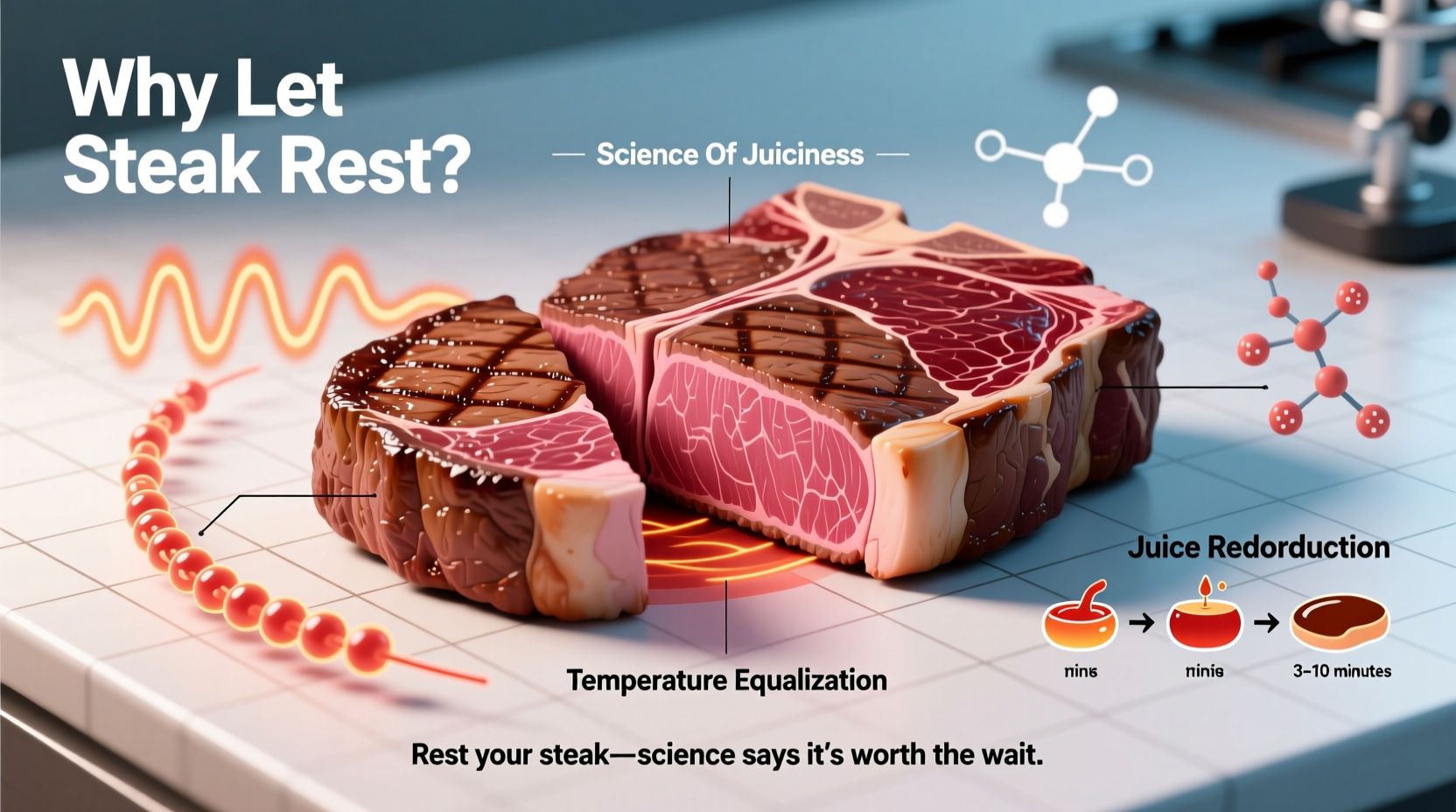
When steak is exposed to high heat, its muscle fibers contract and squeeze out moisture. The proteins denature, coagulate, and push internal juices toward the center. At peak temperature, especially in thicker cuts like ribeye or strip loin, the internal pressure from steam and liquid buildup is at its highest. If you slice immediately, that accumulated juice floods out onto the cutting board instead of staying within the meat.
Resting allows the internal temperature to stabilize and the muscle fibers to relax. As the steak cools slightly—from carryover cooking and natural dissipation—the proteins reabsorb some of the expelled moisture. This redistribution ensures that each bite remains succulent, not dry. Studies using thermal imaging and moisture retention analysis confirm that rested steaks retain up to 30% more internal fluid than those cut immediately after cooking.
“Resting isn’t about cooling down—it’s about equilibrium. The steak continues to cook internally during the first few minutes off the heat, and that time is crucial for moisture retention.” — Dr. Nathan Myhrvold, former Chief Technology Officer at Microsoft and co-author of *Modernist Cuisine*
How Long Should You Rest Your Steak?
The ideal resting time depends on the thickness and cut of the steak. A thin skirt steak may only need 5 minutes, while a 2-inch thick tomahawk requires closer to 10–15 minutes. During this period, loosely tent the steak with foil to retain warmth without trapping steam, which could soften the crust.
Carryover cooking raises the internal temperature by 5–10°F (3–5°C) during rest, depending on mass and initial heat. This means removing your steak from the heat just before it reaches your target doneness is essential. For medium-rare (130–135°F), pull it at around 125°F and let carryover and resting do the rest.
Step-by-Step Guide to Properly Resting Steak
- Cook the steak evenly using a reliable method—sear on high heat, then finish in the oven if needed for thicker cuts.
- Remove at the right temperature: Pull the steak 5°F below your desired final doneness to account for carryover cooking.
- Transfer to a warm plate or cutting board, ideally pre-warmed to prevent rapid cooling.
- Tent loosely with aluminum foil. Do not wrap tightly—this traps moisture and softens the crust.
- Wait patiently: Allow 5 minutes for thinner cuts (under 1 inch), 10–15 minutes for thicker ones.
- Slice against the grain only after resting. Cutting too soon negates the benefits.
Common Myths About Resting Meat Debunked
- Myth: Resting makes the steak cold. In reality, a properly tented steak stays warm enough for serving. Thermal mass keeps it above 120°F even after 15 minutes.
- Myth: Only large cuts need resting. Even a ½-inch burger benefits. Juices still migrate under heat stress.
- Myth: You’re “losing time” by resting. The opposite—resting gains quality. Skipping it sacrifices texture and flavor balance.
| Steak Thickness | Recommended Rest Time | Pull Temp (for Medium-Rare) | Expected Final Temp |
|---|---|---|---|
| ¾ inch (hamburger, flat iron) | 5 minutes | 125°F | 130–132°F |
| 1–1.5 inches (strip, filet) | 8–10 minutes | 123–125°F | 130–135°F |
| 2+ inches (tomahawk, bone-in ribeye) | 12–15 minutes | 120–123°F | 130–138°F |
Real Example: The Restaurant vs. Home Cook Difference
Consider two chefs preparing identical 1.5-inch ribeyes. Chef A, working in a high-end steakhouse, pulls the steak at 125°F and places it on a heated rail under a loose foil tent for 10 minutes. Chef B, at home, pulls at 135°F and slices immediately to serve hot.
At the table, Chef A’s steak shows minimal juice loss when cut. Each bite is tender, rosy, and moist. Chef B’s steak bleeds significantly upon slicing, leaving a pool on the plate. Though initially hotter, the meat tastes drier and less cohesive. The difference? Not equipment or seasoning—but the discipline of proper resting.
Pro Tips for Maximizing Juiciness
- Use a wire rack for resting instead of a flat surface. This prevents the bottom from steaming and helps maintain crust integrity.
- Avoid piercing the steak with tongs or forks while cooking or resting. Piercing creates channels for juice escape.
- Season early. Salting 40–60 minutes before cooking helps the meat retain moisture through osmotic regulation.
Frequently Asked Questions
Can I rest steak in the oven on “warm”?
Yes, but only if your oven has a true “warm” setting (170–200°F). Too hot, and you’ll overcook the steak. Better to rest at room temperature with loose foil coverage.
Does resting work the same for other meats?
Absolutely. Roasts, chicken breasts, pork chops, and lamb benefit similarly. Larger roasts (like prime rib) may need 15–30 minutes. The principle—fiber relaxation and juice redistribution—is universal.
What if my steak gets too cold during resting?
If ambient temperatures are low, pre-warm your serving platter or use a heated countertop (like one near the stove). Alternatively, shorten the rest slightly for thinner cuts, but never eliminate it entirely.
Conclusion: Elevate Your Steak Game with One Simple Step
Letting steak rest is not a suggestion—it’s a scientific necessity for optimal texture and flavor. It costs nothing, requires no special tools, and yet dramatically improves eating quality. Whether you're grilling for family or hosting a dinner party, mastering this small pause between plate and palate sets you apart as someone who truly understands great meat.




 浙公网安备
33010002000092号
浙公网安备
33010002000092号 浙B2-20120091-4
Comments
No comments yet. Why don't you start the discussion?