
Lithium has long been a cornerstone in the treatment of bipolar disorder, valued for its mood-stabilizing effects and decades of clinical use. Since its approval in the 1970s, it has helped countless individuals manage extreme mood swings and reduce the risk of suicide. Yet, recent data shows a steady decline in lithium prescriptions across the United States and parts of Europe. While still an effective option for many, both clinicians and patients are increasingly turning to alternative treatments. This shift is not due to a single factor but rather a convergence of safety concerns, side effect profiles, patient preferences, and the emergence of newer pharmacological options.
Rising Safety and Tolerability Concerns
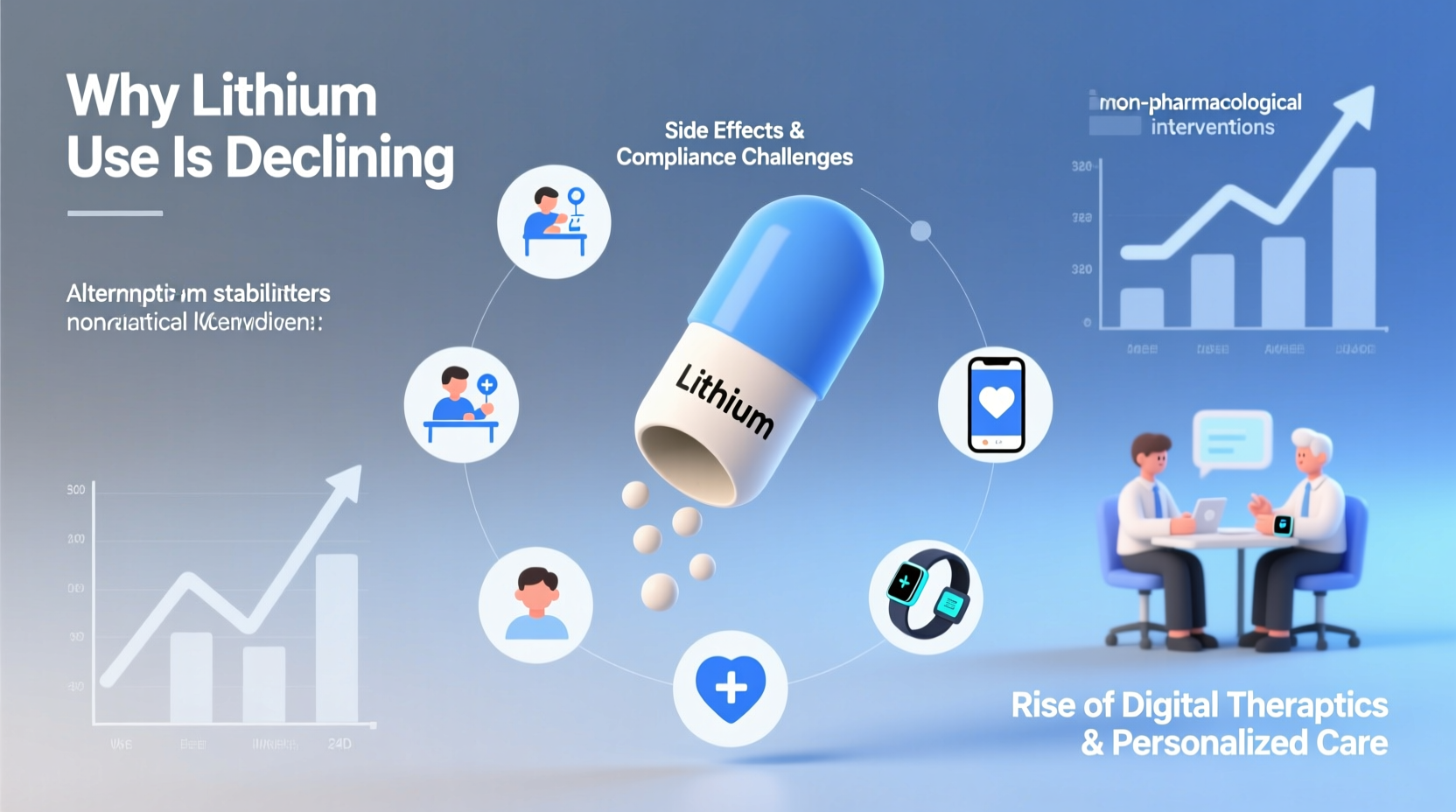
One of the primary reasons behind the decline in lithium use is its narrow therapeutic index—the range between an effective dose and a toxic one. Patients require regular blood monitoring to ensure levels stay within safe limits. Even slight dehydration or changes in kidney function can push levels into the toxic zone, leading to symptoms like tremors, confusion, and in severe cases, seizures or cardiac arrhythmias.
Long-term use of lithium is also associated with significant risks to renal and thyroid function. Studies show that up to 30% of patients on chronic lithium therapy develop some degree of reduced kidney filtration, and hypothyroidism occurs in approximately 15–20% of users. These complications often necessitate additional medications or even discontinuation of lithium altogether.
Availability of Effective Alternatives
The pharmaceutical landscape for mood stabilization has evolved dramatically since lithium’s heyday. Anticonvulsants such as valproate, lamotrigine, and carbamazepine have demonstrated strong efficacy in managing bipolar disorder, particularly in preventing depressive episodes—a domain where lithium has shown more modest results.
Atypical antipsychotics like quetiapine, olanzapine, and aripiprazole are now frequently used as first-line treatments. These medications offer rapid symptom control during acute manic or mixed episodes and are generally easier to manage due to less stringent monitoring requirements. Unlike lithium, they don’t demand weekly blood draws or strict fluid intake management.
“While lithium remains a gold standard for antimanic efficacy, newer agents offer comparable outcomes with fewer lifestyle disruptions.” — Dr. Rachel Nguyen, Clinical Psychiatrist and Mood Disorders Specialist
Patient-Centered Treatment Preferences
Modern psychiatric care emphasizes shared decision-making, where patient values and quality of life play a central role. Many patients report that lithium’s side effects—such as weight gain, cognitive dulling, hair thinning, and persistent thirst—negatively impact their daily functioning and self-image. In contrast, alternatives like lamotrigine are praised for their minimal metabolic impact and better cognitive tolerance.
Additionally, younger patients and those newly diagnosed often express reluctance toward lifelong lithium therapy due to its stigma and perceived burden. The need for routine lab work, dietary restrictions (e.g., limiting salt fluctuations), and fear of organ damage contribute to lower adherence rates and higher discontinuation.
Comparative Overview of Common Mood Stabilizers
| Medication | Monitoring Required | Common Side Effects | Renal Risk | Best For |
|---|---|---|---|---|
| Lithium | Blood levels every 3–6 months | Tremor, thirst, weight gain, hypothyroidism | High (long-term) | Manic prevention, suicide reduction |
| Valproate | Liver & platelet checks | Weight gain, hair loss, PCOS (in women) | Moderate | Rapid cycling, acute mania |
| Lamotrigine | None after titration | Rash (rarely SJS), headache | Low | Depressive episodes, maintenance |
| Quetiapine | Blood sugar & lipids | Sedation, weight gain, metabolic syndrome | Low | Mixed episodes, insomnia |
Case Study: A Shift in Clinical Practice
Consider the case of Marcus, a 28-year-old graphic designer diagnosed with bipolar II disorder. His psychiatrist initially prescribed lithium due to family history of positive response. However, after six months, Marcus reported constant fatigue, difficulty concentrating at work, and a 12-pound weight gain. Blood tests revealed early signs of reduced glomerular filtration rate (GFR).
After discussion, his treatment was transitioned to lamotrigine, titrated slowly over 10 weeks. Within three months, Marcus reported improved energy, stabilized mood, and no cognitive side effects. His kidney markers stabilized, and he expressed greater confidence in maintaining long-term treatment. This scenario reflects a growing trend: when tolerability and functionality are prioritized, alternatives often become preferred—even if slightly less potent in certain domains.
Step-by-Step Guide to Evaluating Lithium Alternatives
For patients and providers considering a shift from lithium, a structured approach ensures safety and continuity of care:
- Assess current symptoms and treatment goals: Is the focus on preventing mania, depression, or both?
- Review side effect burden: Document all physical and cognitive complaints related to lithium.
- Check lab results: Evaluate kidney function (eGFR), thyroid panel (TSH), and lithium levels.
- Explore alternatives based on profile: Choose agent based on phase of illness and comorbidities (e.g., lamotrigine for depression, quetiapine for mixed states).
- Plan a gradual transition: Cross-taper under supervision to avoid destabilization.
- Monitor closely for 3–6 months: Track mood, side effects, and lab values post-switch.
Expert Insight on Long-Term Outcomes
Despite the decline, lithium retains a unique place in psychiatry. It remains the only mood stabilizer with robust evidence for reducing suicide risk in bipolar patients—by as much as 50% in some studies. Experts caution against dismissing it entirely.
“We’re seeing fewer new starts on lithium, but for the right patient—someone stable, compliant, and without renal issues—it’s still unmatched in long-term protection.” — Dr. Alan Torres, Director of Bipolar Research at Columbia University
The decline isn't about obsolescence; it's about precision. As personalized medicine advances, clinicians aim to match treatments to individual biological, psychological, and social profiles—not default to a one-size-fits-all solution.
Frequently Asked Questions
Is lithium becoming obsolete in bipolar treatment?
No. While new options are more commonly prescribed today, lithium remains highly effective for specific patients, especially those with classic euphoric mania and a strong family response. It is far from obsolete but is now one tool among many.
What are the safest alternatives to lithium?
Lamotrigine and lurasidone are considered among the safest in terms of metabolic and organ toxicity. Lamotrigine has low risk for weight gain or diabetes, and neither requires routine blood monitoring once stabilized.
Can I stop lithium on my own if I’m having side effects?
No. Abrupt discontinuation increases the risk of relapse or rebound mania. Always consult your psychiatrist before making changes. Tapering must be done gradually under medical supervision.
Conclusion
The decline in lithium prescriptions reflects progress—not failure. It signals a maturing field where patient well-being, functional outcomes, and individualized care take precedence over tradition. While lithium saved lives and set the standard for mood stabilization, modern psychiatry offers diverse pathways to stability with fewer burdens. The goal is no longer just symptom control, but sustainable wellness without compromising quality of life.




 浙公网安备
33010002000092号
浙公网安备
33010002000092号 浙B2-20120091-4
Comments
No comments yet. Why don't you start the discussion?