
Wearing a face mask has become a routine part of daily life for many people, whether for health, safety, or professional reasons. But one persistent annoyance—especially for eyeglass wearers—is the constant fogging of lenses. Every breath you take can turn your glasses into a steamed-up barrier, obscuring vision and disrupting focus. While many reach for medical tape to seal the top of their mask, not everyone wants to deal with adhesive residue, skin irritation, or the hassle of reapplying throughout the day.
The good news: there are multiple effective, tape-free strategies to prevent fogging. These methods rely on redirecting airflow, improving mask fit, and using simple household items—all without sticking anything to your face. Understanding the science behind fogging and applying practical adjustments can make a dramatic difference in comfort and clarity.
Why Glasses Fog Under Masks (And How to Stop It)
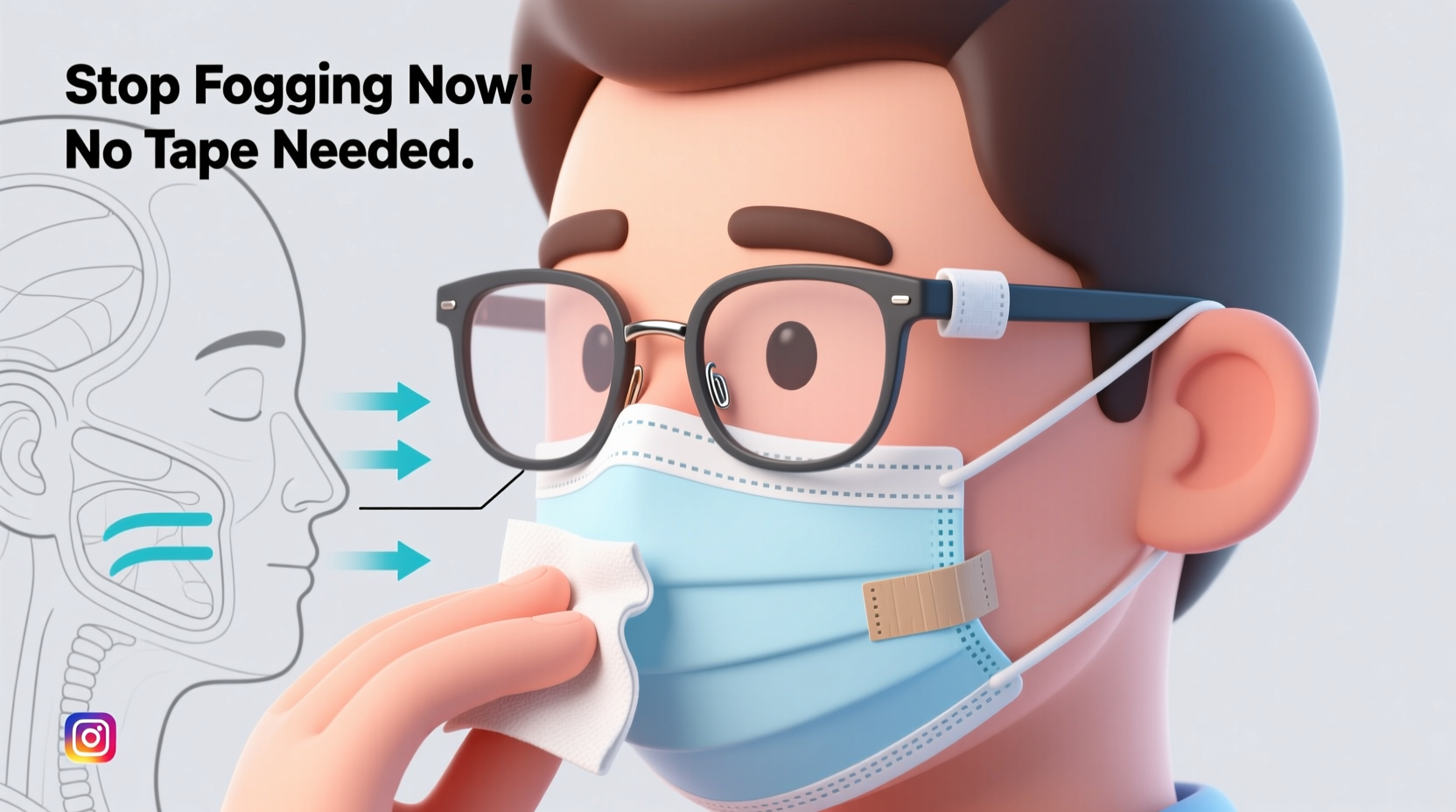
Fogging occurs when warm, moist air from your breath escapes upward from the top of your mask and hits the cooler surface of your lenses. This temperature difference causes condensation—tiny water droplets that form a foggy film. The issue is more pronounced in colder environments but can happen year-round, especially during physical activity or prolonged mask use.
To stop fogging, you don’t need to eliminate moisture—you need to control where it goes. The goal is to ensure exhaled air exits through the front or sides of the mask, not upward toward your eyes. This means focusing on three key areas: mask fit, airflow redirection, and lens treatment.
“Proper mask fit is the single most important factor in preventing glasses fogging. If air isn’t escaping at the bridge of the nose, it won’t fog your lenses.” — Dr. Lena Patel, Respiratory Health Specialist
Step-by-Step Guide to a Fog-Free Experience
Follow this five-step process to minimize or eliminate fogging without tape:
- Choose the Right Mask Type
Select masks with a built-in nose wire or moldable strip. These allow you to shape the top edge snugly around the contours of your nose and cheekbones, sealing off the upward escape route for breath. - Adjust the Fit Over the Nose Bridge
Before putting on your glasses, position the mask securely over your nose. Press the metal strip firmly along the bridge using both hands. The seal should feel tight but comfortable, with no gaps visible when you exhale. - Wear the Mask Above the Glasses Frame
This counterintuitive trick works: place the top edge of the mask over the arms (temples) of your glasses. This creates a downward pressure that helps close the gap between the mask and face. It also uses the frame as a light clamp to keep the mask sealed. - Use the “Double Mask” Method (Optional)
For extra security, wear a disposable surgical mask underneath a cloth mask. The inner mask acts as a moisture barrier, while the outer mask improves fit and filtration. Just ensure both masks have nose wires and are adjusted properly. - Test the Seal with a Deep Breath
After adjusting everything, take a deep breath in and out. If you feel air pushing against your eyes or forehead, readjust the nose wire. A proper seal will direct airflow downward, toward the chin.
Effective Household Hacks That Actually Work
You don’t need specialized products to fight fog. Many common household items can create an anti-fog coating on lenses. These work by forming a thin surfactant layer that prevents water droplets from clustering.
1. Dish Soap Method
Mix a drop of mild dish soap with water. Dip a clean cloth or fingertip, gently rub onto both sides of your lenses, then let them air dry—do not wipe. The residual soap leaves a micro-thin film that disrupts condensation. Reapply every few hours if needed.
2. Shaving Cream Trick
Apply a small amount of non-gel shaving cream to each lens, spread evenly, wait 30 seconds, then buff off with a microfiber cloth. It’s quick, inexpensive, and effective for several hours.
3. Baby Shampoo (Gentler Alternative)
Because baby shampoo is formulated to be non-irritating, it’s ideal for sensitive lenses or frames. Use the same application method as dish soap. It’s less likely to damage lens coatings than harsher cleaners.
Do’s and Don’ts: What Helps (And What Hurts)
| Do | Don’t |
|---|---|
| Use masks with adjustable nose wires | Use loose-fitting masks without structure |
| Wash and dry reusable masks after each use | Reuse damp or soiled masks |
| Apply anti-fog treatments before wearing | Rub lenses with clothing or paper towels |
| Position glasses over the mask’s upper edge | Adjust glasses frequently while wearing a mask |
| Carry a microfiber cloth for touch-ups | Use alcohol-based wipes on coated lenses |
Real-World Example: Nurse Sarah’s Shift Solution
Sarah, an emergency room nurse in Chicago, wears her glasses 12-hour shifts. Early in the pandemic, she struggled with constant fogging that made charting and patient assessments difficult. She tried tape, but it irritated her sensitive skin and left residue on her frames.
She experimented with different techniques and found success using a three-part system: a surgical mask underneath a cotton mask with a strong nose wire, combined with a weekly application of diluted Dawn dish soap on her lenses. She also started wearing her glasses slightly lower on her nose, allowing the mask to sit snugly above the frame arms.
“It took two days to get the fit right,” she says, “but now I go entire shifts without wiping my lenses. The soap trick lasts about four hours, so I reapply during lunch. No tape, no irritation, just clear vision.”
Checklist: Fog-Free Glasses in 5 Minutes
- ✅ Choose a mask with a flexible nose wire
- ✅ Mold the nose wire tightly over your nasal bridge
- ✅ Place your glasses over the top edge of the mask
- ✅ Apply a drop of dish soap to lenses, air dry
- ✅ Test the seal by breathing deeply—adjust if air hits your eyes
- ✅ Carry a microfiber cloth for mid-day touch-ups
Frequently Asked Questions
Can I use toothpaste instead of dish soap?
No. Toothpaste is abrasive and designed for enamel, not optical surfaces. It can scratch lenses and degrade special coatings like anti-glare or UV protection. Stick to mild, non-abrasive liquids like dish soap or baby shampoo.
Why do some masks still cause fogging even with a nose wire?
A nose wire alone isn’t enough—it must be properly shaped to your face. Gaps can still form if the mask material doesn’t conform to facial contours. Also, masks made from overly stretchy or thin fabric may not hold the seal. Opt for structured, multi-layered designs with secure ear loops or ties.
Are there permanent anti-fog solutions for glasses?
Yes. Some opticians offer professional anti-fog coatings applied during lens manufacturing. These last longer than DIY methods but may wear off over time with cleaning. They’re ideal for people who wear glasses daily in high-humidity or mask-heavy environments.
Conclusion: Clear Vision Starts With Smart Adjustments
Fogged-up glasses under a mask don’t have to be an unavoidable nuisance. By understanding how condensation forms and applying practical, tape-free fixes, you can maintain clear vision throughout the day. Whether you’re a healthcare worker, teacher, commuter, or just someone who prefers wearing a mask, these strategies empower you to stay comfortable and focused.
The most effective solution combines proper fit, airflow control, and simple lens treatments—no adhesives required. Small changes, like adjusting how you wear your glasses or using a drop of dish soap, can yield big results. Start with one method, refine it to suit your lifestyle, and enjoy fog-free clarity.




 浙公网安备
33010002000092号
浙公网安备
33010002000092号 浙B2-20120091-4
Comments
No comments yet. Why don't you start the discussion?