
In the world of academic research and scholarly publishing, peer review stands as a cornerstone of quality control. It is not merely a procedural step but a vital mechanism that upholds the integrity of knowledge dissemination. Whether you're a researcher submitting your first paper or a reader relying on published studies for informed decisions, understanding why peer review matters is essential. This process helps separate rigorous, evidence-based work from speculation, bias, or error—ensuring that what gets published contributes meaningfully to human understanding.
The Foundation of Academic Integrity
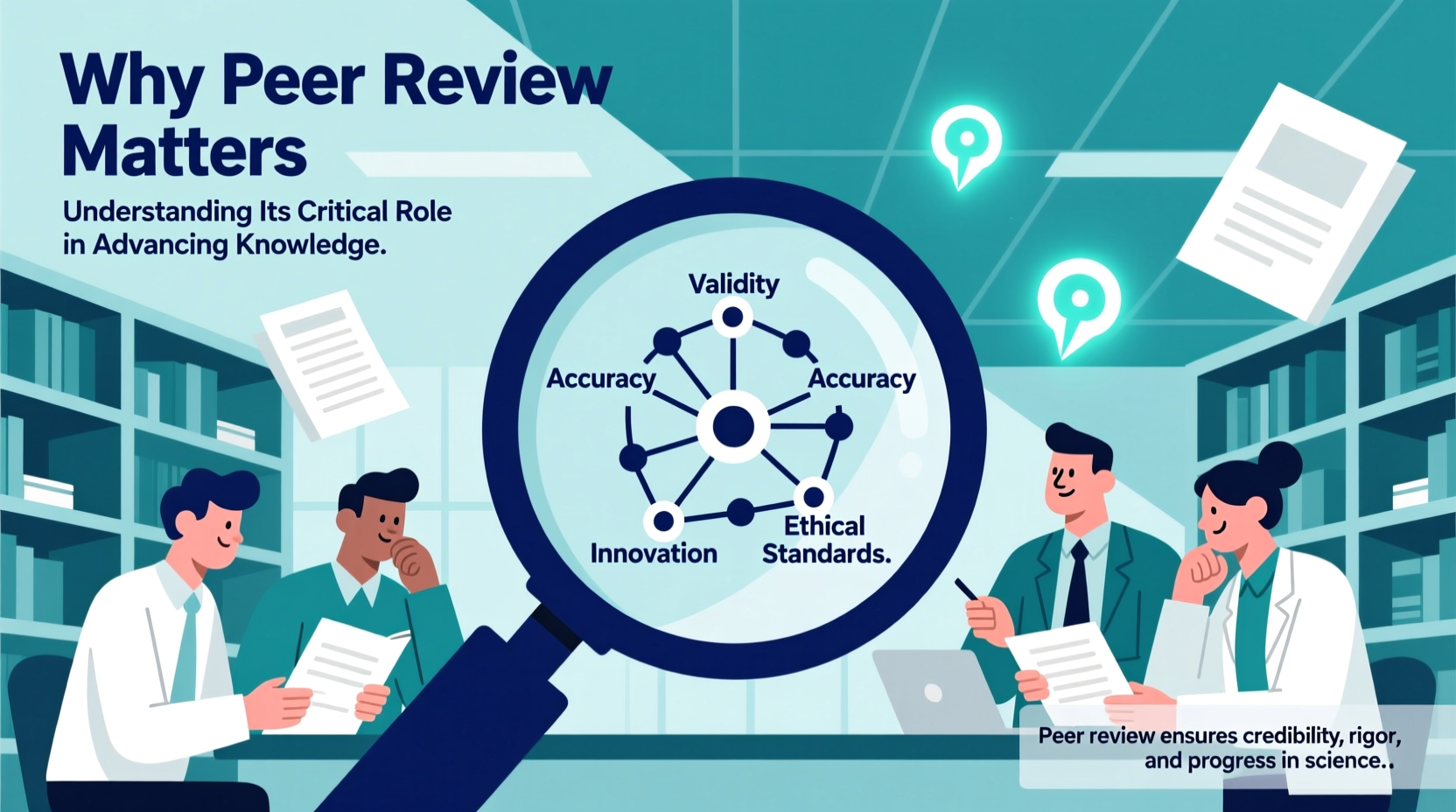
Peer review acts as a gatekeeper in scholarly communication. Before an article appears in a reputable journal, it undergoes evaluation by experts in the same field—peers who can assess the methodology, validity, and significance of the research. This scrutiny ensures that only well-conducted, original, and ethically sound studies are published.
Without peer review, the scientific literature would be vulnerable to misinformation, flawed conclusions, and even fraudulent claims. Consider the case of Andrew Wakefield’s 1998 study linking the MMR vaccine to autism—an article later retracted due to ethical violations and methodological flaws. Although it passed initial editorial checks, broader scientific consensus only emerged after intense peer scrutiny revealed its shortcomings. This example underscores how post-publication peer review, alongside pre-publication evaluation, plays a critical role in correcting the record.
“Peer review is not perfect, but it remains the best system we have for maintaining trust in science.” — Dr. Fiona Godlee, Editor-in-Chief of The BMJ
How Peer Review Enhances Research Quality
One of the most tangible benefits of peer review is the improvement it brings to manuscripts. Reviewers often suggest clarifications, recommend additional experiments, or point out statistical errors. These contributions refine the final publication, making it more robust and accessible.
For authors, constructive criticism during peer review can transform a good paper into a great one. A study published in *Nature* found that over 70% of researchers reported significant improvements in their work following reviewer feedback. This collaborative refinement process strengthens the overall reliability of scientific output.
Types of Peer Review and Their Implications
Not all peer review systems are the same. Journals employ different models, each with distinct advantages and limitations:
| Type | Description | Pros | Cons |
|---|---|---|---|
| Single-blind | Reviewers know the authors’ identities; authors don’t know reviewers. | Encourages honest feedback; common and efficient. | Potential for bias based on institution or reputation. |
| Double-blind | Neither party knows the other’s identity. | Reduces bias; promotes fairness. | Hard to anonymize completely; may delay process. |
| Open peer review | Identities of both authors and reviewers are disclosed. | Increases accountability and transparency. | May discourage candid criticism due to fear of conflict. |
| Post-publication review | Articles are published first, then reviewed publicly. | Speeds up dissemination; allows broad input. | Risk of spreading unverified claims before critique. |
The choice of model affects both the speed and depth of evaluation. While traditional pre-publication review remains dominant, open and post-publication models are gaining traction, especially in fast-moving fields like genomics and artificial intelligence.
A Real Example: The CRISPR Patent Dispute
In 2012, two teams—one led by Jennifer Doudna and Emmanuelle Charpentier, the other by Feng Zhang—published groundbreaking work on CRISPR gene editing. Both claimed priority, sparking a high-stakes patent battle. While the legal dispute unfolded, peer-reviewed publications played a crucial role in validating methods, reproducibility, and innovation timelines.
The scientific community relied heavily on peer-reviewed data to assess technical details, such as delivery mechanisms and off-target effects. Independent labs replicated results, building upon peer-reviewed findings to advance applications in medicine and agriculture. This case illustrates how peer review provides a neutral, evidence-based framework for resolving disputes and guiding progress—even amid fierce competition.
Challenges and Limitations of Peer Review
Despite its strengths, peer review is not infallible. It can be slow, inconsistent, and occasionally biased. Reviewers are volunteers, often overburdened, which can lead to superficial evaluations. Moreover, novel or interdisciplinary research may struggle to find qualified reviewers, increasing the risk of rejection based on unfamiliarity rather than merit.
There have also been cases of peer review manipulation, such as fake reviewer accounts created by authors to approve their own papers. In response, journals have strengthened verification protocols and adopted digital tools to detect anomalies in submission patterns.
Nonetheless, these issues reflect systemic pressures rather than inherent flaws in the concept itself. Rather than abandoning peer review, the academic community continues refining it—through training reviewers, rewarding participation, and experimenting with transparent models.
Step-by-Step: What Happens During Peer Review?
Understanding the lifecycle of a manuscript through peer review demystifies the process:
- Submission: An author submits a manuscript to a journal.
- Editorial Screening: The editor checks for scope, formatting, and basic quality. If unsuitable, it may be rejected immediately (“desk rejected”).
- Reviewer Selection: The editor invites 2–3 independent experts to evaluate the paper.
- Review Period: Reviewers assess the study’s design, data, interpretation, and contribution to the field. They submit reports with recommendations: accept, revise, or reject.
- Author Response: The author revises the manuscript and replies to reviewer comments.
- Decision: The editor makes a final call—accepting, requesting further revisions, or rejecting.
- Publication: Once approved, the article is copyedited, typeset, and published.
This process typically takes several weeks to months, depending on the journal and discipline. Patience and persistence are key for authors navigating this path.
Checklist for Authors Navigating Peer Review
- Choose a journal whose scope aligns with your research.
- Follow submission guidelines precisely (formatting, word count, etc.).
- Suggest potential reviewers—or request exclusion of conflicted ones.
- Prepare a clear cover letter explaining your study’s significance.
- Anticipate critiques and preemptively strengthen weak points.
- Respond professionally and thoroughly to all reviewer comments.
- Revise carefully, tracking changes for transparency.
Frequently Asked Questions
Is peer review mandatory for all scientific publications?
While most reputable academic journals require peer review, some platforms publish preprints (e.g., arXiv, bioRxiv) without formal review. These allow rapid sharing but come with the caveat that findings are preliminary and not yet validated.
Can peer review prevent all errors or fraud?
No system is foolproof. Peer review improves quality but cannot guarantee perfection. Fabricated data or subtle methodological flaws may escape detection. However, it significantly reduces the likelihood of serious errors reaching the public domain.
How can I become a peer reviewer?
Start by publishing in your field and networking with editors. Many journals invite early-career researchers to review. You can also express interest directly via journal websites or through mentors who serve on editorial boards.
Conclusion: Upholding Trust in Knowledge
Peer review is far more than a hurdle to publication—it is a shared responsibility among scientists, editors, and institutions to maintain the rigor and trustworthiness of research. It fosters dialogue, encourages precision, and ultimately advances human knowledge. While evolving challenges demand continuous improvement, the core principle remains unchanged: collective scrutiny leads to better science.




 浙公网安备
33010002000092号
浙公网安备
33010002000092号 浙B2-20120091-4
Comments
No comments yet. Why don't you start the discussion?