
The Gaza Strip often appears in global headlines, frequently associated with conflict and humanitarian crises. One striking feature of its population is the unusually high proportion of children. More than half of Gaza’s residents are under the age of 18—a statistic that raises questions about the underlying causes. Understanding this demographic reality requires examining fertility rates, historical trends, economic conditions, and political constraints. This article explores the structural, cultural, and geopolitical forces that have shaped Gaza’s youthful population.
Demographic Overview: The Youth Bulge in Gaza
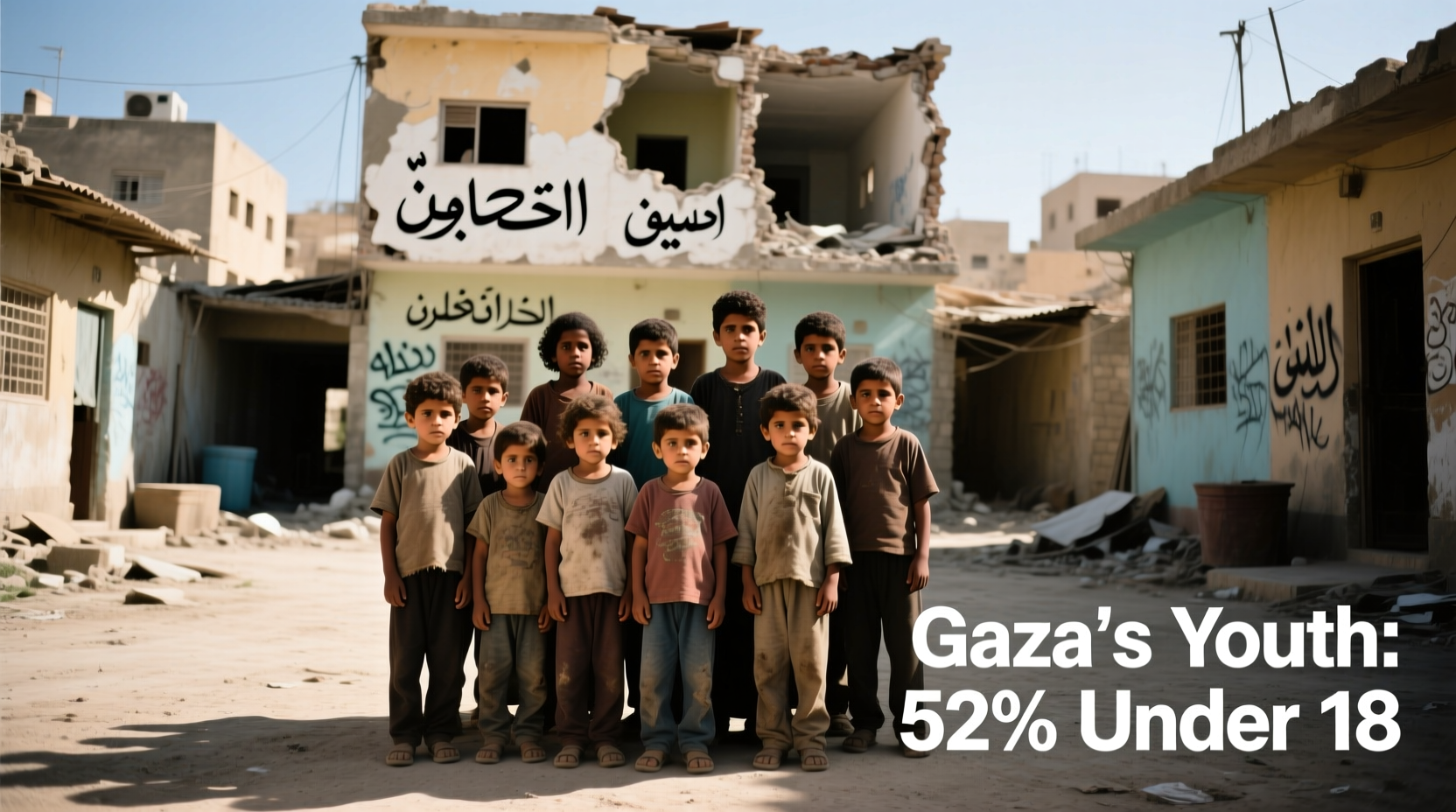
Gaza’s population stands at approximately 2.3 million people, with over 54% under the age of 18 and nearly 30% under the age of 10. This creates one of the youngest population profiles in the world. In contrast, the global median age is around 30, while in Gaza it is just over 18. Such a pronounced youth bulge is not accidental—it results from decades of social, economic, and political dynamics unique to the region.
High fertility rates are a primary driver. The total fertility rate (TFR) in Gaza is estimated at around 3.3 children per woman—significantly higher than the global average of 2.3. While declining from peaks above 6 in the 1990s, this rate remains elevated due to a combination of cultural norms, limited access to family planning, and early marriage patterns.
Historical and Political Context
The roots of Gaza’s demographic structure trace back to the 1948 Arab-Israeli War, when more than 200,000 Palestinians fled or were expelled from their homes and resettled in Gaza. Refugee camps established then evolved into permanent urban neighborhoods, creating dense, multi-generational communities. Today, about 70% of Gaza’s population are registered refugees or their descendants, many living in overcrowded conditions where large families are both a cultural norm and a practical response to instability.
The prolonged Israeli blockade, in place since 2007, has severely restricted movement, trade, and access to resources. This isolation has contributed to economic stagnation, unemployment exceeding 45%, and limited opportunities for youth. Paradoxically, economic hardship does not always correlate with lower fertility. In contexts of uncertainty, having more children can be perceived as a form of social security or resilience.
“High birth rates in Gaza are not just about culture—they’re also about survival in a context of chronic instability.” — Dr. Rania Awad, Demographer at Birzeit University
Socio-Cultural Factors Influencing Family Size
Family is central to Palestinian society, and children are widely valued as a blessing and a source of continuity. Extended kinship networks provide emotional and financial support, especially in times of crisis. In such environments, larger families can strengthen communal bonds and offer protection in fragmented systems.
Religious beliefs also play a role. While Islam does not mandate large families, interpretations emphasizing procreation and resistance through demography are present in some narratives. Additionally, early marriage—particularly among women—contributes to longer reproductive windows. Though child marriage is relatively rare, the average age of first marriage for women in Gaza is still below 22, compared to mid-to-late 20s in many developed nations.
Impact of Conflict and Restricted Mobility
Repeated military conflicts have devastated infrastructure, disrupted healthcare, and limited educational access—all of which influence demographic behavior. However, despite high infant and maternal mortality in past decades, improvements in basic healthcare have led to declining death rates, especially among children. This creates a classic demographic transition pattern: high birth rates combined with falling death rates lead to rapid population growth.
Movement restrictions further amplify demographic pressures. Most Gazans cannot travel freely for work, education, or medical care. This confinement prevents the kind of out-migration that typically moderates population growth in other regions. Without external outlets, population density intensifies. Gaza is now one of the most densely populated territories on Earth—over 7,000 people per square kilometer in some areas.
| Indicator | Gaza | Global Average |
|---|---|---|
| Median Age | 18.3 years | 30.0 years |
| Fertility Rate (TFR) | 3.3 | 2.3 |
| Population Under 18 | 54% | ~40% |
| Unemployment Rate | 45%+ | 6% (global avg) |
| Density (per km²) | ~5,700 | ~60 |
Education and the Role of Youth
Despite challenges, Gaza maintains high enrollment rates in primary education—over 95%. However, secondary and tertiary completion rates drop significantly, particularly for girls. Overcrowded classrooms, frequent school closures due to conflict, and lack of resources strain the system. UNRWA and local institutions run schools serving hundreds of thousands of children, often in double or triple shifts.
Yet education remains a priority for families. Many parents view schooling as a path to dignity and opportunity, even when tangible outcomes are limited. The sheer number of children places immense pressure on educational infrastructure, but it also reflects a societal investment in future generations.
Mini Case Study: The Al-Shati Refugee Camp School System
In the Al-Shati refugee camp in western Gaza, a single UNRWA school serves over 2,500 students across three daily shifts. Teachers report classrooms with 40–50 students, limited textbooks, and frequent disruptions due to power outages or hostilities. Despite this, attendance remains high. One teacher, Amal Hassan, explains: “Parents bring their children even during bombings. They say, ‘If we stop learning, they win.’” This determination underscores how education symbolizes resistance and hope, reinforcing the value placed on raising and nurturing children even amid adversity.
Future Projections and Humanitarian Implications
If current trends continue, Gaza’s population could exceed 3 million by 2030. With unemployment already crippling and infrastructure strained, this growth poses serious challenges for housing, water, sanitation, and healthcare. The World Bank and UN agencies warn of a “humanitarian time bomb” if investment and political solutions do not keep pace.
Moreover, the concentration of youth presents both risk and opportunity. A large young population can drive innovation and renewal—if given access to education, employment, and freedom of movement. But without prospects, it can also fuel frustration and unrest. The demographic reality of Gaza is thus not just a statistical curiosity; it is central to its stability and future.
- Youth make up over 60% of Gaza’s labor force, yet most remain unemployed or underemployed.
- Over 70% of university graduates are unable to find jobs in their field.
- Brain drain is minimal due to travel restrictions, trapping talent within the territory.
Checklist: Key Factors Behind Gaza’s High Child Population
- High fertility rates due to cultural and religious values
- Legacy of displacement and refugee status across generations
- Limited access to contraception and reproductive health services
- Early average age of marriage for women
- Declining child mortality improving survival rates
- Blockade restricting emigration and economic development
- Urban overcrowding amplifying intergenerational household structures
Frequently Asked Questions
Why doesn’t poverty lead to fewer children in Gaza?
In many contexts, economic hardship correlates with lower fertility. However, in Gaza, children are often seen as long-term assets—providers in old age, symbols of national resilience, and bearers of cultural continuity. Social safety nets are weak, making family support essential, which incentivizes larger families.
Is the high birth rate unique to Gaza?
No—similar patterns exist in other conflict-affected or developing regions like Yemen, Somalia, and parts of Sub-Saharan Africa. What makes Gaza distinct is the combination of high fertility, extreme density, and near-total movement restriction, which intensifies demographic pressures.
Could improved access to education reduce fertility rates?
Evidence suggests yes. Globally, each additional year of female education correlates with a decline in fertility. In Gaza, expanding access to secondary and higher education—especially for girls—and providing career pathways could gradually shift family size norms.
Conclusion: Toward a More Nuanced Understanding
The high number of children in Gaza is not merely a biological outcome but a reflection of history, politics, culture, and survival. It emerges from decades of displacement, constrained autonomy, and a society clinging to hope through its youngest members. To address the challenges this demographic poses—overcrowding, unemployment, strained services—requires more than aid. It demands policy changes, lifting of movement restrictions, investment in human capital, and recognition of the dignity and potential inherent in Gaza’s youth.




 浙公网安备
33010002000092号
浙公网安备
33010002000092号 浙B2-20120091-4
Comments
No comments yet. Why don't you start the discussion?