
Buoyancy—the ability to float—is a fundamental principle of physics that plays a crucial role in swimming, survival, and even athletic performance. While it might seem like floating is simply about relaxation or technique, the reality is far more complex. Some individuals effortlessly bob on the surface, while others struggle despite perfect form. The difference lies not in effort alone, but in a combination of biological, physical, and environmental factors. Understanding why some people float better than others reveals insights into human anatomy, fluid dynamics, and practical strategies for improving one’s experience in water.
The Science of Buoyancy: Archimedes’ Principle
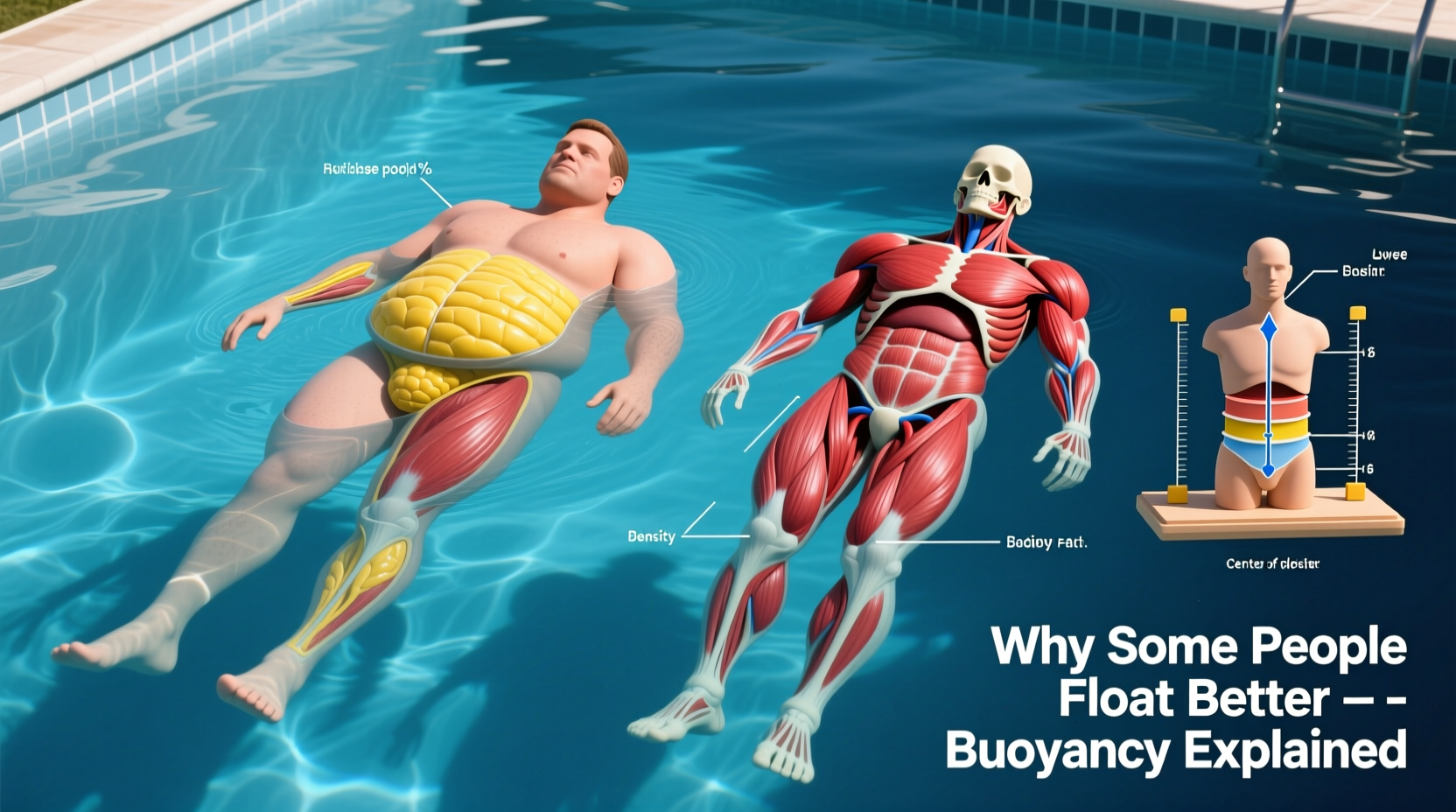
At the heart of floating is Archimedes’ Principle, which states that any object submerged in a fluid experiences an upward force equal to the weight of the fluid it displaces. If this upward buoyant force exceeds or equals the object’s weight, it floats. For humans, this means our bodies must displace enough water to counteract our total mass.
Water has a density of approximately 1 gram per cubic centimeter (g/cm³). Human body density varies between individuals but averages around 0.985 g/cm³—slightly less than water—which is why most people can float with proper technique. However, small differences in body composition can tip the balance between floating and sinking.
Body Composition and Its Impact on Flotation
One of the most significant determinants of buoyancy is body composition—specifically the ratio of fat to muscle and bone. Fat tissue is less dense than water (about 0.9 g/cm³), meaning it contributes positively to flotation. Muscle and bone, on the other hand, are denser than water (muscle ~1.06 g/cm³, bone ~1.8–2.0 g/cm³), making them more likely to pull a person downward.
This explains why individuals with higher body fat percentages often float more easily. A person with 25% body fat will generally have better natural buoyancy than someone with 10%, even if both have similar weights. This isn’t a matter of fitness level—it’s pure physics. Elite swimmers, despite their strength and skill, may find floating at rest challenging due to low body fat and high muscle mass.
“Buoyancy isn't just about skill—it's deeply rooted in physiology. Two people of the same weight can have vastly different floating abilities based on body composition.” — Dr. Lena Torres, Biomechanics Researcher, University of Aquatic Sciences
How Lung Capacity Influences Floating
Lungs act as internal flotation devices. When filled with air, they increase volume without significantly increasing mass, thereby reducing overall body density. A full inhalation can make the difference between staying afloat and slowly sinking.
Individuals with larger lung capacities—such as trained swimmers or singers—can enhance their buoyancy by taking deep breaths before lying back in the water. Conversely, shallow breathing or anxiety-induced hyperventilation can reduce effective lung volume and compromise stability on the surface.
Technique also matters. Lying flat with ears submerged and arms extended helps distribute weight evenly and maximizes displacement. Tucking the chin or lifting the head disrupts alignment and increases leg drag, causing the lower body to sink.
Factors That Affect Human Buoyancy
Beyond body composition and breathing, several other variables influence how well a person floats:
- Water salinity: Saltwater is denser than freshwater, providing greater buoyant force. The Dead Sea, with its extreme salinity, allows nearly effortless floating.
- Body shape and size: Longer limbs and broader torsos displace more water, aiding buoyancy.
- Age and gender: On average, women have higher body fat percentages than men, giving them a natural advantage in floating. Children often float more easily due to proportionally larger lung volumes and lower muscle mass.
- Hydration and digestion: A full stomach or hydrated tissues slightly increase body density, potentially reducing buoyancy.
| Factor | Increases Buoyancy? | Notes |
|---|---|---|
| High body fat percentage | Yes | Fat is less dense than water |
| Large lung capacity | Yes | Air in lungs reduces overall density |
| High muscle mass | No | Muscle is denser than water |
| Saltwater environment | Yes | Higher fluid density enhances lift |
| Proper horizontal position | Yes | Improves water displacement |
Step-by-Step Guide to Improve Your Floating Ability
Natural buoyancy can be enhanced through technique and awareness. Follow these steps to maximize your flotation, regardless of body type:
- Find calm water: Begin in a pool or still body of water where you feel safe and supported.
- Take a deep breath: Inhale fully through your nose to fill your lungs completely. Hold gently—don’t strain.
- Lean back slowly: Extend your arms overhead and recline into the water, keeping your head back and ears submerged.
- Relax your muscles: Tension causes sinking. Let your legs rise naturally rather than forcing them up.
- Distribute weight evenly: Keep your body in a straight line from head to toe. Avoid lifting your head or tucking your knees.
- Exhale slowly: As you prepare to end the float, breathe out gradually to descend smoothly.
- Practice regularly: Like any skill, floating improves with repetition and confidence.
Mini Case Study: Overcoming Sinking Legs
Mark, a 32-year-old triathlete with low body fat and high muscle mass, struggled with vertical sinking during beginner swim lessons. Despite excellent cardiovascular fitness, his legs would drop no matter how hard he tried to relax. His coach assessed his technique and identified two issues: shallow breathing and slight forward head tilt.
After focusing on diaphragmatic breathing and adjusting his head position so that his face was fully submerged with only the back of his head above water, Mark noticed immediate improvement. He began using a foam kickboard under his thighs during practice to simulate proper alignment. Within three weeks, he could float horizontally for over two minutes without assistance—proof that even those with poor natural buoyancy can learn to float effectively.
Checklist: Optimize Your Float in 7 Steps
- ✅ Breathe deeply before entering the floating position
- ✅ Keep your head back and ears underwater
- ✅ Extend arms overhead to balance the torso
- ✅ Relax shoulders, neck, and legs completely
- ✅ Maintain a horizontal body line
- ✅ Practice in saltwater if possible for added support
- ✅ Use gentle sculling motions with hands if needed for stabilization
Frequently Asked Questions
Can everyone learn to float, even if they sink naturally?
Yes. While some people have a physiological disadvantage, nearly everyone can learn to float with proper technique, breath control, and practice. Fear and tension are often bigger obstacles than body composition.
Why do my legs sink when I try to float on my back?
Sinking legs are common, especially among muscular or lean individuals. This happens because the lower body is denser. To correct it, focus on deep breathing, head positioning, and slight arching of the lower back to bring hips toward the surface.
Does water temperature affect buoyancy?
Indirectly, yes. Cold water causes muscles to tense and breathing to become shallow, both of which reduce flotation. Warmer water promotes relaxation, making floating easier.
Conclusion: Mastering the Art and Science of Floating
Floating isn’t magic—it’s mechanics. Whether you’re a seasoned swimmer or learning to be comfortable in water, understanding buoyancy empowers you to work with your body, not against it. Factors like body fat, lung capacity, and posture all play roles, but none are insurmountable. With deliberate practice and informed technique, anyone can improve their ability to stay afloat.




 浙公网安备
33010002000092号
浙公网安备
33010002000092号 浙B2-20120091-4
Comments
No comments yet. Why don't you start the discussion?