
Nature has spent over 3.8 billion years refining systems, structures, and strategies through evolution. From the self-cooling architecture of termite mounds to the adhesive strength of gecko feet, biological solutions are inherently efficient, sustainable, and resilient. Today, engineers, designers, and technologists increasingly turn to these natural models not just for aesthetic inspiration, but as blueprints for solving complex human challenges. This convergence of biology and technology—known as biomimicry—is revolutionizing industries from robotics to renewable energy.
The logic is simple: if a solution has evolved to work in the real world under pressure, it’s likely optimized far beyond what humans could invent from scratch. By studying how organisms adapt, survive, and thrive, innovators are unlocking breakthroughs that are both high-performing and ecologically aligned.
The Principles of Biomimicry in Modern Technology
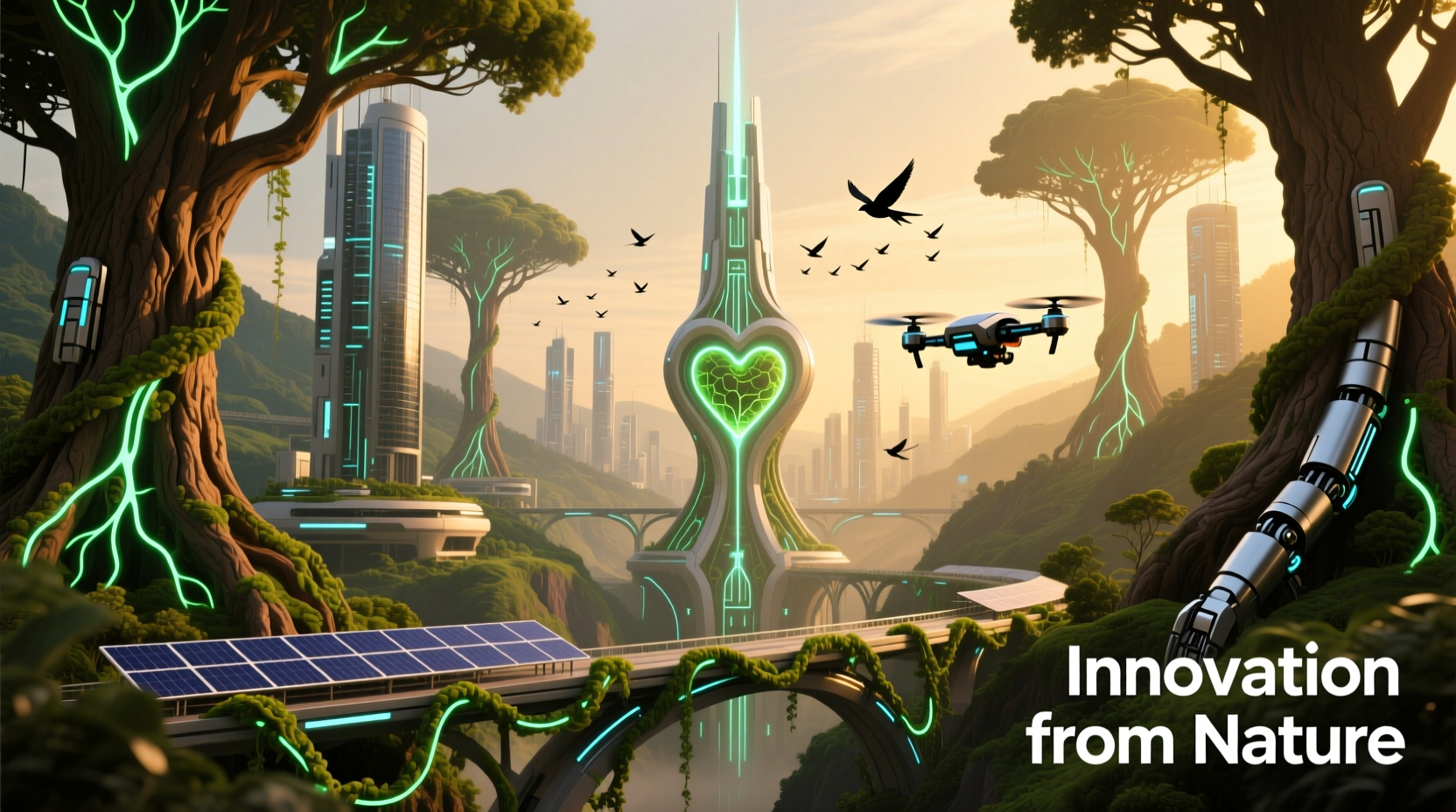
Biomimicry operates on three levels: form, process, and ecosystem. At the level of form, engineers replicate physical structures found in nature—like shark skin or bird wings—to improve aerodynamics or reduce drag. At the process level, scientists mimic biological mechanisms such as photosynthesis or protein folding to develop cleaner manufacturing methods. Finally, at the ecosystem level, entire systems are designed to function like natural ecosystems, where waste from one component becomes input for another.
One foundational principle is efficiency through simplicity. Nature doesn’t use excessive materials or energy. A spider’s web, for example, uses minimal silk yet maintains remarkable tensile strength. Engineers applying this concept have developed lightweight composite materials for aircraft and buildings that maintain durability while reducing resource consumption.
Real-World Examples of Nature-Inspired Innovation
Some of the most impactful technological advances in recent decades originated from observations of the natural world. These are not speculative ideas—they are working solutions deployed across transportation, medicine, and infrastructure.
“Nature is the ultimate engineer. It doesn’t innovate for novelty—it innovates for survival. That kind of reliability is what we need in sustainable technology.” — Dr. Janine Benyus, Co-founder of the Biomimicry Institute
Shinkansen Bullet Train and the Kingfisher Beak
In Japan, engineers faced a problem with the Shinkansen bullet train: as it exited tunnels at high speed, it created loud sonic booms due to sudden air pressure changes. Inspired by the kingfisher bird—which dives from air into water with minimal splash—the design team reshaped the train’s nose to mimic the bird’s long, tapered beak. The result? Smoother airflow, reduced noise, 15% faster speeds, and 15% less energy consumption.
Velcro and Burdock Burrs
The invention of Velcro is perhaps the most famous example of biomimicry. In 1941, Swiss engineer George de Mestral noticed burdock burrs clinging to his dog’s fur. Under a microscope, he saw tiny hooks that latched onto loops in fabric. This observation led directly to the development of hook-and-loop fasteners now used in everything from shoes to space suits.
Lotus Effect and Self-Cleaning Surfaces
The lotus leaf repels water and dirt through microscopically structured wax crystals on its surface. Water droplets roll off, picking up contaminants along the way. This “lotus effect” has inspired self-cleaning paints, windows, and textiles that reduce the need for chemical cleaners and maintenance.
How Nature Guides Sustainable Design
As climate change accelerates, industries are under pressure to reduce emissions, minimize waste, and adopt circular models. Nature excels at all three. Forests, coral reefs, and wetlands operate in closed-loop systems where nothing is wasted. This principle is now being applied to urban planning, manufacturing, and digital infrastructure.
For instance, the Eastgate Centre in Harare, Zimbabwe, uses passive cooling modeled after termite mounds. Termites maintain constant internal temperatures despite extreme external fluctuations by continuously adjusting air vents. The building uses 90% less energy for ventilation than conventional structures of similar size.
| Natural Model | Technological Application | Benefit |
|---|---|---|
| Termite mound ventilation | Eastgate Centre passive cooling | 90% lower energy use |
| Spider silk structure | Biodegradable fibers and synthetic silk | Stronger than steel, fully compostable |
| Moth eye nanostructure | Anti-reflective solar panels | Increased light absorption, higher efficiency |
| Whale fin tubercles | Wind turbine blade design | Improved airflow, reduced noise and stall |
| Beetle back texture | Fog-harvesting water collectors | Potable water generation in arid regions |
Steps to Apply Nature’s Wisdom in Innovation
Integrating biomimicry into technological development isn’t just about copying shapes—it requires a shift in mindset. Here’s a practical approach for researchers, entrepreneurs, and designers:
- Observe and Identify: Spend time studying natural systems relevant to your challenge. Use field guides, scientific papers, or collaborate with biologists.
- Abstract the Principle: Instead of replicating a structure, identify the underlying function—e.g., adhesion, temperature regulation, structural support.
- Translate to Design: Adapt the biological strategy into an engineering context using available materials and technologies.
- Test and Iterate: Validate performance under real-world conditions and refine based on feedback.
- Scale Sustainably: Ensure production methods align with ecological principles—minimal waste, renewable inputs, biodegradability where possible.
“Biomimicry isn’t just about stealing good ideas from nature. It’s about learning to think like nature—holistic, adaptive, and regenerative.” — Dayna Baumeister, Biomimicry Educator
Checklist: Evaluating Your Project for Biomimetic Potential
- ✅ Does my design rely on excessive energy or non-renewable materials?
- ✅ Is there a natural organism or ecosystem that performs a similar function?
- ✅ Can I replace mechanical complexity with elegant, passive solutions?
- ✅ Does my product generate waste that could be repurposed, like nutrients in an ecosystem?
- ✅ Have I consulted biological databases (e.g., AskNature.org) for inspiration?
- ✅ Is my solution adaptable to changing environments, like living systems?
Emerging Frontiers: AI, Robotics, and Neural Networks
Beyond physical design, nature inspires computational innovation. Artificial neural networks, the foundation of modern AI, are modeled after the human brain’s interconnected neurons. These systems learn patterns, recognize images, and make decisions in ways that mirror biological cognition.
Swarm robotics takes cues from ant colonies and bee hives, where simple individual agents follow basic rules to achieve complex group behaviors. Such systems are being tested for search-and-rescue missions, warehouse automation, and environmental monitoring.
Even material science is evolving through bio-inspiration. Researchers are developing “living concrete” infused with bacteria that can self-heal cracks, much like bone regeneration. These materials could drastically extend the lifespan of infrastructure while reducing carbon emissions from repairs and replacements.
FAQ
What is the difference between biomimicry and bio-inspired design?
Biomimicry involves emulating nature’s time-tested patterns and strategies with a focus on sustainability and integration with natural systems. Bio-inspired design may borrow forms or ideas from nature but doesn’t necessarily prioritize ecological harmony or systemic thinking.
Can small companies apply biomimicry without a biology team?
Absolutely. Public resources like AskNature.org offer free access to thousands of biological strategies categorized by function. Online courses and cross-disciplinary collaborations also make biomimicry accessible to startups and independent inventors.
Is biomimicry only useful for environmental applications?
No. While sustainability is a major benefit, biomimicry drives innovation in performance, resilience, and efficiency across sectors—including aerospace, computing, healthcare, and defense.
Conclusion
Nature is not just a reservoir of beauty—it’s a vast library of proven, optimized solutions. As technology confronts global challenges like climate change, resource scarcity, and system fragility, turning to nature isn’t poetic idealism; it’s strategic intelligence. The most advanced innovations of the 21st century will not come from rejecting the natural world, but from listening to it.




 浙公网安备
33010002000092号
浙公网安备
33010002000092号 浙B2-20120091-4
Comments
No comments yet. Why don't you start the discussion?