
In theory, a true random sample is the gold standard of statistical research. It ensures that every member of a population has an equal and independent chance of being selected, minimizing bias and maximizing representativeness. Yet, despite its theoretical superiority, true random sampling is seldom implemented in real-world studies. The gap between ideal methodology and practical execution reveals deep-rooted logistical, financial, and ethical constraints. Understanding why true randomness remains elusive helps researchers, policymakers, and readers critically assess the validity and generalizability of study findings.
The Ideal vs. Reality of Random Sampling
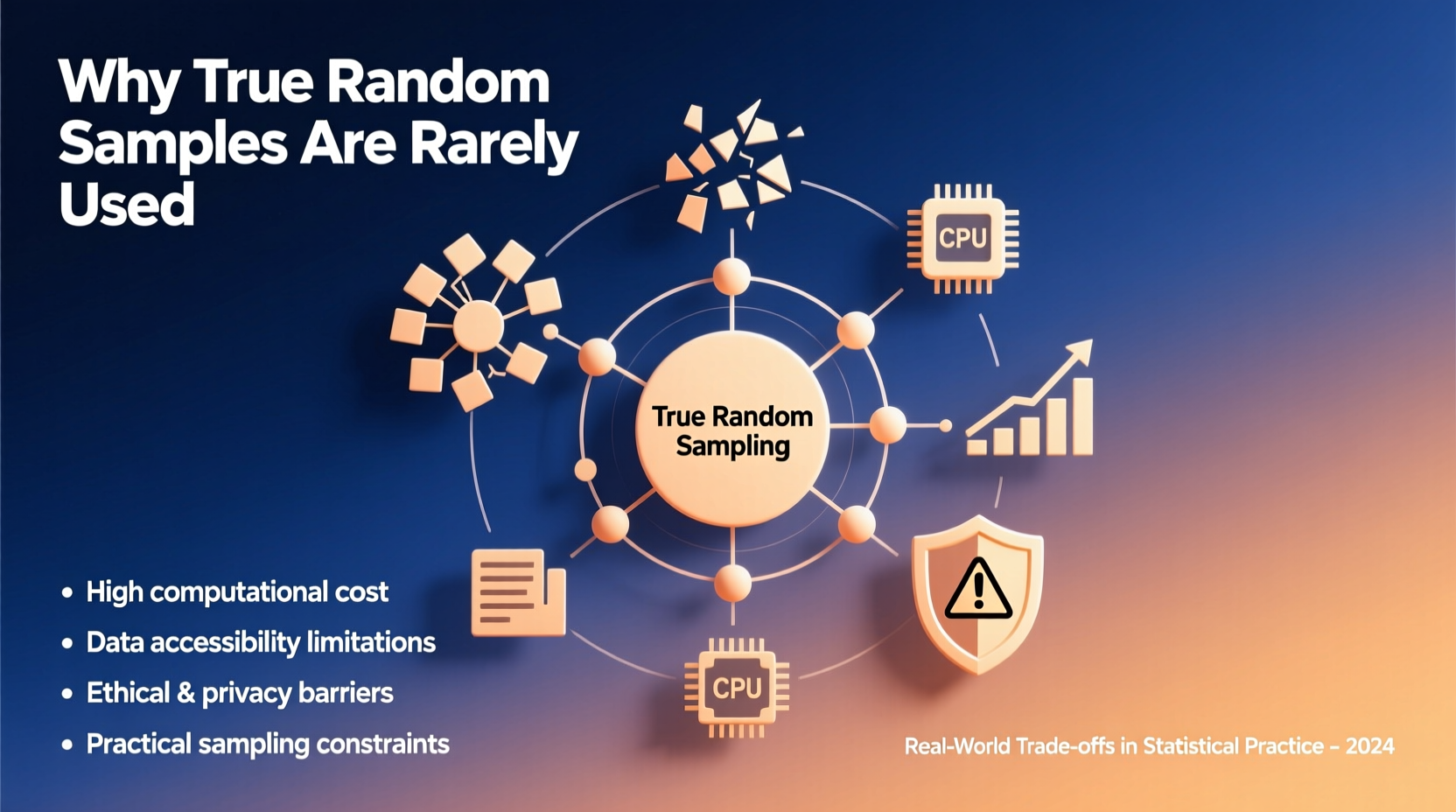
True random sampling relies on two core principles: complete access to the entire population and the ability to randomly select participants without influence or interference. In academic textbooks, this process appears straightforward—assign numbers to all individuals and use a random number generator to pick subjects. However, outside controlled environments, these conditions are nearly impossible to meet.
Consider a national health survey aiming to understand diabetes prevalence. A true random sample would require a comprehensive list of every adult in the country, including homeless individuals, undocumented residents, and those without phone access. Even if such a list existed, contacting and securing participation from each selected individual introduces layers of complexity that compromise randomness.
“Random sampling is a cornerstone of inferential statistics, but its assumptions often break down in practice due to incomplete frames and non-response.” — Dr. Lena Patel, Biostatistician at Johns Hopkins School of Public Health
Major Challenges Preventing True Random Sampling
1. Lack of Complete Population Lists (Sampling Frame Issues)
A fundamental requirement for random sampling is a complete and accurate sampling frame—a list containing every member of the target population. In reality, such lists are rarely available. For example:
- Political polling organizations do not have access to a full registry of eligible voters who will actually vote.
- Market researchers lack comprehensive databases of all consumers within a niche demographic.
- Public health officials may miss marginalized groups like migrants or rural populations in official registries.
When the sampling frame is incomplete or outdated, any selection—even if random—is biased from the outset. This is known as frame error, and it undermines the validity of results regardless of how rigorously randomness was applied.
2. High Costs and Resource Demands
Conducting true random sampling is resource-intensive. It requires extensive planning, personnel, funding, and time. Reaching geographically dispersed individuals, especially in remote areas, involves travel, translation services, and logistical coordination. These costs often exceed research budgets, particularly in academic or nonprofit settings.
For instance, a university-led study on rural education outcomes might aim to randomly sample schools across five states. But hiring field staff, arranging transportation, and ensuring data consistency across regions can double or triple project expenses—leading researchers to adopt cheaper alternatives like cluster sampling instead.
3. Low Response Rates and Non-Response Bias
Even with perfect random selection, participation is never guaranteed. Modern surveys face declining response rates—often below 20% in telephone or mail-based studies. Those who choose to respond may differ significantly from those who don’t, introducing non-response bias.
For example, a government agency conducting a random-dial survey about mental health may reach thousands of phone numbers. But only individuals with stable housing, working phones, and willingness to discuss personal issues will participate. The resulting sample overrepresents socially engaged, mentally resilient individuals—skewing conclusions about overall population needs.
4. Ethical and Legal Barriers
In some cases, accessing certain populations violates privacy laws or ethical guidelines. Medical researchers cannot randomly contact patients from hospital records without consent due to regulations like HIPAA in the U.S. Similarly, studies involving minors, incarcerated individuals, or trauma survivors require layered approval processes that restrict open sampling.
These protections are essential for human rights but inherently limit the feasibility of random selection. As a result, researchers often rely on opt-in panels or institutional referrals, which introduce self-selection bias.
5. Practical Infeasibility in Time-Sensitive Research
Emergencies such as disease outbreaks or natural disasters demand rapid data collection. Waiting to construct a full sampling frame and conduct random draws delays critical insights. During the early stages of the COVID-19 pandemic, many countries used convenience samples from testing centers to estimate infection rates—not because it was ideal, but because speed outweighed methodological purity.
In fast-moving contexts, actionable intelligence trumps statistical perfection. While results may lack generalizability, they provide directional guidance when no better data exists.
Common Alternatives and Their Trade-offs
Given these barriers, researchers routinely adopt alternative sampling strategies. Each offers practical advantages but comes with limitations:
| Sampling Method | How It Works | Advantages | Limitations |
|---|---|---|---|
| Stratified Sampling | Divide population into subgroups, then randomly sample within each | Ensures representation across key demographics | Requires prior knowledge of population structure |
| Cluster Sampling | Randomly select groups (e.g., schools, neighborhoods), then sample all or some within | Reduces travel and administrative costs | Higher sampling error; less precision than simple random sampling |
| Convenience Sampling | Select readily available participants (e.g., university students) | Fast, inexpensive, easy to implement | High risk of bias; poor generalizability |
| Quota Sampling | Set targets for subgroups (e.g., 50% women, 50% men) and fill them non-randomly | Balances demographics without full randomness | Still vulnerable to selection bias |
Mini Case Study: Voter Polling in the 2020 U.S. Election
Polling firms entering the 2020 U.S. presidential election aimed for nationally representative samples using random digit dialing and voter file matching. Despite sophisticated modeling, most national polls underestimated support for Donald Trump by 2–4 percentage points.
Post-election analysis revealed several issues rooted in sampling challenges:
- Landline users were older and more likely to be Democrats, while younger Republican voters relied on mobile phones not always included in samples.
- Trump supporters were less likely to respond to surveys due to distrust in media institutions—introducing non-response bias.
- Voter files excluded newly registered or infrequent voters, creating gaps in the sampling frame.
This case illustrates how even well-funded, methodologically rigorous efforts fall short of true randomness. While pollsters used probability-based designs, real-world constraints led to systematic偏差 (bias), affecting accuracy.
Step-by-Step Guide to Improving Sample Representativeness
While true randomness may be unattainable, researchers can enhance sample quality through careful design:
- Define the target population clearly: Specify inclusion criteria (age, location, behavior) to avoid ambiguity.
- Identify the best available sampling frame: Use government databases, membership rosters, or multi-source registries to maximize coverage.
- Use random selection within accessible segments: Apply randomness where possible, even if limited to certain regions or groups.
- Weight data post-collection: Adjust responses based on known population benchmarks (e.g., census data) to correct imbalances.
- Report limitations transparently: Disclose response rates, frame deficiencies, and potential biases so readers can interpret results appropriately.
Frequently Asked Questions
Can online surveys ever produce truly random samples?
No. Most online surveys rely on opt-in panels or social media recruitment, meaning participants self-select. While platforms like YouGov use statistical weighting to approximate representativeness, the initial selection is not random. True randomness requires control over who is invited, not just how responses are adjusted afterward.
Is convenience sampling always invalid?
Not necessarily. While it lacks generalizability, convenience sampling is valuable in exploratory research, pilot testing, or hypothesis generation. Its main weakness lies in claiming broad applicability without acknowledging selection bias.
Why not just increase sample size to fix bias?
Larger samples reduce random error (improve precision), but they do not eliminate systematic bias. A biased sample of 10,000 people can be worse than a smaller, more representative sample of 500. Accuracy depends more on how participants are chosen than how many are included.
Conclusion: Embracing Practical Rigor Over Theoretical Perfection
True random sampling remains a benchmark for scientific integrity, but its real-world application is constrained by cost, access, ethics, and human behavior. Recognizing these limitations does not invalidate research—it strengthens it. By understanding the trade-offs inherent in different sampling methods, researchers can design smarter studies, and readers can interpret findings with appropriate skepticism and insight.




 浙公网安备
33010002000092号
浙公网安备
33010002000092号 浙B2-20120091-4
Comments
No comments yet. Why don't you start the discussion?