
If you were tuned in to watch the San Francisco 49ers today only to find the game unexpectedly delayed, you're not alone. Fans across the country were left wondering what caused the interruption. While official announcements from the NFL or stadium authorities provide definitive answers, several common factors can lead to game delays. Understanding these possibilities helps fans stay informed and manage expectations during live sporting events.
Delays in professional football games are rare but not unheard of. The NFL prioritizes fan experience and broadcast continuity, so any pause in play is typically due to serious logistical, safety, or operational concerns. This article explores the most likely causes behind a 49ers game delay, supported by real-world examples, expert insights, and practical information for fans.
Common Causes of NFL Game Delays
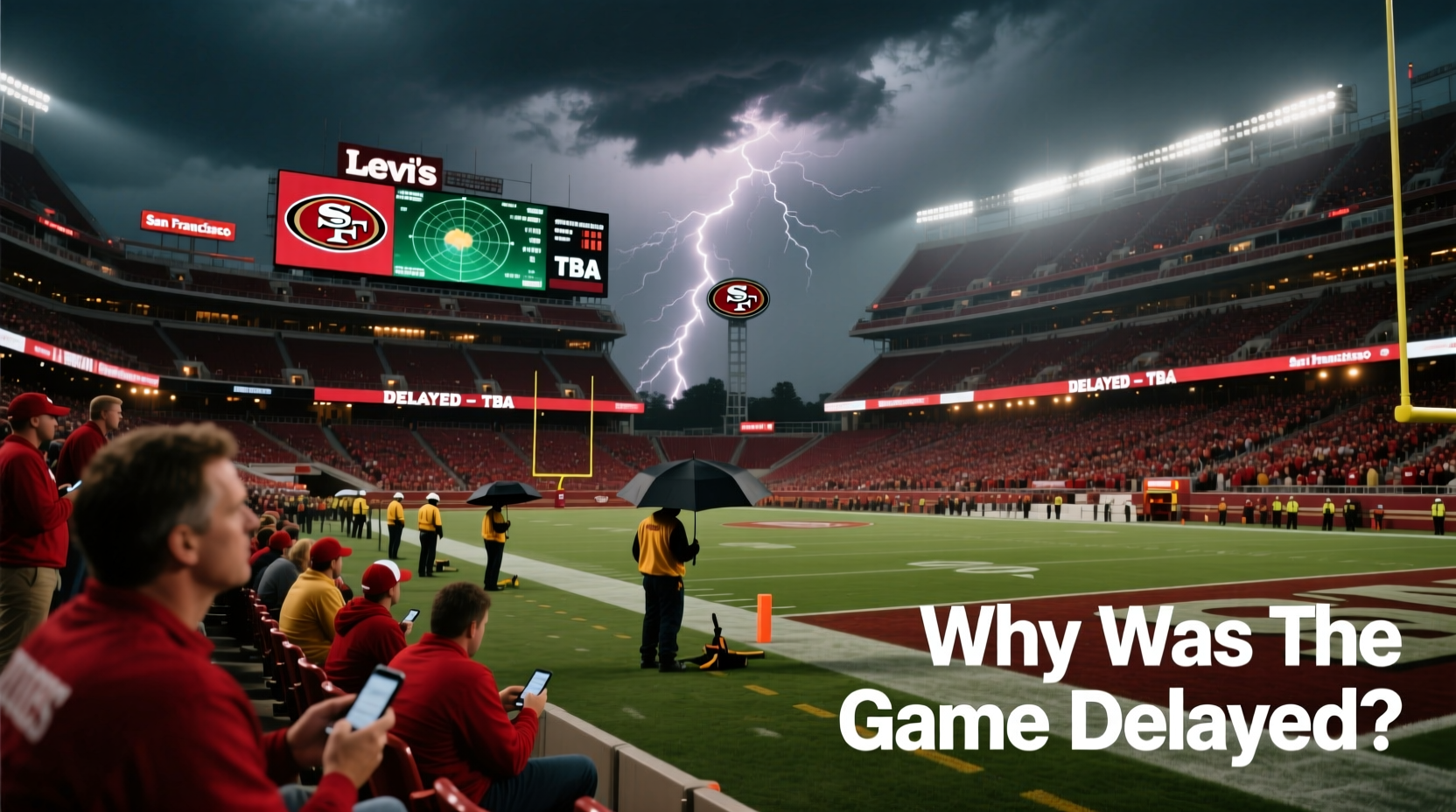
NFL games follow a tightly scheduled format, with every second accounted for—from commercial breaks to halftime shows. When a delay occurs, it disrupts this rhythm and usually indicates an issue that requires immediate attention. The most frequent causes include:
- Weather conditions: Lightning, heavy rain, or extreme winds can make field conditions unsafe.
- Power outages: Stadium lighting, scoreboards, and broadcast systems depend on stable electricity.
- Medical emergencies: Injuries to players, staff, or spectators may require extended response time.
- Field issues: Drainage problems, turf damage, or foreign objects on the field.
- Security threats: Suspicious packages, crowd disturbances, or law enforcement activity.
- Broadcast or technical failures: Issues with cameras, audio feeds, or replay systems.
Each of these scenarios triggers specific protocols designed to protect everyone involved—players, staff, fans, and broadcasters alike.
Weather as a Leading Factor
One of the most common reasons for game delays in outdoor stadiums like Levi’s® Stadium in Santa Clara is adverse weather. While Northern California generally enjoys mild conditions, sudden storms can roll in from the Pacific, especially during fall and winter months.
Lightning poses a significant risk. The NFL follows strict lightning safety policies: if thunder is heard within six miles of the stadium, play must be suspended immediately. Officials wait at least 30 minutes after the last observed lightning strike before resuming action.
“Player and fan safety always comes first. We have zero tolerance for compromising anyone’s well-being for the sake of continuing a game.” — Troy Vincent, Executive VP of Football Operations, NFL
In 2022, a preseason game between the 49ers and Chargers was delayed over an hour due to lightning near SoFi Stadium. Though less frequent at Levi’s Stadium, similar incidents have occurred when storm systems move inland unexpectedly.
Technical and Operational Failures
Modern stadiums rely heavily on technology—not just for entertainment, but for essential operations. A single system failure can cascade into a full game delay.
Power outages are among the most disruptive. In 2013, Super Bowl XLVII at the Mercedes-Benz Superdome was halted for 34 minutes due to an electrical malfunction. While Levi’s Stadium has redundant power systems, no facility is immune to grid fluctuations or internal faults.
Other technical issues include:
- Digital scoreboard malfunctions
- Replay review system crashes
- Communication breakdowns between referees and booth officials
- Broadcast transmission errors affecting national feeds
These may seem minor, but without accurate timing, scoring, or video review capability, the integrity of the game is compromised.
Recent Example: Broadcast Delay During Prime Time
In October 2023, a Monday Night Football matchup involving the 49ers experienced a 12-minute delay due to a network-level audio sync issue. Viewers reported missing the start of the second quarter, while stadium fans noticed a pause in public announcements. The league later confirmed it was a coordination error between the stadium feed and ESPN’s production truck.
This incident highlighted how dependent modern games are on seamless tech integration—even when the field itself is ready to go.
Medical Emergencies and Player Safety
The health and safety of athletes remain paramount. If a player sustains a serious injury—particularly spinal or head trauma—the game will be paused until medical personnel safely remove the individual from the field.
In November 2022, a 49ers game against the Chiefs was delayed nearly 20 minutes after wide receiver Deebo Samuel suffered a collision requiring a backboard evacuation. While he walked off under his own power later, protocol dictated caution, halting play until the situation was fully managed.
Spectator emergencies also occur. Stadium medical teams are trained to respond quickly to cardiac events, heat exhaustion, or falls in seating areas. If such an incident happens near the field or blocks access routes, officials may pause the game temporarily.
| Delay Cause | Average Duration | Likelihood (NFL Games) |
|---|---|---|
| Weather (lightning/rain) | 30–60 minutes | Moderate (higher in outdoor venues) |
| Power/technical outage | 15–45 minutes | Low |
| Player injury requiring evacuation | 10–25 minutes | High (multiple per season league-wide) |
| Security concern | Varies (can exceed 1 hour) | Very low |
| Broadcast failure | 5–20 minutes | Low to moderate |
Step-by-Step: How a Game Delay Is Managed
When a disruption occurs, a structured response ensures safety and order. Here's how the process unfolds:
- Initial Alert: Stadium operations or game officials identify the issue (e.g., lightning detection system triggers).
- Public Announcement: Fans are informed via PA system and scoreboard messages to remain seated or take shelter.
- Coordination with Authorities: Medical, security, or utility teams assess and address the problem.
- NFL Command Center Involvement: League officials monitor the situation and approve restart procedures.
- Resumption Decision: Once resolved, referees confer with the head of officiating and stadium management to resume play.
- Communication Update: Broadcast partners and social media channels relay the status to remote viewers.
This sequence ensures transparency and minimizes confusion, even when exact timelines are uncertain.
Frequently Asked Questions
How long can an NFL game be delayed?
There is no strict time limit. Delays can last minutes or, in extreme cases, stretch for hours. If conditions don’t improve (e.g., persistent lightning), the game may be postponed entirely and rescheduled.
Do ticket holders get refunds if a game is delayed?
No. Game delays do not qualify for refunds unless the event is canceled outright. Most tickets include clauses acknowledging potential interruptions due to weather or unforeseen circumstances.
Can a delayed game go into overtime?
Yes. If the delay occurs during regulation time, the game resumes exactly where it left off, including the possibility of overtime if the score remains tied.
What Fans Can Do During a Delay
While waiting for play to resume, fans can take proactive steps to stay informed and comfortable:
- Check the official 49ers website or @49ers on X/Twitter for updates.
- Review team stats or player performances using sports apps like ESPN or NFL Mobile.
- Use restroom facilities or grab food during extended pauses to avoid lines later.
- Stay hydrated and seated if weather is a factor—especially important during lightning alerts.
Checklist: What to Monitor During a Game Delay
- ✅ Official team social media accounts
- ✅ NFL Game Status page (nfl.com)
- ✅ Local news stations covering the event
- ✅ Stadium public address announcements
- ✅ Weather radar apps (for outdoor games)
Conclusion: Staying Informed Enhances the Fan Experience
While a delayed 49ers game can be frustrating, understanding the reasons behind it fosters patience and appreciation for the complexities of live sports. Whether it’s a lightning strike, a technical glitch, or a medical emergency, each delay reflects a commitment to safety, fairness, and operational integrity.
The next time you see the clock stopped and the players heading to the locker room, remember: these pauses aren’t arbitrary. They’re part of a larger system designed to protect everyone involved. By staying connected through reliable sources and knowing what to expect, you can turn an unexpected break into a moment of deeper engagement with the game you love.




 浙公网安备
33010002000092号
浙公网安备
33010002000092号 浙B2-20120091-4
Comments
No comments yet. Why don't you start the discussion?