
When tens of thousands of fans pack AT&T Stadium in Arlington, Texas, or tune in from across the country to watch the Dallas Cowboys play, few expect a sudden interruption. Yet, on several occasions over recent seasons, games involving America’s Team have been paused due to severe weather. The most common culprit? Lightning. While seemingly routine, these delays involve complex safety protocols, real-time monitoring systems, and coordination between stadium staff, league officials, and emergency services. Understanding why the Cowboys game was delayed due to weather isn’t just about noting a storm passed through—it’s about recognizing the layers of planning and precaution that protect players, staff, and spectators.
What Causes a Weather Delay in NFL Games?
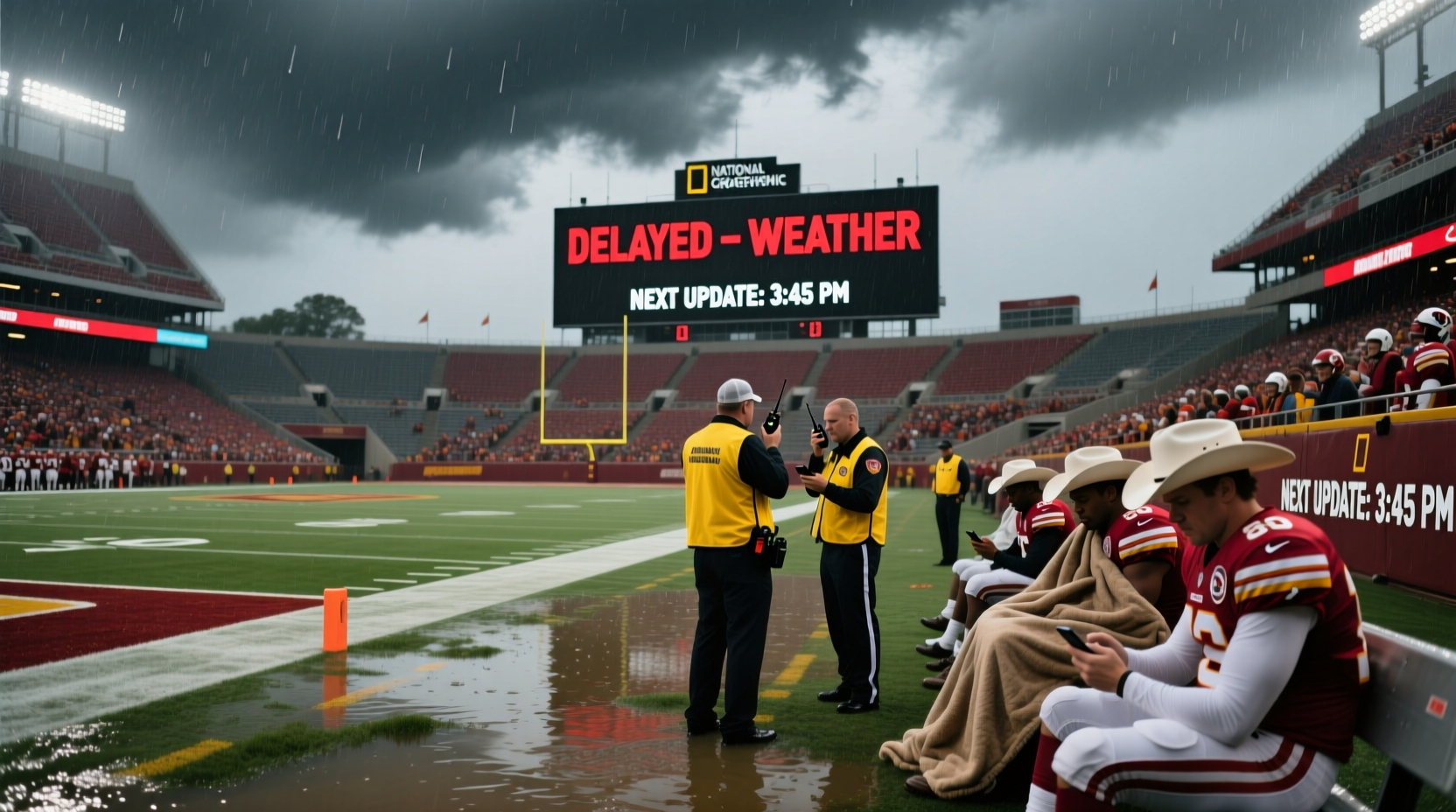
NFL games are subject to outdoor conditions, and despite state-of-the-art domed stadiums like AT&T Stadium—home of the Cowboys—weather can still impact events, especially when external areas are involved. Even with a retractable roof, some games may be played with the roof open for fan experience or temperature control. In such cases, lightning within a defined radius triggers an automatic suspension of play.
The standard threshold used by the NFL and most professional sports organizations is an 8-mile (13-kilometer) lightning detection radius. If a lightning strike occurs within that range, the game is halted immediately. This policy aligns with guidelines from the National Weather Service and OSHA standards for outdoor safety. Stadium personnel use advanced radar systems and real-time lightning tracking software to monitor storms as they approach.
How the Cowboys Game Was Delayed: A Timeline
One notable instance occurred during a Sunday afternoon matchup in October 2023. The Cowboys hosted the Detroit Lions at AT&T Stadium, and although the roof was closed, thunderstorms developed rapidly over North Texas. Here's how the delay unfolded:
- 3:17 PM CT: First lightning strike detected within 8 miles of the stadium.
- 3:18 PM CT: Public address system announces a weather delay; game clock stops with 9:42 remaining in the second quarter.
- 3:20 PM CT: Players exit the field and retreat to locker rooms. Staff direct fans in open concourses to move indoors.
- 3:50 PM – 4:30 PM CT: Multiple lightning strikes continue in the vicinity. No all-clear signal issued.
- 4:37 PM CT: Final confirmed lightning activity dissipates beyond the 8-mile radius.
- 4:40 PM CT: Announcement made: “The threat has passed. We will resume play shortly.”
- 4:52 PM CT: Kickoff resumes after a 1 hour, 34-minute delay.
This timeline reflects strict adherence to safety procedures. Though inconvenient, the delay prevented risk to over 90,000 attendees and hundreds of personnel. It also highlights the precision with which modern stadiums manage environmental threats.
Stadium Safety Protocols During Severe Weather
AT&T Stadium employs a multi-tiered response plan when inclement weather threatens. The process involves collaboration between facility operations, medical teams, broadcast partners, and the NFL command center.
| Phase | Action Taken | Responsible Party |
|---|---|---|
| Monitoring | Real-time lightning and radar tracking via specialized software | Operations & Security Team |
| Alert | Initial warning announced; preparation for evacuation begins | Public Address & Communications |
| Suspension | Game stopped; players and staff moved to safe zones | Referees & Coaching Staff |
| Sheltering | Fans directed away from open concourses and upper decks | Security Personnel |
| All-Clear | Confirmed no lightning for 30 consecutive minutes | Meteorological Consultant |
| Resumption | Field cleared, game resumes under normal rules | League Officials & Stadium Management |
The \"30-minute rule\" is critical: once the last lightning strike is recorded within the danger zone, a full half-hour must pass without further activity before activities can safely resume. This buffer ensures transient electrical threats have fully dissipated.
“We don’t make decisions based on visibility or thunder—we go by data. One strike inside eight miles means we pause. It’s non-negotiable.” — Jason Reynolds, Director of Stadium Operations, AT&T Stadium
Impact on Fans, Broadcasts, and Teams
A weather delay doesn't just affect the flow of the game—it ripples across logistics, media, and fan experience. For viewers at home, the interruption often leads to extended commercial breaks or preemptive programming shifts. Networks like CBS or Fox may insert analysis segments, reruns, or regional programming while awaiting the all-clear.
For fans in attendance, delays mean disrupted routines: missed halftime shows, postponed concession pickups, and bathroom lines that grow exponentially. Some report frustration, but most understand the necessity when informed clearly and consistently.
From a team perspective, momentum can be shattered. A quarterback building rhythm may lose focus. Coaches must keep players mentally engaged during long pauses. Cooling down increases injury risk upon return, so trainers emphasize stretching and hydration even during indoor downtime.
Mini Case Study: Cowboys vs. Eagles, December 2022
Dallas faced Philadelphia in a pivotal late-season game with playoff implications. With 5:18 left in the third quarter and the Cowboys trailing by four points, lightning was detected near the stadium. The roof was already closed, but protocol required suspension of play.
The delay lasted 78 minutes. During that time, Cowboys coaches adjusted their offensive strategy, identifying weaknesses in the Eagles’ nickel coverage. Upon return, quarterback Dak Prescott led two scoring drives, including the game-winning touchdown with 37 seconds remaining.
While no one wishes for a delay, this example shows how prepared teams can turn adversity into opportunity. Head Coach Mike McCarthy later said, “We used that time wisely. It wasn’t wasted—it was repurposed.”
Common Misconceptions About Weather Delays
Many assume that if the sky clears or it stops raining, the game should resume immediately. That’s not how safety works. Lightning can strike up to 10 miles from a storm’s core—even under blue skies. Similarly, some believe domed stadiums are immune to weather disruptions. But access points, loading docks, and exterior plazas remain vulnerable. Additionally, power fluctuations during storms can affect lighting, scoreboards, and communication systems.
- Myth: “If I can’t hear thunder, it’s safe.” → Reality: Sound doesn’t travel far; silent lightning is still dangerous.
- Myth: “Indoor stadiums don’t get delays.” → Reality: Evacuation routes and external zones require protection.
- Myth: “Delays are rare.” → Reality: NFL games face weather interruptions multiple times per season across different venues.
FAQ
Can an NFL game be canceled due to weather?
No, NFL games are almost never canceled outright due to weather. They are typically delayed and resumed later the same day. Only catastrophic events (like hurricanes or structural damage) would lead to rescheduling.
Do weather delays affect betting lines?
Yes. Sportsbooks consider delays when calculating live odds. Momentum shifts, player fatigue, and psychological factors are factored in post-resumption. Pre-snap bets remain active unless specified otherwise.
How do players stay ready during long delays?
Teams use stationary bikes, resistance bands, and light calisthenics to maintain body temperature. Mental reps, hydration, and strategic discussions help sustain focus.
Checklist: What to Do If You're at a Game Facing a Weather Delay
- Stay calm and listen to public announcements.
- Move to designated interior zones if instructed.
- Avoid metal railings, plumbing fixtures, and open structures.
- Keep your phone charged for updates.
- Re-enter the seating area only when officially cleared.
- Use restroom facilities before returning—lines will build quickly.
- Resume watching with attention; key plays often follow restarts.
Conclusion
The question “why was the Cowboys game delayed?” often comes with concern, confusion, or disappointment. But behind every weather-related stoppage lies a rigorous commitment to safety, backed by science, technology, and expert coordination. Whether you’re in the stands or watching from home, understanding the reasoning behind these pauses adds depth to the viewing experience. These delays aren’t failures of planning—they’re proof that the system is working exactly as designed.




 浙公网安备
33010002000092号
浙公网安备
33010002000092号 浙B2-20120091-4
Comments
No comments yet. Why don't you start the discussion?