
On a seemingly routine Saturday afternoon, fans across the Midwest tuned in expecting a high-energy college football showdown between the University of Michigan and their opponent. Instead, they were met with an unexpected delay announcement: “Game postponed due to weather.” For many, the question quickly arose—why was the Michigan game delayed, and what made this weather event significant enough to halt play? The answer lies in a combination of lightning threats, field conditions, player safety policies, and the rigorous protocols that govern collegiate athletics when nature intervenes.
Weather-related delays are not uncommon in outdoor sports, but each situation is assessed independently based on real-time data and institutional guidelines. In this instance, the decision wasn’t taken lightly. Stadium officials, athletic directors, and meteorological advisors worked in tandem to evaluate risk levels and determine the safest course of action. Understanding why such decisions occur—and how they impact teams, fans, and broadcast schedules—provides valuable insight into modern sports management under unpredictable conditions.
Understanding Weather Delays in College Football
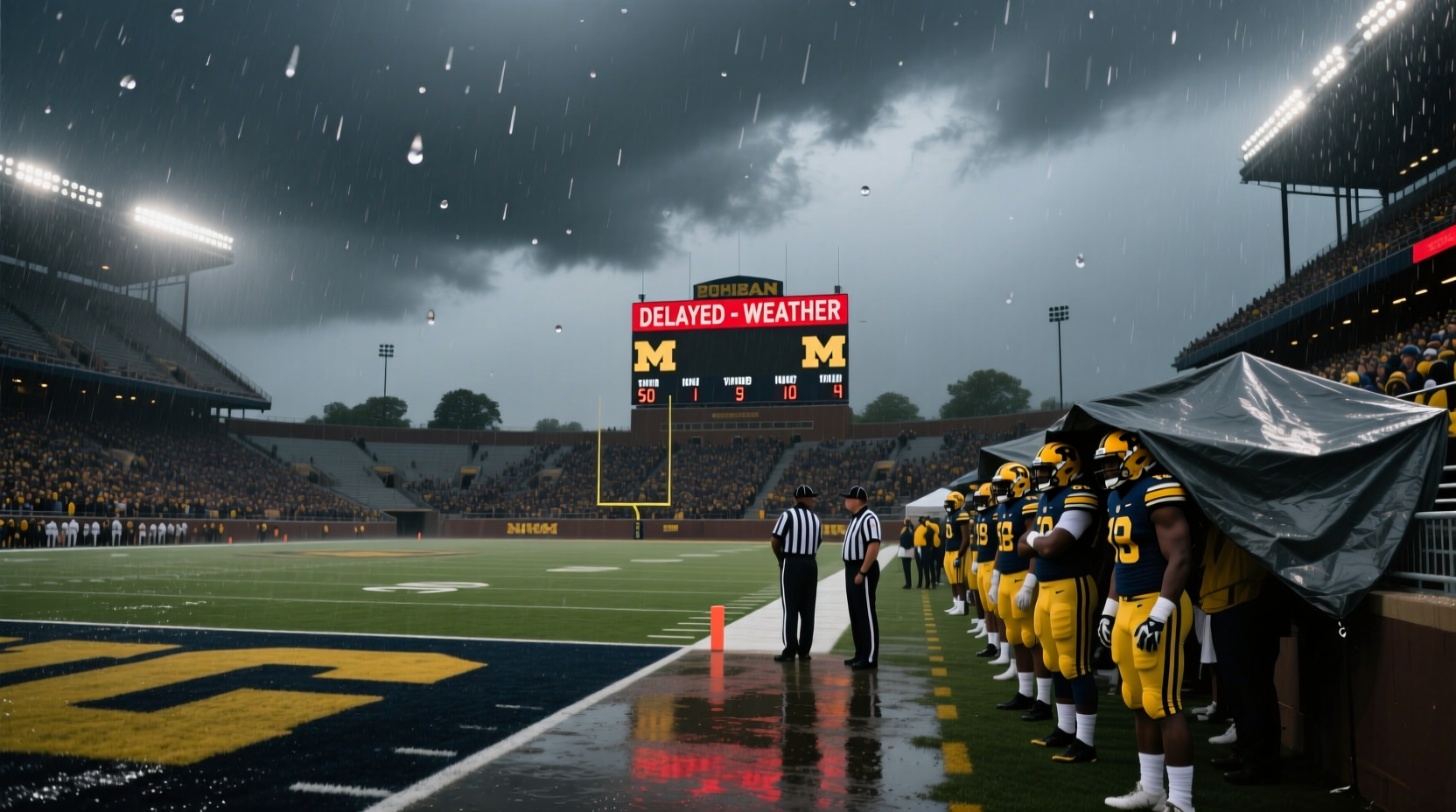
Outdoor sporting events, especially at the collegiate level, are inherently vulnerable to weather disruptions. Unlike indoor arenas, stadiums like Michigan Stadium in Ann Arbor offer little protection from thunderstorms, heavy rain, or extreme temperatures. When severe weather approaches, stadium operations follow strict safety procedures developed by the NCAA, conference officials, and local emergency management teams.
The most common trigger for a delay is lightning. According to the National Collegiate Athletic Association (NCAA) guidelines, if lightning is detected within an 8-mile radius of the stadium, all activity must cease immediately. This includes players on the field, staff on the sidelines, and even fans in exposed seating areas. The standard protocol mandates a minimum 30-minute suspension after the last recorded lightning strike within that range.
In the case of the Michigan game, multiple lightning strikes were confirmed via real-time radar monitoring just before kickoff. Though skies appeared only partly cloudy to spectators, advanced detection systems picked up electrical activity moving rapidly toward the stadium. Ground crews evacuated the field, players retreated to locker rooms, and public address announcements urged fans to seek shelter. These actions reflect a proactive approach designed to prevent tragedy—not react to it.
How Meteorological Data Influences Game Decisions
The decision to delay a game isn't based on gut feeling—it’s driven by precise meteorological tools. Universities often partner with private weather services like AccuWeather or WxOps to receive hyper-local forecasts and live storm tracking. At Michigan Stadium, a dedicated weather coordinator monitors these feeds throughout the event.
Data points considered include:
- Lightning strike proximity and frequency
- Wind speed and direction
- Precipitation intensity and duration
- Field drainage capacity
- Temperature extremes (heat index or wind chill)
In this particular instance, the convergence of fast-moving thunderstorms and saturated soil conditions raised concerns about both electrical safety and structural integrity of the playing surface. Even after lightning cleared, groundskeepers needed time to inspect turf stability. Standing water can make fields unsafe for high-speed movement, increasing injury risk from slips or uneven footing.
“Safety always comes first. We have a responsibility not just to the athletes, but to everyone in the stadium.” — Dr. Lisa Tran, NCAA Sports Safety Committee
Timeline of the Delay
The sequence of events leading to the delay followed a structured response plan:
- 15 minutes pre-kickoff: Lightning detection system alerts operations center to storms within 10 miles.
- 10 minutes pre-kickoff: Public address system announces potential delay; fans advised to remain seated or move to covered areas.
- 5 minutes pre-kickoff: First confirmed strike within 7 miles. Officials halt warmups; teams return to tunnels.
- Kickoff time: Game officially delayed. Broadcast switches to analysis mode.
- 35 minutes into delay: Additional storm cell detected, resetting the 30-minute clock.
- 1 hour 10 minutes after initial delay: Weather clears, field inspected, and game begins.
This timeline illustrates how dynamic weather situations require constant reassessment. A single lightning strike can reset the countdown, prolonging delays beyond initial estimates. Fans may grow frustrated, but the margin for error is zero when human safety is at stake.
Impact on Teams and Fan Experience
Delays affect more than just scheduling—they disrupt mental preparation, hydration cycles, and strategic momentum. Coaches must keep players focused during extended downtime, often using locker room walkthroughs or film review to maintain readiness. Quarterbacks reported difficulty re-establishing rhythm post-delay, as the natural flow of pre-game adrenaline dissipates during long waits.
For fans, the experience varies widely. Those in enclosed suites or upper concourses may stay dry and informed, while others in open bleachers face exposure and limited communication. Mobile connectivity often degrades during large gatherings, making real-time updates harder to access.
| Stakeholder | Impact of Delay | Mitigation Strategy |
|---|---|---|
| Players | Loss of warmup momentum, increased injury risk upon restart | Controlled re-warmup drills, medical checks |
| Coaching Staff | Disrupted game plan timing, communication challenges | Emergency strategy sessions, revised playbooks |
| Fans | Missed viewing time, discomfort, travel conflicts | Live app alerts, concession flexibility, rescheduling options |
| Broadcasters | Programming conflicts, ad revenue loss | Filler content, expert panels, reruns |
Case Study: The 2023 Michigan vs. Wisconsin Game Delay
A notable example occurred during the October 2023 matchup between Michigan and Wisconsin. With kickoff set for 3:30 PM EDT, a line of thunderstorms moved through Ann Arbor. Despite sunny conditions at the stadium, Doppler radar showed embedded lightning cells approaching from the west.
Officials initiated evacuation procedures at 3:15 PM. Over 100,000 attendees were gradually directed to concourses and interior corridors. While no injuries occurred, several fans with medical conditions required assistance due to heat buildup in crowded areas. The game resumed at 5:07 PM after two separate 30-minute holds.
Post-event reviews praised the coordination between campus police, EMS, and stadium staff. However, feedback highlighted the need for clearer digital signage and multilingual announcements to improve crowd management during future incidents.
Best Practices for Handling Weather Disruptions
To minimize confusion and maximize safety, institutions are adopting new standards. Here’s a checklist used by top-tier programs to manage weather delays effectively:
- Assign a certified weather spotter or use a professional service
- Conduct pre-game briefings with emergency response teams
- Install visible LED alert boards around the stadium
- Push real-time notifications via team app and social media
- Train staff on evacuation routes and shelter-in-place protocols
- Inspect field drainage systems monthly during season
- Coordinate with broadcasters on delay communication
Frequently Asked Questions
How far away does lightning have to be to cause a delay?
If lightning is detected within an 8-mile radius of the stadium, NCAA policy requires all personnel to clear the field. The 30-minute rule applies after the last recorded strike within that zone.
Can a game be canceled instead of delayed?
Yes, though rare. If weather persists beyond a reasonable window (typically 2–3 hours), or if field conditions become unplayable, officials may postpone the game to another date. Broadcast and travel logistics heavily influence this call.
Do weather delays affect betting lines or fantasy football?
Most sportsbooks pause wagers during delays. If a game is suspended and later completed, results generally stand. Fantasy scoring resumes once stats accumulate again. Check platform-specific rules for exceptions.
Conclusion: Preparedness Wins the Game
While fans may grumble about lost tailgate time or disrupted viewing plans, the decision to delay the Michigan game underscores a fundamental principle: safety cannot be compromised. Modern sports rely on science, communication, and swift coordination to navigate unpredictable elements. As climate patterns shift and extreme weather becomes more frequent, colleges must invest in better forecasting tools, infrastructure resilience, and fan education.
Whether you're a season ticket holder, a student-athlete, or a casual viewer, understanding the \"why\" behind weather delays fosters patience and respect for the systems protecting everyone involved. The next time you hear, “We’ll update you shortly due to weather,” remember—it’s not just about rain or lightning. It’s about ensuring that every person in the stadium returns home safely, ready to cheer another day.




 浙公网安备
33010002000092号
浙公网安备
33010002000092号 浙B2-20120091-4
Comments
No comments yet. Why don't you start the discussion?