
Among the quiet giants of the spice cabinet, few ingredients deliver as much impact with such subtlety as whole nutmeg. Often overlooked in favor of more assertive spices or relegated to pre-ground convenience, whole nutmeg remains one of the most underappreciated assets in both home and professional kitchens. Unlike its powdered counterpart, freshly grated whole nutmeg offers a depth of aroma and complexity that transforms dishes from ordinary to extraordinary. Its warm, sweet, slightly peppery essence enhances everything from béchamel sauce to spiced cider, yet it’s rarely given center stage. This guide explores not only why you should keep whole nutmeg in your pantry but also how to use it effectively, store it properly, and understand its unique role in global cuisines.
Definition & Overview
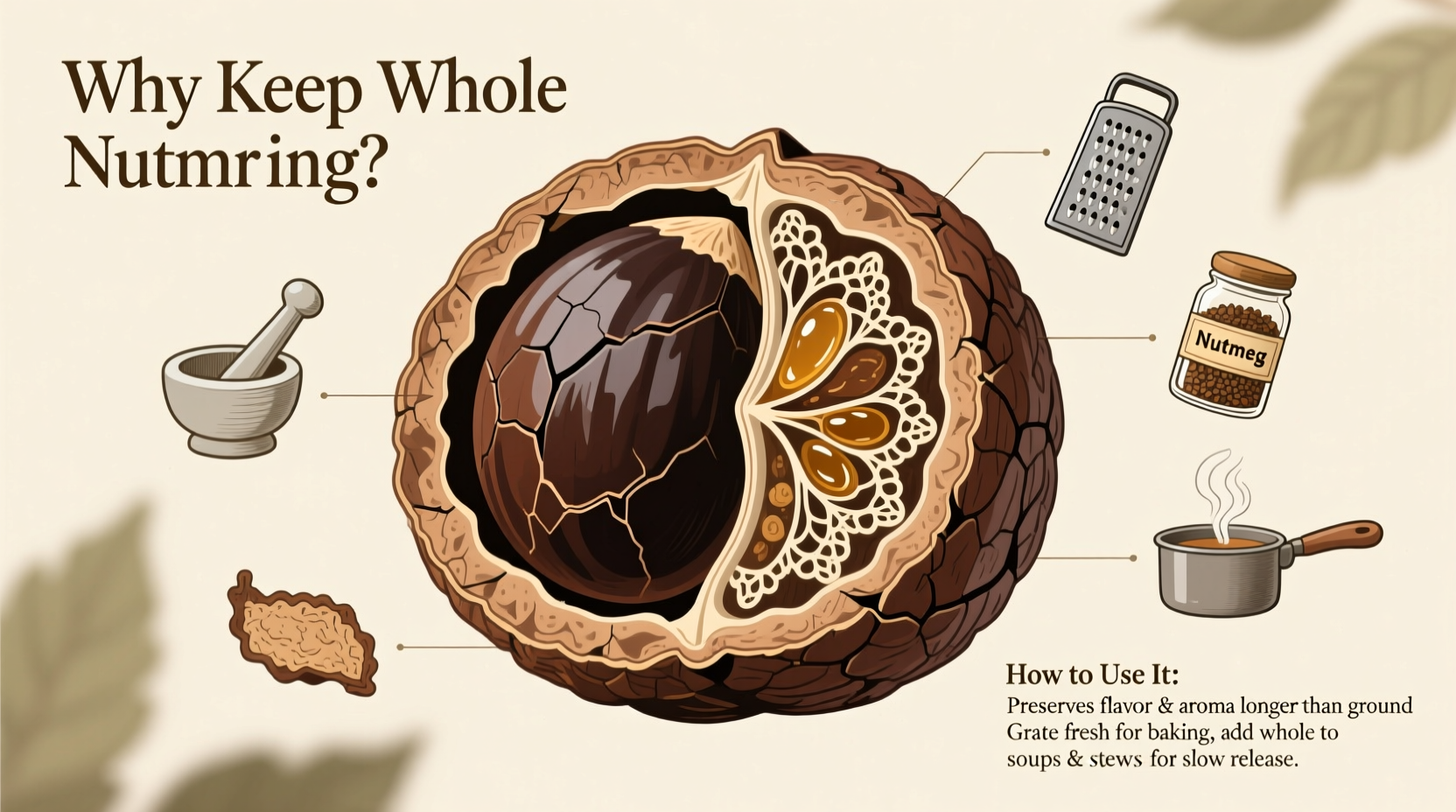
Nutmeg is the seed of Myristica fragrans, an evergreen tree native to the Banda Islands in Indonesia’s Maluku province—historically known as the Spice Islands. For centuries, this single tree was the source of two distinct spices: nutmeg, the seed itself, and mace, the lacy red aril that surrounds it. The fruit resembles a small peach; when ripe, it splits open to reveal the nutmeg encased in mace. After harvesting, the seed is dried for up to two months, resulting in the hard, dark brown oval kernel sold as whole nutmeg.
The flavor profile of nutmeg is complex: simultaneously sweet, woody, floral, and faintly peppery, with subtle notes of clove and cinnamon. It carries a warmth that lingers on the palate without overwhelming, making it ideal for balancing rich or creamy dishes. Historically prized during the Age of Exploration, nutmeg was once so valuable it sparked colonial wars and fueled trade monopolies. Today, while widely available, its true potential is still best unlocked when used whole and freshly grated.
Key Characteristics
| Attribute | Description |
|---|---|
| Flavor | Warm, sweet, aromatic, with hints of clove, pepper, and vanilla |
| Aroma | Intensely fragrant when freshly grated; floral, balsamic, slightly resinous |
| Form | Oval-shaped hard seed, 2–3 cm long, deep brown exterior |
| Heat Level | Mild warmth (not spicy); contributes aromatic heat rather than capsaicin-like burn |
| Culinary Function | Flavor enhancer, aroma booster, balancing agent in creamy/savory/sweet dishes |
| Shelf Life (Whole) | Up to 4 years when stored properly in a cool, dark place |
| Shelf Life (Ground) | 6–12 months before significant flavor degradation |
Practical Usage: How to Use Whole Nutmeg in Cooking
The primary advantage of using whole nutmeg lies in its freshness. Once ground, nutmeg begins to lose volatile oils rapidly—within weeks, pre-ground versions become flat and musty compared to the vibrant lift of freshly grated spice. Using whole nutmeg requires minimal effort but delivers maximum return.
To grate nutmeg, use a fine microplane, rasp grater, or traditional nutmeg grinder. Hold the whole nut between your fingers and rub it against the surface using gentle, circular motions. A little goes a long way: **¼ teaspoon of freshly grated nutmeg** is typically sufficient for most recipes serving four to six people.
Applications in Home Cooking
- Cream Sauces: Add a pinch to béchamel, Alfredo, or cheese sauces. It cuts through richness and adds dimension.
- Vegetable Dishes: Grate over mashed potatoes, buttered carrots, or roasted squash just before serving.
- Baked Goods: Incorporate into pumpkin pie, gingerbread, spice cakes, or custards for a warm background note.
- Dairy-Based Desserts: Enhance crème brûlée, rice pudding, or eggnog with a light dusting.
- Meat Preparations: Used sparingly in meatloaf, sausage blends, or braised short ribs for aromatic complexity.
- Beverages: Freshly grated nutmeg elevates mulled wine, hot chocolate, chai, and spiced coffee.
Professional Kitchen Techniques
In restaurant settings, chefs often use whole nutmeg more strategically. Some sauté a whole nutmeg in butter at the beginning of a sauce preparation, removing it before service—similar to using a bay leaf. Others infuse cream or milk with nutmeg by steeping a few gratings in warm liquid for 10–15 minutes, then straining. This method extracts flavor without texture interference, ideal for delicate soups or custards.
High-end patisseries may layer multiple warm spices, using nutmeg as a bridge between cinnamon’s sweetness and cloves’ pungency. In savory plating, a final twist of fresh nutmeg over a parmesan risotto or cauliflower purée provides both aroma and visual elegance.
Pro Tip: Always grate nutmeg just before use. Store your whole nut in an airtight container away from light and moisture. One whole nutmeg yields approximately 1½ to 2 teaspoons of grated spice, depending on size and grating technique.
Variants & Types
While all true nutmeg comes from Myristica fragrans, it appears in several forms in the marketplace. Understanding these variants helps determine which to use—and when.
| Type | Description | Best Use Case |
|---|---|---|
| Whole Nutmeg | Unprocessed dried seed; hardest form, longest shelf life | Ideal for grating fresh; preferred for premium applications |
| Ground Nutmeg | Powdered version; convenient but loses potency quickly | Acceptable for large-batch baking where precision isn’t critical |
| Nutmeg Oil | Essential oil extracted from the seed; highly concentrated | Rare in cooking; used in aromatherapy or flavor extracts (use sparingly) |
| Blanched Nutmeg | Peel-treated to remove outer coat; lighter color and milder taste | Used in commercial food production for consistent appearance |
| Jamaican Nutmeg (False Nutmeg) | From Monodora myristica; less aromatic, coarser texture | Regional use in Caribbean cuisine; not a substitute for true nutmeg |
When possible, choose whole Indonesian or Grenadian nutmeg—regions renowned for high-quality harvests. Grenada, in particular, has built a modern reputation for sustainable, sun-dried nutmeg with balanced flavor.
Comparison with Similar Ingredients
Nutmeg is frequently confused with other warm spices due to overlapping flavor profiles. However, each plays a distinct role in seasoning.
| Spice | Flavor Difference | Texture/Form | Substitution? |
|---|---|---|---|
| Mace | More pungent, sharper, with citrusy notes; same plant family | Thin, brittle flakes; often sold ground | Yes, 1:1 ratio, but use slightly less due to intensity |
| Cinnamon | Sweeter, woodier, less floral; lacks nutmeg’s peppery edge | Sticks or powder; fibrous when whole | Limited; can mimic warmth but not complexity |
| Clove | Stronger, medicinal, more numbing; higher eugenol content | Whole buds or powder | No—too dominant; may overpower if substituted directly |
| Allspice | Combines notes of clove, cinnamon, nutmeg—but rounder and fruitier | Berries or ground | Partial substitute in baked goods; lacks nutmeg’s cream-complementing ability |
“Nutmeg is the velvet glove of the spice world. It doesn’t shout, but everything tastes better when it’s present.” — Chef Imogen Hart, Culinary Instructor, International School of Gastronomy
Practical Tips & FAQs
How much nutmeg should I use?
Start with **⅛ to ¼ teaspoon freshly grated** per four servings. Nutmeg intensifies with cooking time, so add early for blended flavor or at the end for brighter aroma. Overuse can lead to bitterness or even mild toxicity in extreme cases (though culinary amounts are safe).
Can I substitute ground nutmeg for whole?
You can, but expect diminished results. Ground nutmeg loses up to 75% of its essential oils within six months. If substituting, use ¾ the amount of fresh-grated quantity and consider boosting with a touch of mace or allspice for depth.
Is nutmeg safe to consume daily?
In normal culinary doses (up to ½ teaspoon per day), nutmeg is perfectly safe. However, consuming more than 1–2 teaspoons raw can cause myristicin toxicity, leading to nausea, dizziness, or hallucinations. This is rare in cooking but worth noting for supplement users.
What dishes absolutely need nutmeg?
Some preparations rely on nutmeg’s unique chemistry:
- Spinach with Cream (Escarole or Swiss Chard variations): Neutralizes bitterness and enriches mouthfeel.
- Classic Béchamel Sauce: Essential for French and Italian white sauces.
- Apple Pie or Pear Tart: Complements fruit acidity and enhances crust aroma.
- German Kartoffelpuffer (Potato Pancakes): Adds warmth without masking potato flavor.
- Indian Kheer or Middle Eastern Rice Pudding: Balances cardamom and rose water.
How do I store whole nutmeg?
Keep in an airtight glass jar, away from heat, light, and humidity. A cool pantry or drawer is ideal. Do not refrigerate, as condensation promotes mold. Properly stored, whole nutmeg retains full potency for 3–4 years.
Do I need a special tool to grate nutmeg?
No, though tools help. A fine microplane zester works best for control and yield. Traditional brass nutmeg graters or adjustable nutmeg mills are elegant options for frequent users. Avoid coarse cheese graters—they waste material and create uneven shreds.
Can I grow my own nutmeg?
Not practically indoors. Myristica fragrans requires tropical conditions (USDA zones 10–12), takes 7–9 years to bear fruit, and needs both male and female trees for pollination. Most consumers source sustainably harvested imports instead.
Storage Checklist:
- ✅ Store in opaque, airtight container
- ✅ Label with purchase date
- ✅ Keep away from stove or dishwasher
- ✅ Pair with bay leaves or cinnamon sticks (no reactivity)
- ❌ Avoid plastic bags or clear jars exposed to sunlight
Summary & Key Takeaways
Whole nutmeg is not merely a nostalgic relic of older cooking traditions—it is a functional upgrade over pre-ground alternatives. Its extended shelf life, superior flavor retention, and nuanced aromatic profile make it indispensable for anyone serious about seasoning. From enhancing creamy sauces to elevating holiday beverages, freshly grated nutmeg performs quietly but powerfully across sweet and savory domains.
The investment is minimal: a single whole nut costs less than $2 and lasts years. Paired with a microplane or dedicated grater, it becomes one of the most cost-effective flavor boosters in the kitchen. While ground nutmeg remains accessible, it cannot replicate the brightness and balance of the freshly grated form.
Understanding nutmeg also means recognizing its botanical siblings—especially mace—and avoiding common substitutions that compromise dish integrity. Whether you're preparing a weekday mac and cheese or a festive Christmas pudding, taking ten seconds to grate fresh nutmeg can transform the outcome.
Make the switch today: Replace your old jar of ground nutmeg with a whole seed. Your palate will notice the difference immediately.




 浙公网安备
33010002000092号
浙公网安备
33010002000092号 浙B2-20120091-4
Comments
No comments yet. Why don't you start the discussion?