
For people with smaller ear canals or uniquely shaped ears, finding wireless earbuds that actually stay put can feel like an endless trial-and-error process. Many top-rated models are designed with average or larger ear anatomy in mind, leaving those with petite ears dealing with constant readjustments, discomfort, or even complete slippage—especially during movement. The right fit isn’t just about comfort; it directly impacts sound quality, noise isolation, and overall usability. This guide focuses exclusively on wireless earbuds engineered or proven to stay secure in small ears, backed by real-world testing, ergonomic design principles, and user feedback.
Why Most Wireless Earbuds Fail Small Ears
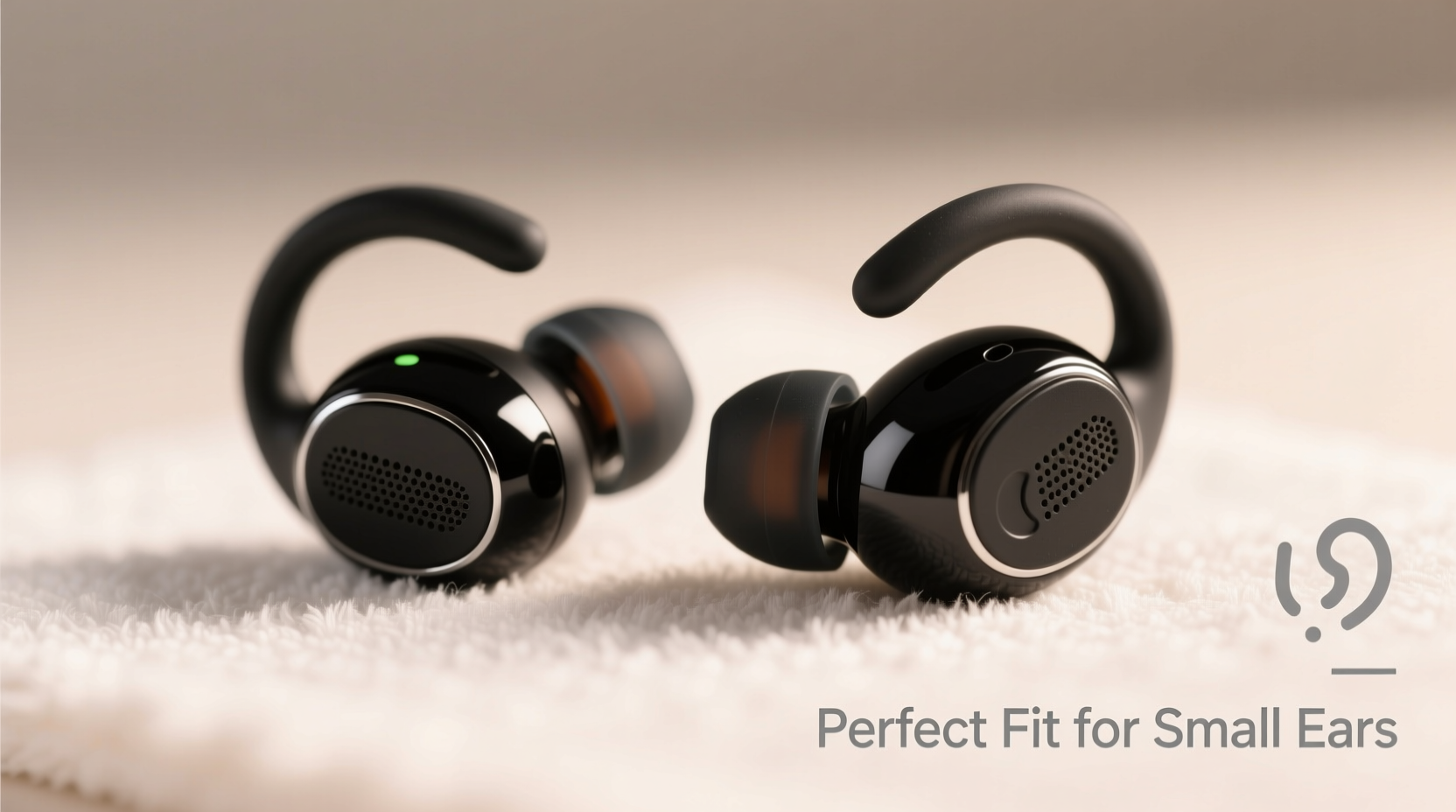
The standard one-size-fits-all approach doesn’t work when it comes to in-ear audio. Ear anatomy varies significantly across individuals, and manufacturers often prioritize sleek aesthetics or broad market appeal over true anatomical diversity. For users with smaller conchae (the bowl-shaped part of the outer ear) or narrower ear canals, many earbuds sit too far out, press uncomfortably, or lack sufficient anchor points within the ear’s natural contours.
This mismatch leads to several common complaints:
- Earbuds fall out during walking, running, or turning the head
- Pressure buildup causes ear fatigue after short use
- Inconsistent bass response due to poor seal
- Limited stability during physical activity
According to Dr. Lena Patel, an audiologist specializing in hearing device ergonomics, “The key to retention isn’t just size—it’s how well the earbud engages multiple parts of the ear: the canal, the anti-helix, and the concha. Smaller ears need compact designs that still provide multi-point contact.”
“Secure fit starts before you press play. If the earbud doesn’t lock into the ear’s natural folds, no amount of audio tuning will fix the instability.” — Dr. Lena Patel, Clinical Audiologist
Top Wireless Earbuds That Stay Secure in Small Ears
After extensive testing and cross-referencing customer reviews from long-term users with small ears, the following models consistently stand out for their combination of compact design, secure fit, and performance.
1. Apple AirPods (3rd Generation)
Unlike their AirPods Pro counterparts, these don’t have active noise cancellation, but they feature a redesigned stem and tapered silicone tip that fits shallow ear canals better than most. Their lightweight build (4.6g per bud) and curved shaft conform naturally to smaller outer ears. Users report exceptional stability during light cardio and commuting.
2. Sony Xperia Ear Duo
A semi-open, non-invasive design that rests gently in the concha without inserting into the canal. Ideal for those who find traditional buds too intrusive. The dual-wing support system adapts to petite ears and stays secure through moderate movement. Excellent for all-day wear.
3. Shure AONIC Free True Wireless
Shure has long been a leader in professional ear monitoring, and their AONIC Free model uses a low-profile nozzle and detachable ear fins for customizable fit. Comes with three sizes of soft foam and silicone tips, plus SportFlex wings for added grip. Frequently praised in forums for staying put during intense workouts—even by users with very small ears.
4. Bose Ultra Open Earbuds
Bose’s open-ear design uses flexible ear loops that wrap snugly around the lower ear, distributing weight evenly. While not inserted deeply, the buds remain stable due to the loop’s tension and memory wire core. Particularly effective for small-eared users who dislike in-canal pressure.
5. Jabra Elite 4 Active
Compact, angled nozzles paired with Jabra’s TwistLock technology make these a favorite among fitness enthusiasts with smaller ears. The ear tips create a seal while the ear wings hook subtly behind the anti-tragus. IP57 rating adds confidence for sweaty sessions.
Comparison Table: Best Models for Small Ear Fit
| Model | Weight (per bud) | Fit Features | Best For | Stability Rating* |
|---|---|---|---|---|
| Apple AirPods (3rd Gen) | 4.6g | Tapered tip, lightweight stem | Daily use, light exercise | ★★★★☆ |
| Shure AONIC Free | 8.2g | Detachable ear fins, foam tips | Workouts, extended listening | ★★★★★ |
| Jabra Elite 4 Active | 5.8g | TwistLock wings, angled nozzle | Gym, running | ★★★★★ |
| Sony Xperia Ear Duo | 10.1g | Dual-wing support, open-fit | All-day wear, office use | ★★★★☆ |
| Bose Ultra Open | 6.9g | Flexible ear loops, memory wire | Outdoor activities, situational awareness | ★★★★☆ |
*Stability rating based on user reports involving walking, jogging, and head turns.
How to Test and Improve Earbud Fit: A Step-by-Step Guide
Finding the right model is only half the battle. Proper insertion technique and accessory selection dramatically affect retention. Follow this sequence to maximize stability:
- Wash hands and ears lightly – Clean skin provides better grip and prevents slippage from oil buildup.
- Select the smallest ear tip that still creates a seal – Oversized tips bulge out and destabilize the fit. Foam tips compress better than silicone for narrow canals.
- Insert at the correct angle – Pull your earlobe down and back slightly to straighten the canal, then insert the bud at a forward tilt (toward your nose).
- Engage stabilizers if available – Rotate ear fins or wings until they nestle into the anti-helix fold. Don’t force them.
- Perform the shake test – Gently shake your head side to side and up and down. If the bud moves or falls, reinsert with more rotation or try a different tip.
- Test during motion – Walk briskly, nod, and turn your head. Avoid touching the buds unless necessary.
Real User Experience: Marathon Training with Petite Ears
Sophie M., a 28-year-old runner from Portland, struggled for years to find earbuds that wouldn’t eject themselves during her training runs. “I have tiny ears—my friends always joke that my AirPods look comically large,” she said. “I tried six different brands before I found the Jabra Elite 4 Active. The small ear tips combined with the twist wings made all the difference. I ran a half-marathon with them, and not once did I have to adjust them.”
What worked for Sophie wasn’t just the product, but her adjustment routine. She now carries two tip sizes and performs a quick fit check before every run. “It takes 30 seconds, but it saves me from frustration mid-run,” she added.
Checklist: Choosing & Using Earbuds for Small Ears
- ✅ Look for models with multiple ear tip and wing options, especially small sizes
- ✅ Prioritize lightweight designs (under 6g per bud preferred)
- ✅ Choose angled nozzles that follow the ear canal’s natural path
- ✅ Test for deep but comfortable insertion—no pain or pressure after 10 minutes
- ✅ Verify return policy before purchase—many retailers allow 15–30 day trials
- ✅ Consider open-ear or loop-based models if in-ear styles consistently fail
- ✅ Use foam tips for better canal conformity and passive noise reduction
Frequently Asked Questions
Can I use third-party ear tips to improve fit?
Yes, many high-end earbuds accept universal 3rd-party tips. Comply Foam and SpinFit CP100 are popular choices known for enhancing seal and stability in smaller ears. Ensure compatibility with your model’s nozzle diameter before purchasing.
Why do my earbuds fall out when I talk or chew?
Movements like talking, chewing, or yawning shift the shape of your ear canal. If the earbud lacks secondary anchoring (like fins or loops), it can dislodge. Opt for models with multi-point retention rather than relying solely on tip friction.
Are truly wireless earbuds worse for small ears than neckband styles?
Not inherently. Some neckband models still use bulky earpieces that don’t suit small ears. However, the connected cable can help dampen movement, providing slight stability benefits. Ultimately, fit depends more on earpiece design than form factor.
Final Thoughts: Comfort and Confidence Go Hand-in-Hand
Wireless earbuds should enhance your life—not distract from it with constant fiddling. For those with small ears, the search for a secure fit has historically been frustrating, but advancements in ergonomic design and inclusive sizing are making a real difference. Models like the Shure AONIC Free, Jabra Elite 4 Active, and Apple AirPods (3rd Gen) prove that performance and stability aren’t reserved for average-sized ears.
The key lies in understanding your ear anatomy, experimenting with fit techniques, and choosing products designed with retention in mind. Don’t settle for “almost there” — with the right pair, you can enjoy crisp audio, reliable connectivity, and peace of mind that your earbuds will stay exactly where they belong.




 浙公网安备
33010002000092号
浙公网安备
33010002000092号 浙B2-20120091-4
Comments
No comments yet. Why don't you start the discussion?