
The arrival of December brings with it a quiet magic—the crisp air, twinkling lights, and the ritual of counting down to Christmas. At the heart of that countdown for many families is the advent calendar. Once a simple devotional tool, today’s versions range from mass-produced cardboard sheets with foil-wrapped chocolates to handcrafted wooden designs filled with tiny treasures. But beyond aesthetics and contents lies a deeper question: which type—wooden or chocolate advent calendars—better fosters daily joy?
Daily joy isn’t just about indulgence; it’s about anticipation, mindfulness, and meaningful connection. While a chocolate treat offers momentary pleasure, a well-designed wooden calendar can cultivate lasting emotional resonance. This article examines both types not just as holiday novelties, but as tools for shaping seasonal experience—one door at a time.
The Emotional Architecture of Anticipation
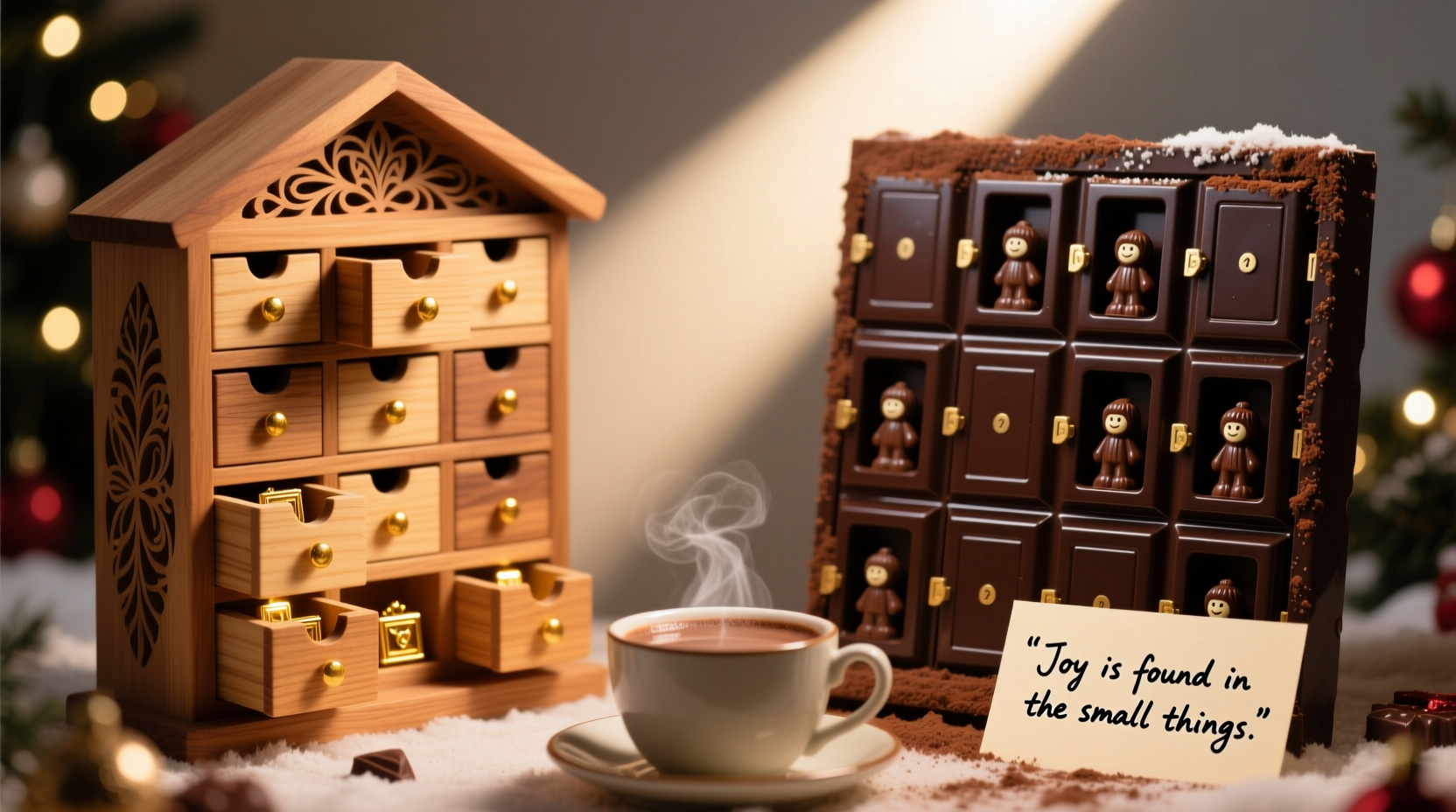
Psychologists have long studied the power of anticipation. Research shows that the build-up to an event often delivers more happiness than the event itself. The 24-day countdown of an advent calendar is essentially a structured exercise in delayed gratification, carefully designed to stretch joy over nearly a month.
Chocolate calendars tap into immediate sensory reward. Each day, a small door opens to reveal a sweet morsel—predictable, fleeting, and undeniably pleasurable. For children, especially, this tactile and gustatory feedback loop reinforces excitement. But because the reward is consumable and uniform, the experience risks becoming routine by mid-December.
In contrast, wooden calendars often emphasize variety and surprise. Behind each numbered drawer might be a handwritten note, a miniature ornament, a tea sample, or a family photo. The act of opening becomes less about consumption and more about discovery. This variability sustains engagement and deepens emotional investment.
“Anticipation is where memory begins. When children open a thoughtful gift each day—not just candy—they start building narratives, not just cravings.” — Dr. Lydia Monroe, Developmental Psychologist
Material Matters: Sustainability and Longevity
One of the most striking differences between wooden and chocolate advent calendars lies in their lifespan and environmental footprint.
A typical chocolate calendar is single-use. Made from cardboard, plastic inserts, and non-recyclable foil wrappers, it contributes to seasonal waste. Even if the box is composted, the production chain involves cocoa farming (often linked to deforestation), sugar processing, and global shipping—all for 24 bite-sized treats.
Wooden calendars, particularly those made from sustainably sourced birch or beech, are built to last. With proper care, they can be reused year after year, reducing waste and offering increasing sentimental value. Over five Christmases, one wooden calendar replaces five disposable ones—saving materials, money, and landfill space.
Beyond ecology, there’s a psychological benefit to reusability. A wooden calendar becomes part of a family’s tradition, accumulating stories and wear marks like a well-loved book. Children may recognize the slight wobble in drawer number 17 or the way the paint has faded near the star on top—details that anchor memory.
Comparison: Environmental and Practical Impact
| Feature | Chocolate Advent Calendar | Wooden Advent Calendar |
|---|---|---|
| Lifespan | Single season | 5–20+ years |
| Waste Generated | High (plastic, foil, mixed materials) | Negligible (reusable) |
| Cost Per Use (over 5 years) | $20 total → $20/year | $60 total → $12/year |
| Customization Potential | Low (fixed contents) | High (refillable, personalizable) |
| Emotional Resonance Over Time | Moderate (nostalgic, but repetitive) | High (evolves with family) |
Designing Daily Joy: Beyond Sugar and Sentiment
True daily joy arises not from passive consumption, but from active participation. Wooden calendars excel here because they invite curation. Filling the drawers becomes a ritual in itself—a chance for parents, partners, or even older children to craft moments of delight.
Instead of chocolates, consider rotating small joys: a joke written on a slip of paper, a matchbox car, a seed packet for spring planting, or a coupon for “one extra bedtime story.” These items cost little but create outsized emotional returns. One family uses their wooden calendar to hide daily acts of kindness—“Today, compliment a sibling” or “Call Grandma.” The calendar becomes not just a receiver of gifts, but a catalyst for generosity.
This level of intentionality is difficult with chocolate calendars. While some premium versions include toys or puzzles, most stick to sweets. And while there’s nothing wrong with enjoying chocolate, relying solely on food-based rewards can inadvertently teach children that joy is synonymous with eating—a problematic association in a culture already navigating complex relationships with food.
Mini Case Study: The Miller Family’s Shift
The Millers of Portland, Oregon, used chocolate calendars for years. By mid-December, their twin boys were restless, sneaking peeks at upcoming days and arguing over whose turn it was to open the door. In 2021, they switched to a handmade wooden calendar with 24 fabric pouches.
Each night, the parents placed a small item inside: a LEGO piece, a riddle, a mini flashlight, or a note like “You made someone smile today.” They also added four “family activity” days—building a gingerbread house, watching a classic film, baking cookies, and volunteering at a shelter.
By Christmas Eve, the boys weren’t just excited—they were reflective. “I liked the day we helped pack food,” said eight-year-old Leo. “It felt like we were part of something big.” The calendar had become less about receiving and more about experiencing.
Practical Guide: Transitioning to a Wooden Calendar
Switching from chocolate to wooden doesn’t mean abandoning tradition—it means evolving it. Follow this step-by-step approach to make the shift meaningful and sustainable.
- Choose the Right Calendar: Look for unfinished wood if you want to personalize with paint or engraving. Ensure drawers or cubbies are large enough for varied items.
- Plan Your Contents Early: Start brainstorming ideas in November. Mix tangible items (toys, crafts) with experiential ones (privileges, activities).
- Involve the Whole Family: Let children help decide what goes in certain drawers. This builds buy-in and reduces resistance to change.
- Create a Refill System: After Christmas, empty the calendar and store refill items in labeled envelopes (e.g., “Day 7 – Puzzle,” “Day 18 – Hot Cocoa Kit”).
- Add Yearly Layers: Each December, incorporate one new tradition—like adding a letter from Santa or including a photo from the previous year’s holiday.
When Chocolate Calendars Still Have a Place
It’s important to acknowledge that chocolate calendars aren’t inherently inferior. For some families, they represent continuity, comfort, and cultural tradition. In households where simplicity is valued, a chocolate calendar provides a low-effort, universally enjoyed ritual.
They also serve a practical purpose: teaching young children the concept of counting down. The visual of opening one door per day helps preschoolers grasp the passage of time. Moreover, moderate chocolate consumption—as part of a balanced diet—can be a joyful, shared experience.
The key is balance. Some families adopt a hybrid model: a wooden calendar for experiences and a small chocolate version for taste. Others reserve chocolate calendars for older kids who appreciate gourmet varieties, using wooden ones for younger children focused on play and discovery.
Checklist: Choosing What’s Right for Your Household
- ☐ Consider your family’s values—do you prioritize sustainability, creativity, or convenience?
- ☐ Assess the age range of participants—toddlers may prefer immediate rewards; older kids enjoy surprises.
- ☐ Evaluate time and budget—wooden calendars require upfront investment and preparation.
- ☐ Think long-term—will this become a keepsake or a one-season item?
- ☐ Test gently—try a wooden calendar alongside a chocolate one before fully transitioning.
Frequently Asked Questions
Can wooden advent calendars be used for non-religious holidays?
Absolutely. Many families use them for Hanukkah, New Year’s, or even secular winter celebrations. The structure works for any countdown, and contents can reflect personal or cultural themes—science experiments, music tracks, or daily affirmations.
Are wooden calendars safe for young children?
Most are designed with safety in mind—rounded edges, non-toxic finishes, and secure construction. Always check manufacturer guidelines for age suitability. Supervise very young children to prevent choking hazards from small fillers.
Where can I find affordable wooden advent calendars?
While high-end artisanal versions exist, budget-friendly options are available from retailers like IKEA, Etsy, or educational toy stores. DIY kits made from pre-cut wood panels offer a lower-cost entry point and can become a fun family project.
Conclusion: Cultivating Joy That Lasts
The choice between wooden and chocolate advent calendars isn’t merely logistical—it reflects a philosophy of celebration. Chocolate calendars deliver sweetness, yes, but often in isolation: a private, silent moment of consumption. Wooden calendars, when thoughtfully curated, foster connection: a shared pause, a spark of laughter, a memory in the making.
Daily joy shouldn’t be disposable. It should be something that accumulates, deepens, and echoes through the years. A wooden calendar, refilled with care and opened with presence, does more than mark days—it shapes how we experience them.
Whether you keep the chocolate tradition, switch to wood, or blend both, the goal remains the same: to slow down, savor the season, and find wonder in the ordinary. This December, consider not just what’s behind each door, but what opens within us when we take the time to look.




 浙公网安备
33010002000092号
浙公网安备
33010002000092号 浙B2-20120091-4
Comments
No comments yet. Why don't you start the discussion?