
Choosing the right skirt suit for a professional environment goes beyond cut and color. The fabric plays a crucial role in how you’re perceived, how comfortable you feel, and how long your investment lasts. Among the most common materials are wool and polyester—two fabrics that occupy opposite ends of the spectrum in terms of origin, performance, and perception. But does this difference actually impact how professional you look?
The short answer is yes. While both fabrics can be tailored into sharp, polished suits, their inherent qualities influence everything from drape and breathability to wrinkle resistance and longevity. Understanding these differences empowers professionals to make informed decisions based on their lifestyle, climate, budget, and career demands.
Fabric Fundamentals: Wool and Polyester Compared
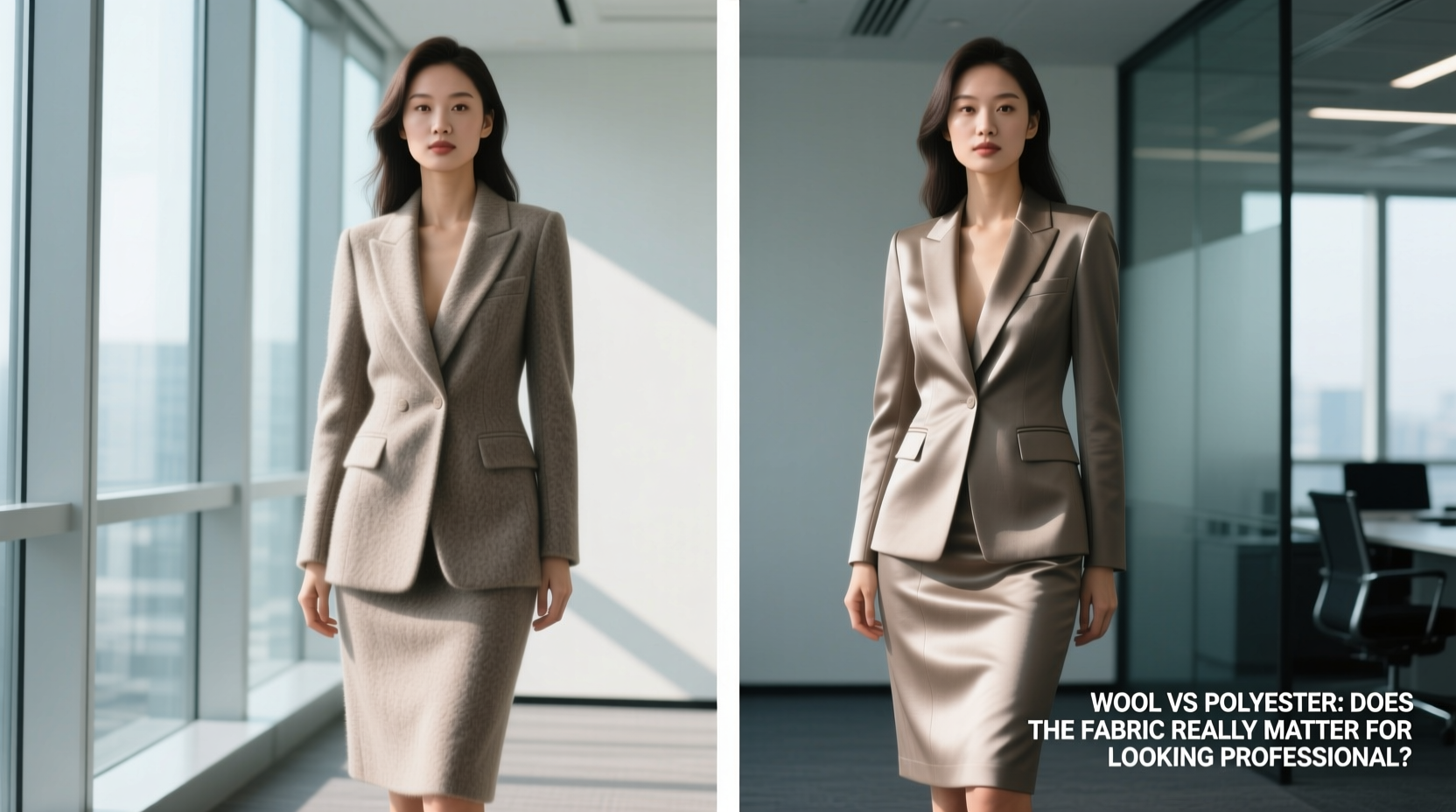
Wool is a natural fiber derived from sheep, prized for centuries in tailoring for its resilience, warmth regulation, and elegant drape. It's breathable, moisture-wicking, and naturally resists odors, making it ideal for long workdays or high-stakes meetings. High-quality wool, such as merino or worsted, offers a soft hand feel and a refined luster that signals sophistication.
Polyester, on the other hand, is a synthetic fiber made from petroleum-based polymers. It’s engineered for durability, low maintenance, and affordability. Modern polyester blends often mimic the look of wool at a fraction of the cost, but they lack the same breathability and environmental responsiveness. While advanced weaving techniques have improved its aesthetic, polyester still struggles with heat retention and static buildup.
“Fabric is not just about comfort—it’s a silent communicator of professionalism. Wool conveys care, quality, and attention to detail.” — Clara Bennett, Corporate Stylist & Wardrobe Consultant
Performance in the Workplace: Comfort, Durability, and Maintenance
In a typical office setting, subtle factors like temperature fluctuations, sitting for extended periods, and frequent movement test a suit’s performance. Wool excels here due to its thermoregulatory properties. It keeps you warm in winter and surprisingly cool in summer by wicking moisture away from the skin. Its natural elasticity allows for ease of movement without losing shape.
Polyester may feel stiffer and trap heat, leading to discomfort during long meetings or commutes. However, it wins in wrinkle resistance and durability. A polyester suit can survive being packed in a suitcase or stored folded far better than wool, which requires careful hanging and periodic steaming. For frequent travelers or those with limited access to dry cleaning, this practicality cannot be overlooked.
Visual Impact: How Fabric Influences Perception
First impressions in professional settings are shaped within seconds. The texture, sheen, and drape of your clothing contribute significantly to how authoritative, trustworthy, or put-together you appear.
Wool has a matte, rich finish that absorbs light subtly, lending depth and elegance to a suit. It drapes fluidly over the body, enhancing tailoring precision. In client-facing roles—law, finance, consulting—this quiet luxury communicates credibility and experience.
Polyester, especially lower-grade versions, can appear shiny under artificial lighting, giving off a “cheap” or overly synthetic look. It tends to cling or box awkwardly around joints, particularly if the weave is tight. That said, high-end microfiber polyesters used in designer businesswear have closed this gap considerably, offering a clean, modern aesthetic suitable for creative industries or tech environments where formality is relaxed.
| Feature | Wool Suit | Polyester Suit |
|---|---|---|
| Drape & Fit | Superior; follows body contours naturally | Stiffer; may pull at seams |
| Wrinkle Resistance | Moderate; requires steaming | High; maintains shape after folding |
| Breathability | Excellent; regulates temperature | Poor; traps heat and sweat |
| Professional Perception | High; associated with quality and tradition | Variable; depends on quality and context |
| Lifespan (with care) | 5–10 years | 2–4 years |
| Care Requirements | Dry clean recommended; sensitive to moisture | Often machine washable; low maintenance |
Real-World Example: Two Professionals, Two Choices
Sophia, a corporate lawyer in Chicago, wears a navy wool skirt suit nearly every day during trial season. She values how it holds up under pressure—literally and figuratively. “Even after eight hours in court, my suit doesn’t look tired,” she says. “It breathes, it moves with me, and clients comment on how ‘put together’ I look.” She invests in annual professional cleaning and stores her suits on padded hangers.
In contrast, Jamal, a regional sales manager who travels weekly, relies on a polyester-blend skirt suit for its resilience. “I live out of my carry-on,” he explains. “I fold my suit, wear it straight from the bag, and it looks presentable. I don’t have time for dry cleaning every week.” His suit performs well under travel stress, though he admits it feels warmer in southern climates and occasionally develops static in dry offices.
Their choices reflect different priorities: Sophia prioritizes prestige and comfort in a formal environment; Jamal values convenience and durability on the road. Both look professional—but for different reasons and in different contexts.
How to Choose the Right Fabric for Your Career Stage
Your profession, workplace culture, and daily routine should guide your decision more than price alone. Consider these questions when selecting a skirt suit:
- Do you attend high-stakes meetings or client presentations regularly?
- Are you frequently traveling or commuting?
- Is your office climate-controlled, or do temperatures fluctuate?
- Do you have access to regular garment care (steaming, dry cleaning)?
- What is the expected dress code—traditional business formal or business casual?
For conservative fields like law, banking, or executive leadership, a pure or high-wool-content suit remains the gold standard. It projects authority and attention to detail. In fast-paced, mobile roles—such as field sales, education, or remote hybrid work—a durable polyester or wool-polyester blend may offer better functionality without sacrificing too much in appearance.
“The best professional wardrobe balances image and practicality. There’s no one-size-fits-all, but wool consistently elevates presence.” — Marcus Lin, Fashion Director at *Executive Style Review*
Checklist: Selecting Your Ideal Skirt Suit Fabric
- ✅ Assess your daily work environment (office, travel, climate)
- ✅ Determine your budget for initial purchase and ongoing care
- ✅ Evaluate wrinkle resistance needs based on commute or storage
- ✅ Prioritize breathability if you're in a warm office or prone to overheating
- ✅ Consider the cultural norms of your industry (conservative vs. modern)
- ✅ Test drape and movement in person before buying
- ✅ Check fabric content label—even “wool-like” isn’t wool
Frequently Asked Questions
Can a polyester suit look as professional as a wool one?
Yes, but only if it’s high-quality, well-tailored, and made from advanced microfibers. Cheap polyester often appears shiny or stiff, undermining professionalism. In less formal industries, a premium polyester suit can pass as professional, especially when paired with structured blazers and crisp blouses.
Is wool worth the extra cost?
For many professionals, yes. Wool’s longevity, comfort, and superior aesthetic typically justify the higher upfront cost. Over five years, a $600 wool suit worn twice weekly will outperform and outlast three $200 polyester suits, both in appearance and wearability.
How do I care for a wool skirt suit?
Avoid frequent washing. Instead, air it out between wears, spot clean when needed, and steam gently to remove wrinkles. Store on a wide, padded hanger in a breathable garment bag. Dry clean only when necessary—over-cleaning can degrade fibers over time.
Conclusion: Fabric Matters—But Context Matters More
The choice between wool and polyester isn’t just about aesthetics or price—it’s about aligning your wardrobe with your professional identity and daily reality. Wool delivers timeless elegance, superior comfort, and enduring quality, making it the preferred choice for those in traditional, client-facing roles. Polyester offers resilience, affordability, and low maintenance, appealing to busy professionals who value practicality.
Ultimately, looking professional isn’t solely determined by fabric, but fabric undeniably shapes the impression you make. By understanding the strengths and limitations of each material, you can choose a skirt suit that not only looks sharp but supports your career goals and lifestyle.




 浙公网安备
33010002000092号
浙公网安备
33010002000092号 浙B2-20120091-4
Comments
No comments yet. Why don't you start the discussion?