
Choosing the right bag for your daily commute isn’t just about aesthetics—it’s a decision that affects posture, productivity, and long-term comfort. Woven tote bags have surged in popularity for their artisanal charm and eco-friendly materials, while backpacks remain a staple for ergonomic support and balanced weight distribution. But when it comes to practicality for a full workday, which truly wins? The answer depends on your routine, load, and personal priorities.
Daily Load and Capacity: What Are You Carrying?
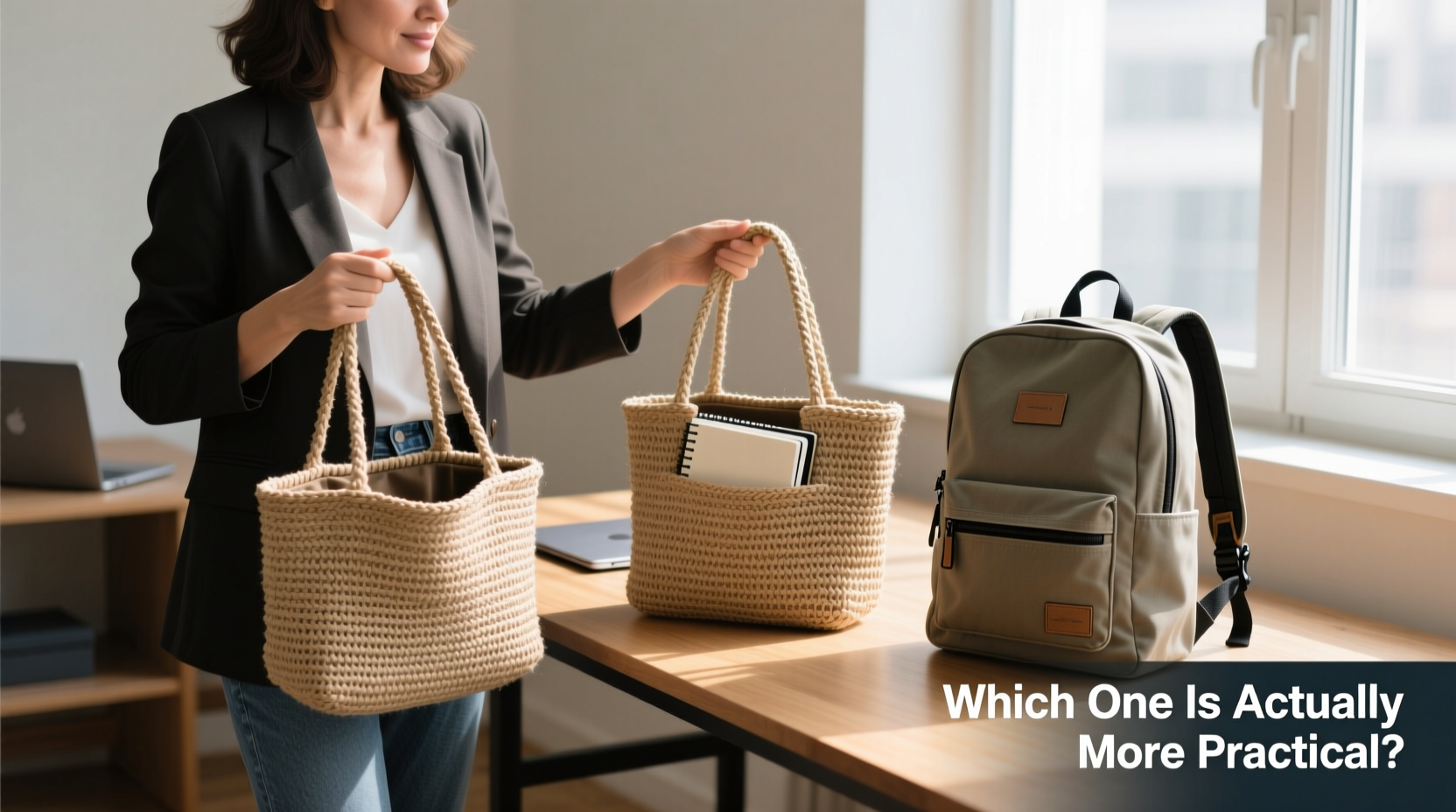
The first consideration is what you carry to work. A laptop, charger, notebook, water bottle, lunch container, and personal items can easily add up to 10–15 pounds. How each bag handles this weight determines its real-world usability.
Woven tote bags typically feature open tops and wide mouths, making access easy. However, they often lack internal compartments, leading to disorganization. Their single-shoulder or double-handled design concentrates weight on one shoulder, which can cause strain over time—especially with heavier loads.
Backpacks, by contrast, distribute weight evenly across both shoulders and often include padded straps, back panels, and multiple pockets. This makes them better suited for carrying laptops securely, organizing documents, and managing bulkier items without discomfort.
Ergonomics and Comfort: Long-Term Wearability
Spending hours commuting or walking between meetings demands a bag that supports your body, not fights against it. Ergonomics play a critical role in determining which bag enhances—or hinders—your daily experience.
Tote bags force an uneven posture. Carrying one on a single shoulder causes spinal misalignment over time. Even double-handled totes require constant grip adjustments and don’t stabilize contents well during movement. For those with existing back or neck issues, this can exacerbate pain.
Backpacks align with natural spine curvature. High-quality models include chest and waist straps that further stabilize the load, reducing sway and improving balance. Breathable mesh backs prevent overheating—a crucial benefit during summer commutes or outdoor transit.
“Uneven weight distribution from shoulder bags is one of the top contributors to postural strain in urban professionals.” — Dr. Lena Torres, Physical Therapist & Ergonomics Consultant
Material Durability and Weather Resistance
Woven materials like cotton, jute, or recycled fibers offer sustainability and visual appeal but come with trade-offs. Most are not inherently water-resistant. Rain, spills, or even humidity can lead to staining, warping, or mold if not properly cared for.
Backpacks, especially those designed for urban professionals, often use water-repellent fabrics like ballistic nylon, polyester blends, or treated canvas. Many include rain covers or sealed zippers, protecting electronics and documents from sudden downpours.
That said, some premium woven totes now integrate interior linings or removable protective sleeves. Still, unless explicitly labeled as weather-ready, assume woven bags are best for dry conditions only.
| Feature | Woven Tote Bag | Work Backpack |
|---|---|---|
| Weight Distribution | Poor (single-shoulder strain) | Excellent (balanced, dual-strap) |
| Capacity & Organization | Limited compartments, prone to clutter | Multipocket, laptop sleeve, zip security |
| Weather Resistance | Low (unless lined or coated) | High (many models include protection) |
| Style & Professionalism | High (artisanal, trendy) | Moderate to high (modern minimalist options) |
| Durability (Daily Use) | Moderate (fraying at stress points) | High (reinforced stitching, abrasion-resistant) |
Real-World Scenario: Two Commuters, Two Choices
Case Study: Maya vs. Jordan
Maya works in creative branding and values aesthetics. She uses a handwoven linen tote with leather trim. It carries her tablet, sketchbook, and coffee cup. Her office is a 10-minute walk from the subway. While she loves the look, she notices shoulder soreness after full days and avoids using it in the rain.
Jordan is a software engineer who commutes 45 minutes via bike and train. He carries a 15-inch laptop, external hard drive, headphones, gym clothes, and lunch. His compact urban backpack has anti-theft zippers, a ventilated back panel, and reflective strips. Despite heavy use, he reports no discomfort and appreciates the organization.
Both bags suit their lifestyles—but only Jordan’s scales with increasing demands. Maya might consider switching on travel-heavy days, while Jordan’s choice remains consistently functional.
When a Woven Tote Makes Sense
A woven tote isn’t impractical—it’s context-dependent. It excels in specific scenarios:
- You carry light loads (tablet, notebook, wallet, keys).
- Your commute is short and sheltered (walking, rideshare, minimal transit).
- Professional image matters more than utility (client meetings, fashion-forward offices).
- You value sustainability and handmade craftsmanship.
For these cases, a tote can be both stylish and sufficient. Just ensure it has reinforced handles, a structured base, and preferably an interior zip pocket for essentials.
Step-by-Step: Choosing Your Ideal Work Bag
- Assess your typical load: Weigh your usual items or simulate a day’s carry.
- Map your commute: Note walking distance, transit type, weather patterns.
- Evaluate comfort needs: Do you have back or shoulder sensitivities?
- Define your style environment: Is your workplace formal, casual, or creative?
- Test prototypes: Carry each bag for a full day and rate comfort, access, and confidence.
- Check durability features: Look for reinforced seams, quality zippers, and fabric resilience.
Hybrid Solutions: Best of Both Worlds?
Some brands now blend tote elegance with backpack functionality. Convertible designs feature hidden backpack straps that tuck away when not in use. Others offer tote-backpack combos where the same bag transforms via strap adjustment.
These hybrids allow style flexibility: wear as a tote for client lunches, switch to backpack mode for the ride home. However, they may compromise on structural integrity—straps and attachment points become weak spots with frequent switching.
If opting for a hybrid, prioritize models with durable hardware, secure strap locks, and independent suspension systems so conversion doesn’t sacrifice safety or fit.
Frequently Asked Questions
Can I carry a laptop safely in a woven tote?
Only if the tote has a padded laptop sleeve or you use a protective case. Unprotected laptops risk damage from bumps and pressure, especially if the tote lacks structure. Avoid placing heavy items at the top where they can tip forward.
Are backpacks unprofessional for office settings?
Not anymore. Modern work backpacks come in sleek, minimalist designs in black, navy, or charcoal gray. Look for clean lines, subtle branding, and premium finishes. In tech, startups, and hybrid workplaces, they’re often the norm.
How do I extend the life of my woven tote?
Rotate usage, store flat or stuffed with tissue to retain shape, and avoid exposure to moisture. Hand wash with mild soap if needed, and never machine-dry. Keep leather-trimmed versions conditioned to prevent cracking.
Final Recommendation: Practicality Wins
For most working professionals, the backpack is the more practical choice. Its superior weight distribution, organizational features, and resilience to daily wear make it ideal for consistent, comfortable use. It adapts seamlessly to changing schedules, weather, and transport modes.
Woven tote bags shine in niche roles—short commutes, light loads, and style-first environments. They reflect personality and sustainability values but shouldn’t be the default for heavy-duty use.
The smart approach? Own both. Use the tote when image and simplicity matter. Reach for the backpack when function, comfort, and protection take priority. Versatility lies not in choosing one over the other, but in knowing when each serves you best.




 浙公网安备
33010002000092号
浙公网安备
33010002000092号 浙B2-20120091-4
Comments
No comments yet. Why don't you start the discussion?