
For wrestling fans who grew up during the late 2000s, the WWE SmackDown vs. Raw series was a cultural staple. Among its many entries, WWE SmackDown vs. Raw 2011 stands out as a transitional title—one that introduced new mechanics while retaining the core feel of earlier games. Now, more than a decade later, players often wonder: Is this PS3 classic still worth revisiting in 2024? Or should you stick with earlier installments like SVR 2006 or 2007, which are often praised for their simplicity and arcade-style action?
The answer isn't straightforward. While 2011 brought technical advancements, it also marked a shift in design philosophy that alienated some long-time fans. Understanding whether it holds up today requires examining gameplay mechanics, roster depth, online functionality (or lack thereof), and how it stacks up against both its predecessors and modern alternatives.
Evolution of the Series: Where SVR 2011 Fits In
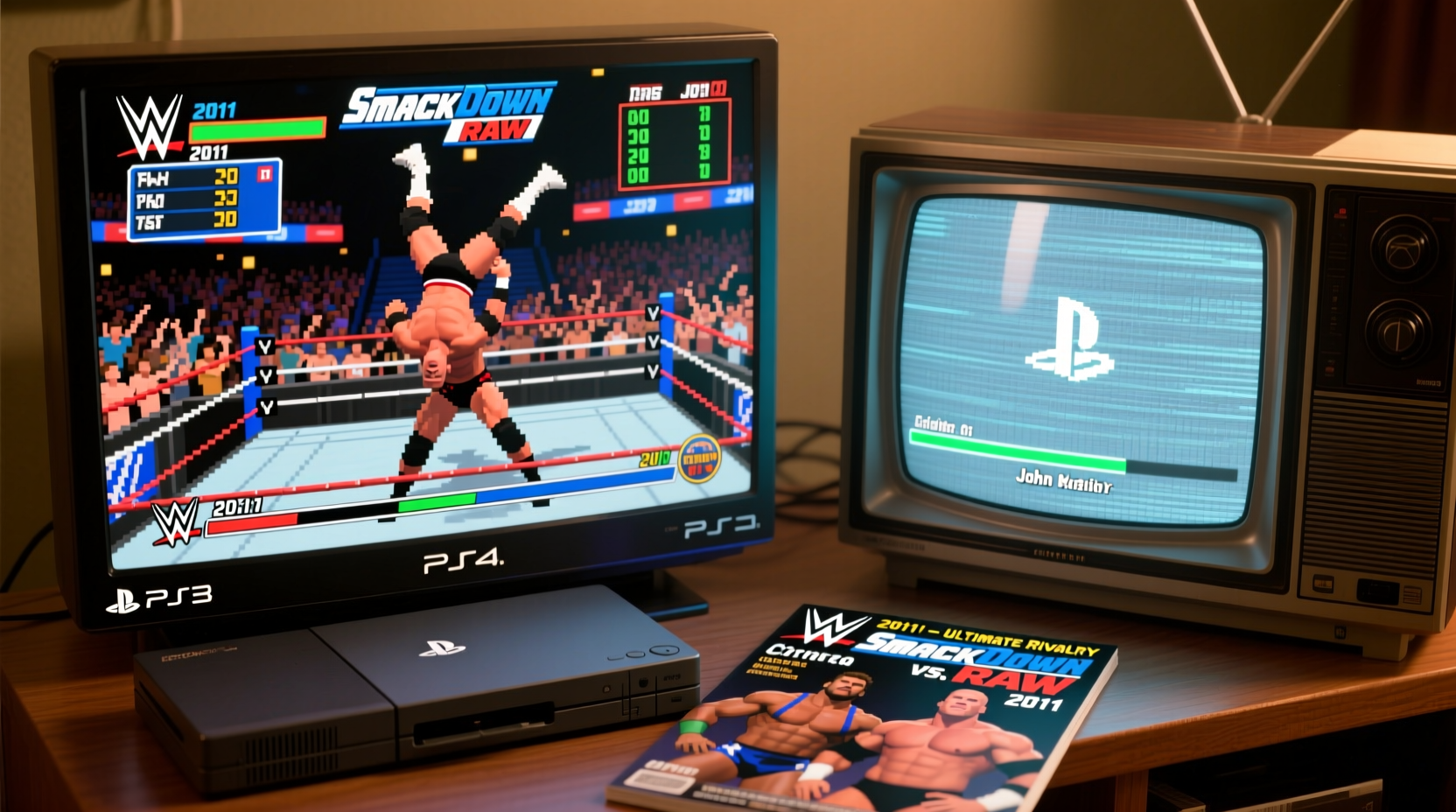
The SmackDown vs. Raw series evolved significantly between 2005 and 2011. Early titles focused on fast-paced, accessible brawling with simple controls and strong emphasis on story modes. By 2011, THQ aimed to make the franchise more simulation-heavy, introducing mechanics like momentum-based striking, stamina management, and a revamped grapple system.
SVR 2011 was one of the first entries built from the ground up for HD consoles. This meant improved character models, smoother animations, and a more cinematic presentation. However, the shift toward realism came at a cost—some of the arcade fun that defined earlier entries began to fade.
Notably, 2011 introduced the \"Road to WrestleMania\" mode, which offered multiple branching storylines featuring John Cena, Randy Orton, and even Rey Mysterio in a stealth-based side mission. While ambitious, these campaigns were criticized for being short and overly scripted.
Gameplay Mechanics: Innovation vs. Accessibility
One of the most significant changes in SVR 2011 was the introduction of the Momentum Grappling System. Unlike previous entries where grapples were context-sensitive but largely automatic, 2011 required players to build momentum through strikes before executing certain moves. This added a layer of strategy but slowed down pacing.
The match flow became more deliberate. Counters and reversals were more nuanced, and the stamina bar had a real impact on performance—overusing strikes would tire your wrestler, making them vulnerable. For players seeking a deeper, more tactical experience, this was a welcome evolution.
However, longtime fans of SVR 2006 or 2007 often found the newer system less intuitive. Those titles emphasized fast, high-impact matches with exaggerated physics and easy-to-execute signature combos. In contrast, 2011 felt heavier, sometimes sluggish—especially in multi-man matches.
“By 2011, the series was trying to balance arcade fun with simulation realism. It didn’t fully satisfy either camp.” — Mark Reynolds, Sports Game Historian & Former IGN Contributor
Feature Comparison: SVR 2011 vs. Older Entries
| Feature | SVR 2011 | SVR 2007 | SVR 2006 |
|---|---|---|---|
| Graphics & Presentation | HD models, dynamic lighting | Standard-def, flat textures | Early PS2-era visuals |
| Control Scheme | Momentum-based grappling, stamina | Simple grapple chains | Button-mash friendly |
| Roster Size | 60+ wrestlers | 40+ wrestlers | ~35 wrestlers |
| Creation Suite | Robust (Create-a-Superstar, -Stable, -Universe) | Limited creation tools | Basic create-a-wrestler |
| Match Speed | Moderate to slow | Fast and fluid | Very fast |
| Online Play (as of 2024) | Servers discontinued | No online support | No online support |
As shown, SVR 2011 wins in technical areas—roster size, customization, and visual fidelity. But older entries offer a purer, more energetic wrestling experience that many still prefer for casual play.
Real-World Example: A Fan’s Weekend Tournament
Daniel, a long-time wrestling gamer from Austin, recently hosted a retro gaming night with friends. They rotated between SVR 2006, 2007, and 2011 across two evenings. The group quickly noticed differences in pacing. Matches in 2006 lasted under five minutes on average, filled with dives, run-ins, and rapid-fire finishers. In contrast, 2011 matches often stretched past ten minutes, with players carefully managing stamina and counters.
While some appreciated the depth of 2011, others found it “too much like work.” One player remarked, “I just want to throw Triple H into a steel chair and hit a Pedigree off the top rope—not wait 90 seconds to build enough momentum for a basic suplex.”
In the end, the group returned to SVR 2007 for the finale. The consensus? 2011 is technically superior, but 2007 delivers the fun they remember from childhood.
Should You Play It in 2024? A Step-by-Step Decision Guide
Deciding whether to revisit WWE SmackDown vs. Raw 2011 depends on what you value in a wrestling game. Follow this decision path to determine if it's right for you:
- Assess your preferred play style: Do you enjoy slower, strategic matches with realistic mechanics? If yes, 2011 may appeal. If you prefer fast, over-the-top action, lean toward 2006–2007.
- Check your hardware: The PS3 version runs well on original hardware or via backward compatibility on PS5 (through disc emulation, if supported). Otherwise, ensure you have access to a working console.
- Evaluate your interest in creation tools: If you love building custom wrestlers, stables, or entire universes, 2011 offers the deepest suite in the pre-2K era.
- Consider multiplayer needs: Online servers are long gone. Local multiplayer is still functional, so gather friends for couch play if possible.
- Test before committing: Try a rental or borrow a copy. Play three matches across different modes to gauge enjoyment.
Frequently Asked Questions
Can I still play online in 2024?
No. Sony shut down online services for PS3 games in 2021. All multiplayer must be local (couch co-op or split-screen).
Is the Create-a-Universe mode worth it?
Yes, especially for solo players. You can simulate full WWE seasons, assign rivalries, and manage brand splits. It adds dozens of hours of replayability.
How does it compare to WWE 2K24?
Modern 2K games are far more advanced visually and mechanically, but they require current-gen consoles. If you’re limited to PS3, 2011 remains the most feature-complete option.
Final Verdict: Nostalgia Meets Nuance
WWE SmackDown vs. Raw 2011 isn’t the most fun entry in the series, but it is one of the most complete. Its blend of creation tools, expanded rosters, and refined mechanics makes it a compelling choice for players who appreciate depth over speed. That said, if your goal is pure entertainment and fast-paced chaos, the earlier entries—particularly SVR 2007—still deliver unmatched energy.
Ultimately, your choice depends on intent. Are you reliving memories with friends? Go for 2006 or 2007. Are you diving into a solo campaign with custom content? 2011 earns its place.




 浙公网安备
33010002000092号
浙公网安备
33010002000092号 浙B2-20120091-4
Comments
No comments yet. Why don't you start the discussion?