
If you've noticed that your web browsing experience has suddenly shifted—searches redirecting, new tabs opening with Yahoo, or your preferred browser no longer launching by default—you're not imagining things. Many users report that Yahoo repeatedly resets itself as their default browser or search engine, often without consent. This isn't a glitch—it's typically the result of software behavior, bundled installations, or browser hijackers. The good news is that it can be fixed, and more importantly, prevented from happening again.
Why Yahoo Keeps Taking Over Your Browser
The most common reason Yahoo becomes your default browser or homepage is through third-party software installations. When downloading free programs—especially media players, PDF converters, or system utilities—users often skip reading installation prompts. These installers frequently include optional components that modify browser settings, promoting Yahoo as the default search engine or homepage.
Browser hijackers, a type of potentially unwanted program (PUP), are another culprit. These programs alter your browser settings to redirect traffic to specific websites, often for advertising revenue. They may change your start page, default search engine, or even inject sponsored results into your searches.
Additionally, some older versions of certain toolbars or extensions—particularly those associated with AOL, Yahoo Companion, or outdated security software—can reactivate after updates or reboots, restoring Yahoo settings even after manual removal.
“Over 30% of browser hijacking cases we analyze stem from seemingly harmless freeware downloads that bundle ad-supported toolbars.” — Sarah Lin, Cybersecurity Analyst at NetShield Labs
Step-by-Step: How to Remove Yahoo as Default Browser
Fixing this issue requires checking multiple layers of your system: browser settings, installed applications, and startup processes. Follow this sequence carefully.
- Open your preferred browser (Chrome, Firefox, Edge, etc.).
- Navigate to Settings > Privacy and Security > Search Engine.
- Select your preferred search engine (e.g., Google, Bing, DuckDuckGo) as default.
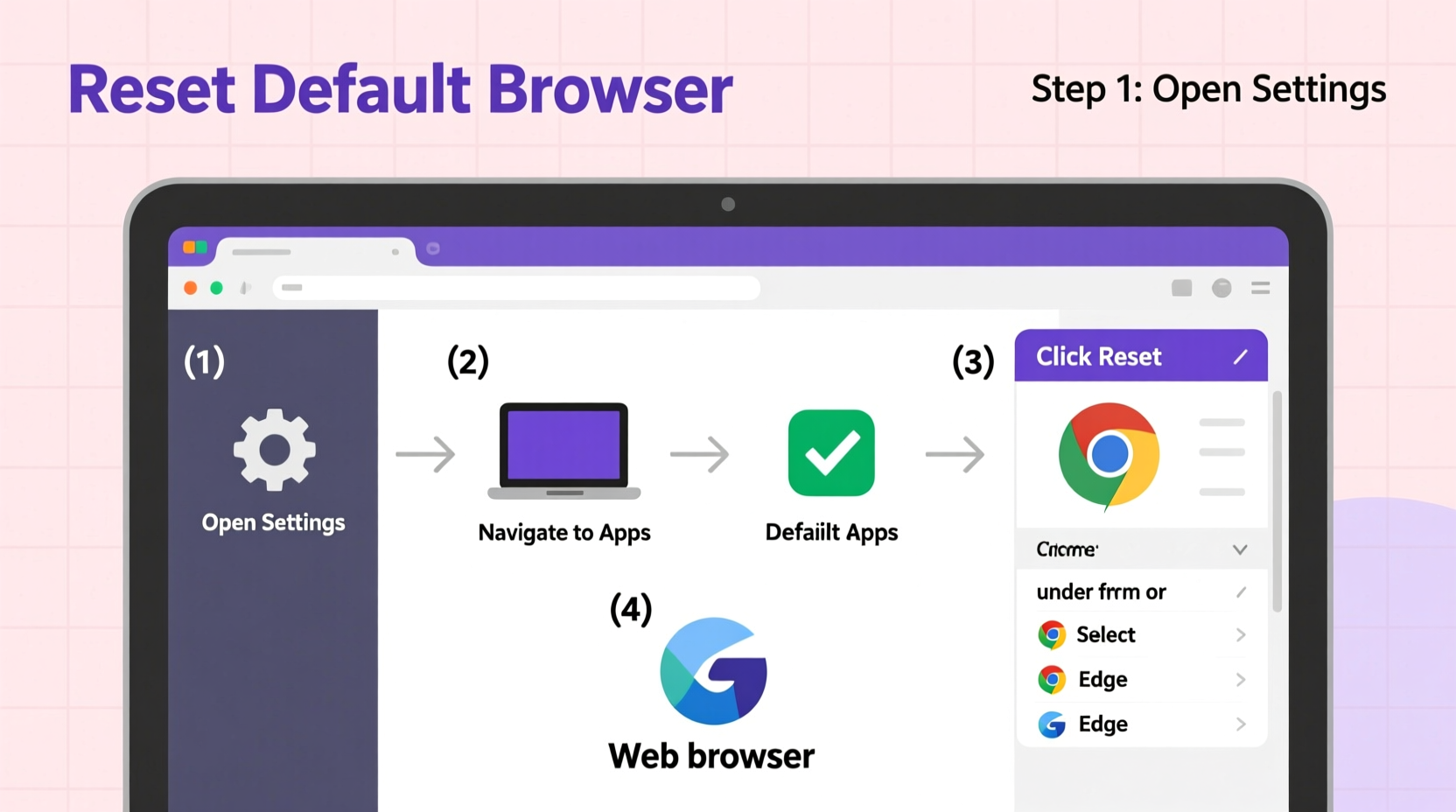
- Go to Settings > Apps > Default Apps (on Windows) or General > Default Web Browser (on macOS).
- Choose your desired browser (e.g., Chrome, Safari, Firefox) instead of Yahoo or Microsoft Edge if Yahoo is tied to it.
- Check for suspicious extensions: In your browser, go to Extensions or Add-ons and remove any labeled “Yahoo Toolbar,” “Search Helper,” or unknown entries.
- Clear browsing data: Cookies, cached images, and site data may retain redirects. Clear them via browser settings.
Check for Unwanted Programs and Toolbars
Even after adjusting browser settings, background programs can revert your changes. Here’s how to identify and uninstall them:
- On Windows: Go to Control Panel > Programs > Uninstall a Program.
- Sort by installation date and look for recently added software like “Yahoo Assistant,” “Conduit,” “Delta Search,” or “WebDiscover Browser.”
- Uninstall anything unfamiliar or related to Yahoo that you didn’t intentionally install.
- On macOS: Open Applications folder and drag suspicious apps to Trash. Use tools like AppCleaner to remove associated files.
Some PUPs hide under generic names like “Browser Manager” or “Search Protect.” If unsure, research the publisher online. Legitimate software will have clear branding and support sites.
Common Programs That Change Browser Settings
| Program Name | Potential Impact | Action Required |
|---|---|---|
| Yahoo Toolbar | Changes homepage & search engine | Uninstall via Control Panel |
| Conduit Search | Installs browser extensions and redirects | Remove + scan with anti-malware |
| WebCake / Trovi | Modifies new tab behavior | Delete extensions and registry entries |
| AOL Desktop Gold | Sets Yahoo as default in some configurations | Adjust settings or uninstall |
Prevent Future Hijacks: Best Practices
Once you’ve regained control, take steps to ensure Yahoo—or any other unwanted service—doesn’t return.
Essential Prevention Checklist
- ✅ Use custom installation mode for all downloads
- ✅ Decline offers to install toolbars or change your homepage
- ✅ Keep your operating system and browser updated
- ✅ Install a reputable ad-blocker (e.g., uBlock Origin)
- ✅ Run monthly scans with Malwarebytes or similar tools
- ✅ Regularly review browser extensions and permissions
Consider using a dedicated adware scanner. While traditional antivirus software focuses on viruses and ransomware, tools like Malwarebytes, AdwCleaner, or HitmanPro specialize in detecting and removing browser hijackers and PUPs.
Real Example: How One User Fixed Recurring Yahoo Redirects
Jamie, a freelance writer using Windows 10 and Chrome, kept finding her default search engine switched back to Yahoo every few days. She had already changed it manually twice but saw no lasting fix. After reviewing her installed programs, she found “PDF Converter Pro” installed alongside a “Search Enhancement Module.” Though she remembered installing the PDF tool, she hadn’t noticed the extra component during setup.
After uninstalling both programs and running a scan with Malwarebytes, Jamie cleared Chrome’s cookies and reset browser settings. She then disabled unnecessary extensions and enabled Chrome’s built-in protection against malicious files. Since then, her browser has remained stable for over three months—with no more Yahoo takeovers.
Frequently Asked Questions
Why does Yahoo keep coming back after I remove it?
Yahoo-related settings often persist because an underlying program or extension reinstalls or reactivates them. Simply changing the default in your browser doesn’t remove the source. You must uninstall the associated software and clean up browser extensions to achieve a permanent fix.
Is Yahoo a virus?
No, Yahoo itself is not a virus. However, unauthorized software that forces Yahoo as your homepage or search engine may be classified as a potentially unwanted program (PUP) or browser hijacker. These are not always malicious but can compromise user experience and privacy.
Can resetting my browser fix this?
Yes, resetting your browser to default settings can help. In Chrome, go to Settings > Reset settings > Restore settings to their original defaults. This removes extensions, clears temporary data, and resets search engines and homepage. However, combine this with uninstalling suspicious programs for full effectiveness.
Conclusion: Take Back Control of Your Browsing Experience
Having your default browser hijacked by Yahoo is frustrating, but it’s a solvable problem. The key is understanding that the issue usually lies not with Yahoo directly, but with third-party software exploiting loose installation practices. By auditing your installed programs, securing browser settings, and adopting safer download habits, you can prevent future takeovers.
Your browser should reflect your choices—not the hidden agendas of bundled software. Take the time today to audit your system, remove unwanted add-ons, and lock in your preferred settings. A few minutes of maintenance now can save hours of frustration later.




 浙公网安备
33010002000092号
浙公网安备
33010002000092号 浙B2-20120091-4
Comments
No comments yet. Why don't you start the discussion?