
It’s a common question: if both yoga mats and exercise mats go on the floor during workouts, why can’t you just use one for everything? After all, they look similar—flat, rubbery, and rolled up in the corner of a gym bag. But appearances can be deceiving. While there’s some overlap in function, these mats are designed with different priorities in mind. Using the wrong one can lead to discomfort, reduced performance, or even injury. Understanding the distinctions helps you make smarter choices about your fitness gear—and whether a single mat can truly do it all.
Key Differences Between Yoga Mats and Exercise Mats
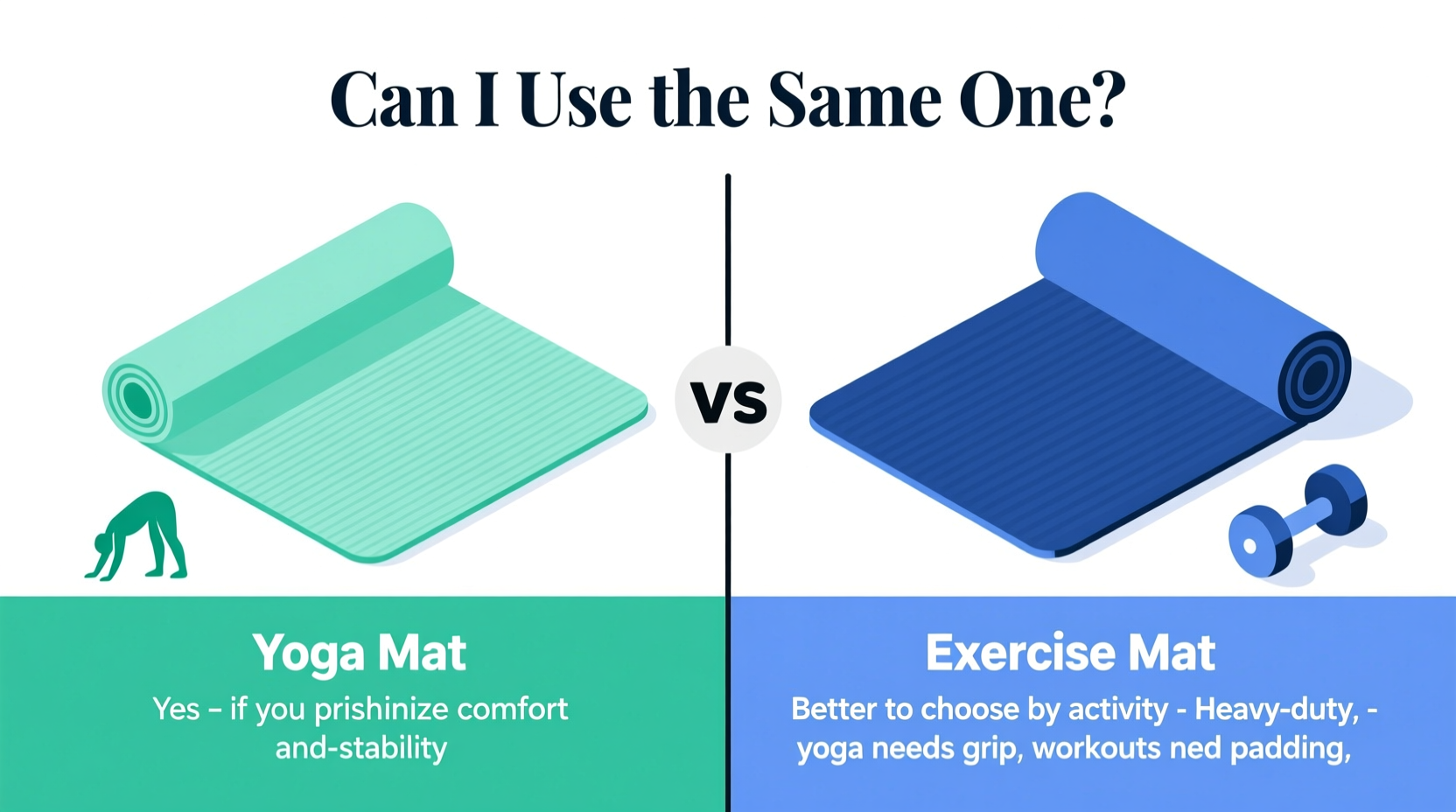
The core difference lies in design intent. A yoga mat is engineered for stability, grip, and comfort during static postures and transitions between poses. An exercise mat, on the other hand, prioritizes cushioning and durability for high-impact movements like jumping, burpees, or weight training.
Let’s break down the main variations:
- Thickness: Yoga mats average 3–6mm; exercise mats are often 10–20mm thick for joint protection.
- Material: Yoga mats use sticky rubber (like TPE or natural rubber) for grip; exercise mats use dense foam or EVA for shock absorption.
- Texture: Yoga mats have textured surfaces to prevent slipping during sweaty sessions; exercise mats may be smooth or slightly ribbed but focus less on traction.
- Portability: Yoga mats are lightweight and easy to roll; many exercise mats are bulkier and harder to transport.
When One Mat Might Be Enough
For casual users who practice light yoga and low-impact bodyweight exercises at home, a mid-range mat around 6mm thick with moderate cushioning might suffice. These hybrid options are marketed as \"all-purpose\" fitness mats and strike a balance between grip and padding.
However, “good enough” doesn’t mean optimal. Consider this real-world example:
Mini Case Study: Sarah, a remote worker, does 20-minute morning yoga flows and occasional ab workouts. She bought a standard 4mm yoga mat thinking it would cover both. Over time, she noticed knee pain during planks and crunches. Switching to a thicker 10mm exercise mat eliminated the discomfort—but now her downward dogs slip on the smoother surface. Her solution? Two mats: one for yoga, one for core work.
This scenario shows that while convenience is appealing, specialization often leads to better long-term results and comfort.
Comparison Table: Yoga Mat vs Exercise Mat
| Feature | Yoga Mat | Exercise Mat |
|---|---|---|
| Typical Thickness | 3–6 mm | 10–20 mm |
| Cushioning Level | Low to moderate | High |
| Grip/Texture | High-traction surface (sticky when dry/sweaty) | Smooth or lightly textured |
| Durability Against Wear | Moderate (can degrade with heavy dragging) | High (designed for repeated impact) |
| Best For | Yoga, Pilates, stretching, barre | HIIT, floor exercises, sit-ups, strength training |
| Portability | Easy to carry and store | Bulkier, heavier, less travel-friendly |
Expert Insight: What Fitness Professionals Recommend
Fitness trainers and physical therapists consistently emphasize using the right tool for the job. The wrong mat can compromise form and increase strain.
“Using a thin yoga mat for plyometric drills is like wearing dress shoes to hike Mount Everest. It might get you through the first mile, but your body will pay for it.” — Dr. Lena Torres, Physical Therapist and Movement Specialist
She adds: “I’ve seen clients develop knee tendinitis from repeatedly landing jumps on inadequate padding. A proper exercise mat absorbs force—up to 3–5 times body weight during jump squats.”
How to Choose Based on Your Routine
Your ideal choice depends on your primary activity. Use this checklist to guide your decision:
- Assess your weekly workout mix: More than 50% yoga or stretching? Prioritize a yoga mat. Mostly HIIT, abs, or strength circuits? Go for an exercise mat.
- Check your floor type: Hard surfaces (wood, tile) demand more cushioning. Carpeted floors allow thinner options.
- Consider sweat levels: Hot yoga or intense flows need non-slip materials like natural rubber or polyurethane.
- Evaluate storage space: Apartments or small homes may favor dual-use mats, though compromises apply.
- Test before you invest: Borrow or try mats at studios or gyms to feel thickness and grip firsthand.
Can You Use a Yoga Mat for Exercise (and Vice Versa)?
In short: sometimes—but with limitations.
A yoga mat can handle light calisthenics like glute bridges or seated stretches. But dynamic moves involving jumps, drops, or rolling (e.g., burpees, mountain climbers) require more shock absorption. Without it, stress concentrates on joints, especially knees and spine.
Conversely, using a thick exercise mat for yoga introduces instability. Poses like crow pose or half-moon rely on precise hand and foot placement. A soft, compressible surface makes balancing harder and increases slipping risk.
If you’re committed to owning just one mat, consider a 6–8mm all-surface fitness mat made from durable TPE with a textured top layer. These aim to blend grip and cushioning. Just know you’re optimizing for versatility, not peak performance in either discipline.
Frequently Asked Questions
Can I use an exercise mat for hot yoga?
Generally not ideal. Most thick exercise mats aren’t designed for moisture management and become slippery when wet. They also lack the sticky surface needed for precision holds in heated environments.
Are travel yoga mats too thin for regular workouts?
Yes. Travel mats are typically 1–3mm thick—great for portability but insufficient for any repetitive floor contact. Use them only for yoga on already-cushioned surfaces.
Do expensive mats last longer?
Often, yes. Higher-end materials like natural rubber or closed-cell TPE resist wear, tearing, and microbial growth better than cheap PVC. With proper care, premium mats can last 3–5 years versus 6–12 months for budget options.
Final Recommendation: Match the Mat to the Movement
While it’s tempting to simplify your fitness setup, your body benefits from purpose-built tools. Think of your mat as foundational support—just like proper footwear. Would you run a marathon in ballet slippers? Similarly, expecting one mat to excel at yoga, strength training, and cardio stretches its limits—literally and figuratively.
If space or budget forces a compromise, prioritize based on your most frequent activity. But if you’re serious about consistency, comfort, and injury prevention, investing in two specialized mats pays off in long-term health and performance.




 浙公网安备
33010002000092号
浙公网安备
33010002000092号 浙B2-20120091-4
Comments
No comments yet. Why don't you start the discussion?