
Every day, millions of people carry credit cards, IDs, transit passes, and loyalty cards in their pockets. How these cards are stored—whether in a zippered or open card holder—can significantly impact their longevity, accessibility, and safety. While both designs have loyal followings, the question remains: which one actually keeps your cards safer?
The answer isn’t as simple as “one is better.” It depends on your lifestyle, environment, and how you define “safe.” Is it protection from physical damage? Theft prevention? Durability over time? Each design has strengths and trade-offs that matter in different contexts.
Defining Card Safety: What Does “Safe” Really Mean?
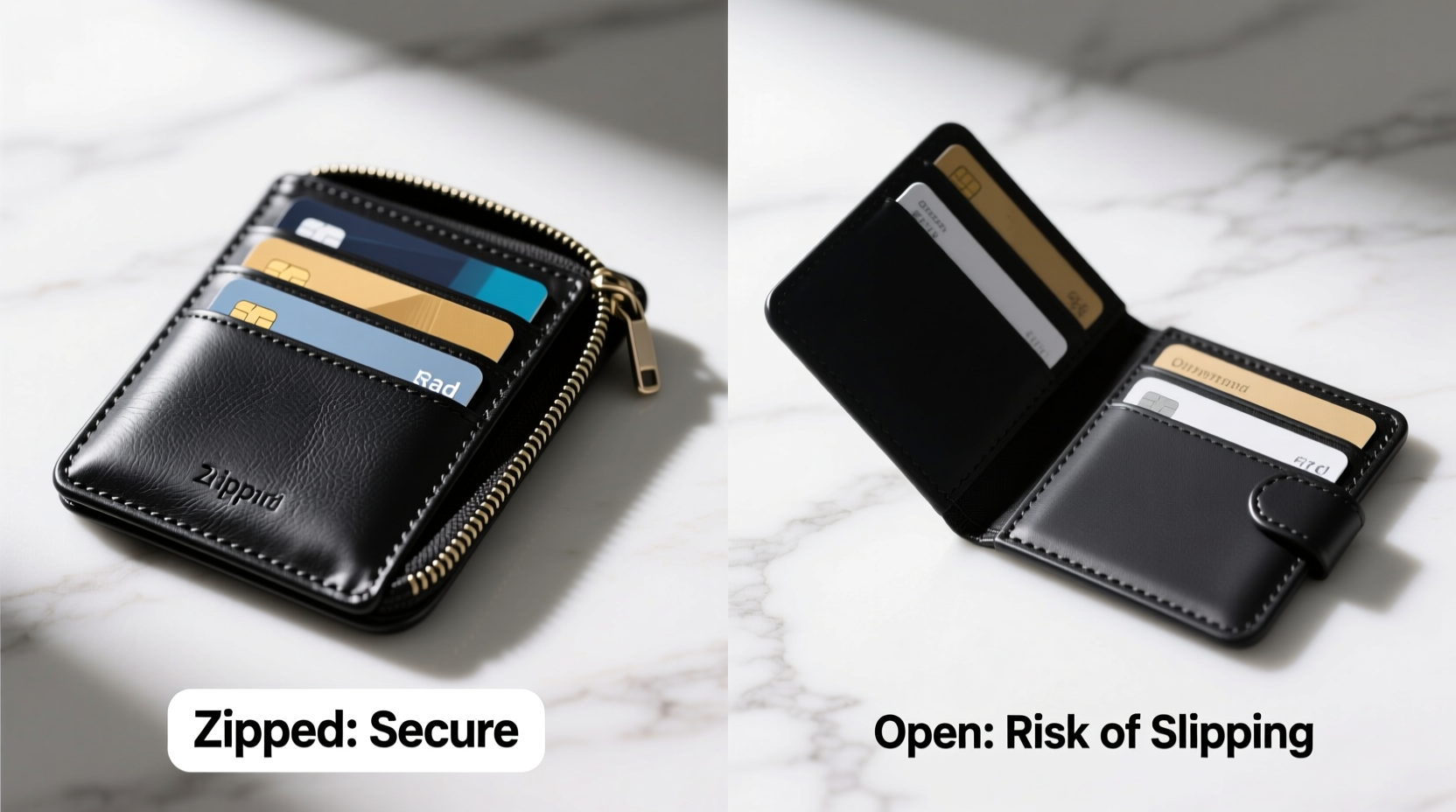
Safety for cards isn't just about avoiding scratches. True card protection includes:
- Physical Protection: Guarding against bending, cracking, and surface wear.
- Security: Preventing unauthorized access or pickpocketing.
- Retention: Ensuring cards don’t fall out during movement or activity.
- Environmental Resistance: Shielding against moisture, dust, and dirt.
An open card holder may offer quick access but could expose cards to more risk in crowded environments. A zippered model adds a barrier but may slow down daily use. Understanding what matters most to you helps determine which style aligns with your needs.
Design & Functionality Comparison
To evaluate effectiveness, let’s compare key features of zippered and open card holders side by side.
| Feature | Zippered Card Holder | Open Card Holder |
|---|---|---|
| Card Retention | High – cards are enclosed and secured behind a zipper | Moderate – relies on friction; cards can slip out if tilted |
| Access Speed | Slower – requires unzipping before access | Fast – cards visible and ready to grab |
| Durability | Depends on zipper quality; potential failure point | Generally higher – fewer moving parts |
| Moisture/Dust Protection | Good – sealed enclosure blocks elements | Poor – fully exposed to environment |
| Security Against Theft | Superior – harder to access without notice | Limited – easy for skilled hands to remove cards |
| Capacity Flexibility | Rigid – fixed internal space | Flexible – can accommodate extra cards temporarily |
This comparison shows that while zippered holders win in security and environmental protection, they sacrifice speed and mechanical simplicity. Open holders excel in convenience but leave cards vulnerable in dynamic settings.
Real-World Scenarios: Who Benefits From Which?
A student rushing between classes may value speed over security. An urban commuter navigating packed subways faces greater risk of theft. Let’s explore two realistic cases.
Mini Case Study: The Daily Commuter in Tokyo
Takashi uses an open leather card holder clipped inside his jacket pocket. During rush hour, he often boards trains so crowded that personal space disappears. One morning, he reaches for his transit card and finds it missing. Surveillance later confirms a pickpocket had slipped his hand into the jacket and removed the card in seconds.
After switching to a slim zippered card wallet, Takashi noticed a difference immediately. Though slightly slower to access, the zipper acted as a deterrent. No more lost cards—and peace of mind during peak hours.
Mini Case Study: The Freelancer Working From Cafés
Maria works remotely and visits coffee shops daily. She carries three cards: a debit, credit, and library card. Her open slot-style holder lets her pull out her card mid-order without fumbling. Since she rarely enters high-risk zones and keeps her bag zipped, she values efficiency over maximum security.
For Maria, the open design fits her low-threat, high-mobility lifestyle. She hasn’t experienced loss and appreciates not having to unzip just to pay for a latte.
“Physical security layers like zippers add meaningful resistance to opportunistic theft, especially in dense public spaces.” — Daniel Reyes, Urban Security Consultant
When Zippered Holders Fall Short
Despite their advantages, zippered card holders aren’t foolproof. Poorly made zippers can jam, break, or snag fabric. Some models create bulk, making them uncomfortable in tight pockets. Others require two-handed operation, which defeats the purpose of a minimalist wallet.
Additionally, frequent opening and closing wears down the zipper over time. Once compromised, the entire protective benefit vanishes. In contrast, open holders—especially those made from elasticated or reinforced materials—often last longer mechanically.
Another issue: overconfidence. Users may assume a zipper makes their cards completely safe, leading to lax habits like leaving the holder unzipped or placing it in back pockets—still prime targets for thieves.
Actionable Checklist: Choosing the Right Holder for Your Lifestyle
Use this checklist to decide which type suits your routine best:
- ✅ Do you regularly use public transportation or attend crowded events? → Lean toward zippered.
- ✅ Are you in a high-theft urban area? → Prioritize locked access.
- ✅ Do you carry sensitive cards (e.g., corporate ID, health insurance)? → Consider added security.
- ✅ Do you value speed and minimalism above all? → Open design may be preferable.
- ✅ Do your cards often get scratched or bent? → Look for padded, enclosed storage.
- ✅ Do you live in a humid or rainy climate? → Zippered offers better moisture resistance.
Best Practices for Maximizing Card Safety (Regardless of Design)
No holder is perfect. Combine smart design with good habits to maximize protection.
- Limit Exposure: Only carry essential cards. Leave unused ones at home in a secure drawer.
- Use RFID Protection: Both zippered and open holders now come with RFID-blocking lining. This prevents digital skimming, a growing threat.
- Avoid Back Pockets: Even the most secure holder is risky here. Front pockets or chest bags are safer.
- Regular Inspection: Check for wear, loose stitching, or damaged zippers weekly.
- Rotate Cards: Don’t always keep the same card in the front slot—mix it up to prevent predictable access.
“Your card holder is only as strong as your weakest habit. A zipper won’t help if it’s left open.” — Lena Patel, Digital Privacy Advocate
Frequently Asked Questions
Can open card holders be safe in cities?
Yes, but with caveats. If you stay alert, avoid high-risk areas, and keep your hand near your pocket, an open holder can work. However, in dense crowds or tourist zones, the risk increases significantly.
Do zippered holders damage cards when inserting/removing?
Not if designed well. High-quality zippered wallets feature smooth interior linings and wide openings to prevent scraping. Avoid forcing cards in at sharp angles.
Is there a hybrid option available?
Yes. Some modern wallets combine open slots for quick-access cards (like transit) with a zippered compartment for cash and backup cards. These offer balanced functionality.
Final Verdict: Which One Actually Keeps Your Cards Safer?
If your priority is **physical security and environmental protection**, the zippered card holder is objectively superior. It shields against moisture, dust, and unauthorized access in ways an open design simply cannot match. For anyone living in a city, traveling frequently, or carrying critical cards, the minor delay in access is a worthwhile trade-off.
However, if your lifestyle is low-risk, highly mobile, and centered around convenience, an open card holder can be perfectly adequate—provided you practice vigilance and limit what you carry.
The truth is, no single solution fits all. But when it comes to pure safety—defined as protection from loss, damage, and theft—the zippered card holder holds a clear edge.




 浙公网安备
33010002000092号
浙公网安备
33010002000092号 浙B2-20120091-4
Comments
No comments yet. Why don't you start the discussion?