All categories
Featured selections
Trade Assurance
Buyer Central
Help Center
Get the app
Become a supplier
(5 products available)
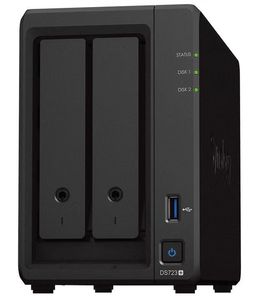





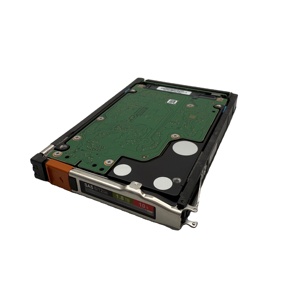
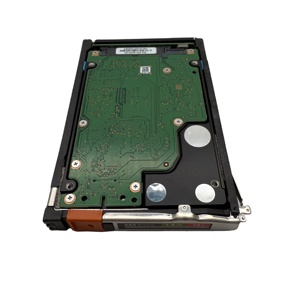
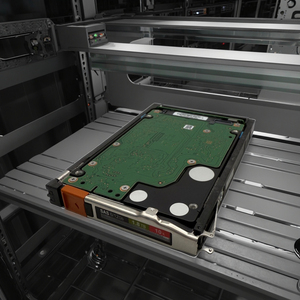
Based on storage capacity, here is a list of different types of SATA DDR2 RAM disks:
The 2GB SATA RAM disk is useful in many industries, and here are some applications:
Video Games
In the past, video game files were mostly on hard disks, which made games load slowly. But with the introduction of RAM disks, game developers now create in-game options to store files on RAM disks. This helps games to load faster because accessing data in RAM is quicker than accessing it on a disk. For example, a game that requires 10 minutes to boot can do so in 4 minutes when installed on a RAM disk.
Also, during gameplay, time is saved in different states like ASCII art, text files, and binary files. These files are usually on hard disks, but gamers can use RAM disks to reduce the time it takes to read or write files and improve performance.
Editing Applications
When video or audio editing programs are installed on a hard disk, the process of opening large files takes longer. But if these files are stored on a RAM disk, they will load faster, making it easier to edit and save the final output. Also, during editing, there are many instances where the software writes metadata to the file. When this instruction is on a hard disk, the drive head has to move around before writing, but in the RAM disk, it will just write the data fast and improve editing speed and productivity.
Computers and Device Booting
The RAM disk can store an operating system or program that boots at startup. The content of a disk can be copied to RAM and set to mount at boot using Linux tools. Then, when the computer is turned on, the operating system will load much faster from RAM. Also, frequently used drivers can be stored on the RAM disk to reduce the time it takes to load them when the computer starts. Essentially, installing applications in the RAM disk allows them to launch at startup and shorten boot times.
When choosing a RAM disk, it is essential to consider system capabilities, disk size, performance, persistence, and cost.
First, check what the system can support. That means checking the maximum amount of DDR2 RAM that the system can hold and finding out if there is a limit to how many disks can be made access at the same time. Knowing these numbers will help one choose a size that will boost performance without going over any boundaries set by the system. It is also essential to pick a DDR2 RAM disk that matches the system specifications. One must ensure that the RAM disk runs on the same DDR2 memory type as in the PC.
The size of the DDR2 SATA RAM disk is crucial because it will determine how much data one can store at once. When choosing a size, consider the applications and files to be used. If running many programs or holding large files, then a larger disk is needed.
Performance is another factor to consider when choosing DDR2 RAM disks. Since all data on the disk is kept in fast random access memory, using it makes computers much faster. Using a RAM disk makes everything run quicker, from the operating system to programs to moving files. That is why picking a fast RAM disk is important. The speed at which the RAM disk transfers data to and from the computer affects how fast everything runs.
Persistence must also be considered when choosing a RAM disk. Regular RAM disks lose whatever temporary data is stored on them whenever the computer shuts down or crashes for any reason. However, persistent disks can use a separate flash memory stick to save data no matter what happens to the computer. This allows data to be restored when the PC is powered back on, even from a bad shutdown.
Finally, the cost of the RAM disk is essential. A DDR2 RAM disk relies on system memory resources, which are volatile and more expensive compared to traditional hard disks.
Q1. What is the difference between DDR2 and other DDR?
A1. The number represents the generation. DDR2 comes after DDR in order. The difference between DDR2 and DDR are data transfer rates, power consumption, and memory modules. DDR2 has a higher data rate, uses less power, and has memory modules than DDR.
Q2. How much memory can DDR2 hold?
A2. The maximum addressable memory is 4GB but can only run on 32-bit operating systems. It can run on a 64-bit system where it will use more than 4GB memory.
Q3. Is DDR2 still used?
A3. Yes. It is still used in older systems that can't be upgraded to new memory modules.
Q4. What are the benefits of DDR2?
A4. Benefits of DDR2 are lower power consumption, increased bandwidth, and Improved Clean Data.