All categories
Featured selections
Trade Assurance
Buyer Central
Help Center
Get the app
Become a supplier
(5 products available)


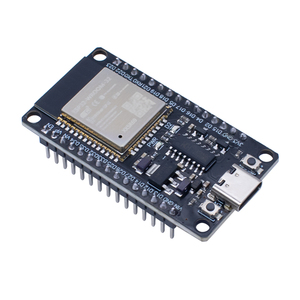
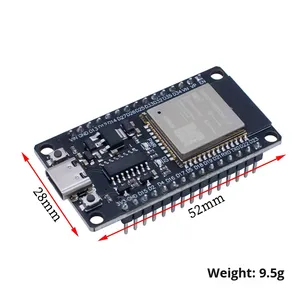
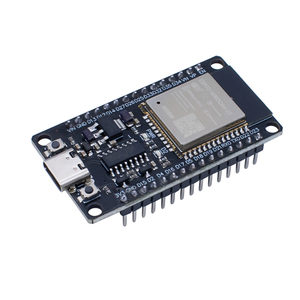
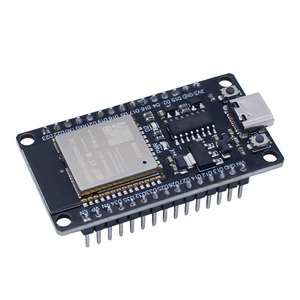


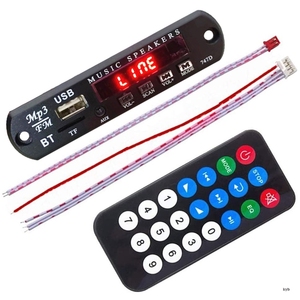
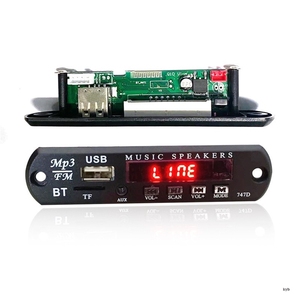
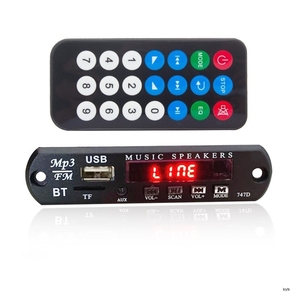





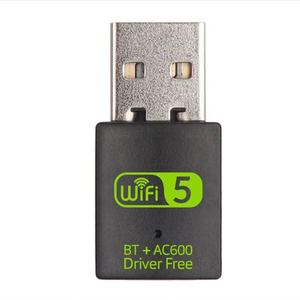
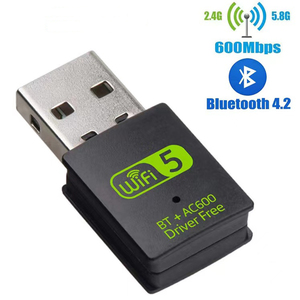
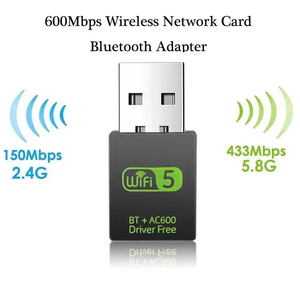
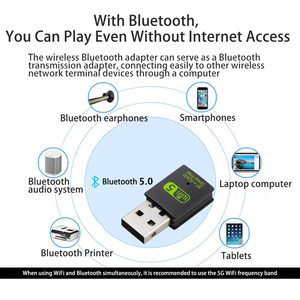
 Ready to Ship
USB WiFi CSR Bluetooth modules in bulk come in several configurations to match the distinct preferences and needs of users. It's vital for people to consider the performance and intended use of each type when selecting a model.
USB WiFi CSR Bluetooth 5.0 Module
This is one of the latest standards, offering faster data transfer rates and extended range. It ensures seamless connections with less energy consumption for mobile phones, headsets, and speakers. Moreover, its compatibility with earlier Bluetooth versions guarantees widespread device connectivity without any hitches.
USB WiFi CSR Bluetooth 4.0 Module
Bluetooth 4.0 is well known for its variety, incorporating the classic Bluetooth technology alongside the more energy-efficient Bluetooth Low Energy (BLE). The Jeep XG Bluetooth Module is a prime choice for enterprise applications because of its versatility. It can manage a range of communication protocols, including BLE for efficient, low-energy exchanges, traditional Bluetooth for broader connectivity, and USB interfaces for sophisticated systems.
Bluetooth and WiFi CSR Module
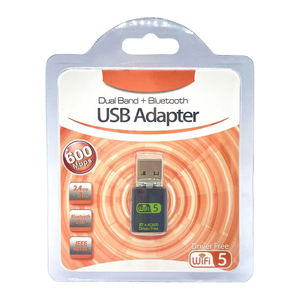
This module enables Bluetooth and WiFi connectivity, making it more functional. These are particularly helpful for applications that require high-speed data transmission and reliable connectivity, like wireless audio streaming or transferring files between devices. Dual functionality simplifies the device design and the number of components required, thus making it cost-effective for manufacturers.
USB-C WiFi CSR Bluetooth Module
This allows faster data and power transfer than the older USB variants. It is relevant in applications where quick connections are essential, like docking stations, modern laptops, and smartphones. Its reversible design adds convenience, making it an excellent choice for contemporary gadgets. The module also works with CSR’s suite of software to ensure reliable wireless communication across devices.
Wearable Technology
Bluetooth modules are the key players in wearables, offering seamless connectivity to smartphones and other devices. For example, fitness trackers and smartwatches use Bluetooth to transfer data in real time, allowing users to monitor their health stats instantly. Bluetooth Low energy maintains long battery life while ensuring continuous interaction with companions’ devices.
Health Monitoring Devices
Bluetooth modules allow health monitoring devices like blood pressure monitors, heart rate monitors, etc., to communicate wirelessly with smartphones or base stations. These modules let the device send real-time personal health data for monitoring and diagnosis, which is critical in the medical field. Bluetooth's security ensures users' sensitive health information is well protected during transmission.
Industrial Automation
Bluetooth modules facilitate smooth communication between machinery and handheld devices in industrial settings. They enable real-time data transmission for monitoring and control, thus helping to automate processes and increase efficiency. Bluetooth's ability to connect with a range of devices, such as sensors and tablets, creates a flexible system used in industrial applications to support operations and maintenance.
Smart Home Devices
Bluetooth modules are found in various smart home gadgets, including thermostats, lights, and security cameras. These modules allow users to control and monitor devices from mobile phones or central hubs. Further, Bluetooth Low Energy helps these devices connect efficiently without draining energy, making it ideal for smart home applications where devices regularly communicate with gadgets.
Transport and Logistics
Bluetooth modules have critical applications in transport and logistics, especially in tracking and inventory management. Devices such as RFID readers, barcode scanners, and asset trackers communicate with mobile or fixed terminals in real time using Bluetooth, streamlining operations and enhancing efficiency. The ability to connect over long distances and with various devices fits seamlessly into the logistics environment, where quick, dependable data transmission is critical for effective asset management.
Range
A shorter range means that the device is optimized for close-range communication, like wearables or health devices, while longer-range modules are better for industrial applications where monitoring needs to be done from a distance. Bluetooth 5.0 modules typically support longer ranges compared to their predecessors, hence better for large-scale applications.
Data transfer speed
The required data rates depend on the type of application. For example, video streaming or transferring files, faster rates will do well. Conversely, lower speeds will do for simple applications like sending sensor data.
Compatibility with other technologies
For example, the Bluetooth Low Energy works best with CSR modules. This is because healthcare devices, fitness gadgets, and wearables use this technology to ensure lower energy consumption while maintaining continuous inter-device communication. Applications requiring frequent Bluetooth interactions will benefit greatly from CSR modules that support BLE.
Energy efficiency
Energy efficiency decides the kind of module to be used in applications requiring battery power, such as wearables and IoT devices. Bluetooth Low Energy (BLE) works with CSR modules, which reduces energy consumption during wireless communication. This technology enables devices to maintain longer battery lives even when connected to Bluetooth, ensuring users enjoy uninterrupted functionality without having to recharge their gadgets often.
Security features
Security is extremely important for applications that require wireless transmission of sensitive information. Look for modules that support secure pairing methods and data encryption, especially those intended for healthcare, financial, or any other businesses dealing with confidential information. CSR Bluetooth modules incorporate advanced security protocols consistent with industry standards to protect against unauthorized access and data breaches during transmission.
PCB Antenna
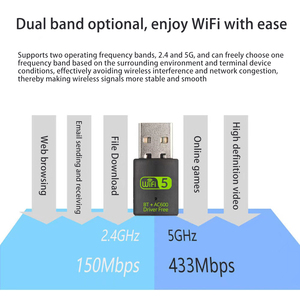
The PCB antenna on a USB WiFi CSR Bluetooth module is fabricated using copper traces laid out on a printed circuit board. The design of the antenna depends on the frequency and standards used, typically 2.4GHz for Bluetooth and WiFi. PCBs can be single or multi-layered, depending on the complexity of the antenna design. Bluetooth and WiFi USB modules use PCB antennas because they are compact, easily integrated into the module, and provide decent range and performance for short-distance wireless communications.
CSR Chipset
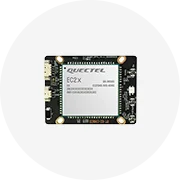
The CSR chipset is the core of the Bluetooth and WiFi functionalities. CSR, or Cambridge Silicon Radio, produces chipsets that support various wireless communication technologies. The chipset processes signals which Bluetooth and WiFi software integrates to enable connectivity. The CSR chipset handles all data transfers between devices, converting signals between digital and analog formats, facilitating seamless synchronization and communication between Bluetooth and WiFi.
USB Interface
This other element is mounted directly to the PCB and connects the module to host systems. The interface is responsible for data transmission, power supply, and signal communication. Under the USB interface lies a well-designed connection that guarantees good performances, such as high data transfer rates and dependable power management between the module and host, be it a computer or other devices. The interface complies with different USB versions, such as 2.0 and 3.0, to ensure compatibility with various applications.
Enclosure
The enclosure for this module is typically made from durable plastic or metal. Enclosures provide EMC shielding to prevent any interference with other components and protect internal elements from damage caused by physical impact, dust, or other environmental factors. The design also ensures efficient heat dissipation while guaranteeing a compact and portable form factor suitable for various applications.
To install a Bluetooth USB CSR module, one has to plug the module into the computer's USB port first. This allows the operating system to identify the device. Next, install the drivers provided by the manufacturer or let the system automatically get them. When the drivers are installed, the module can be used by going to the settings of Bluetooth and selecting it.
Yes, since Bluetooth and WiFi standards evolve but remain backward compatible, the USB WiFi CSR Bluetooth module can work with older devices. However, performance may not be optimal. For example, an older device might not support newer Bluetooth or WiFi standards, hence lower ranges, speeds, and possibly less efficient connectivity.
Usually, a CSR Bluetooth module has a typical range of about 10 meters or 33 feet. Some new models based on Bluetooth 5.0 can go as far as 240 meters. Also, the WiFi range greatly varies depending on the application and environment and typically reaches several hundred meters.
Some common issues with the CSR Bluetooth USB module include connectivity problems due to interference, drivers not being updated, and range limitation. Others are device incompatibility and issues with poor signal strength, often due to physical barriers between the connected devices.
The USB WiFi CSR Bluetooth modules perform better because they combine the speed and efficiency of Bluetooth technology with WiFi capabilities, particularly in applications requiring high data transfer and seamless connectivity. Also, it uses CSR chipsets known for reliable performance in short-range communications, like audio streaming and IoT devices.