B2b Ecommerce Solution Provider

 CN
CN

























 CN
CN



























 CN
CN





























 CN
CN




About b2b ecommerce solution provider
Where to Find B2B Ecommerce Solution Providers?
China remains a dominant hub for digital commerce infrastructure development, with specialized software engineering clusters concentrated in Shenzhen, Guangzhou, and Hangzhou. These regions host mature ecosystems of IT service providers, offering scalable development resources and integrated technology stacks tailored for enterprise-grade B2B ecommerce platforms. Shenzhen, in particular, serves as a core innovation center, combining proximity to hardware manufacturing with deep expertise in cloud architecture, API integration, and multi-vendor marketplace design.
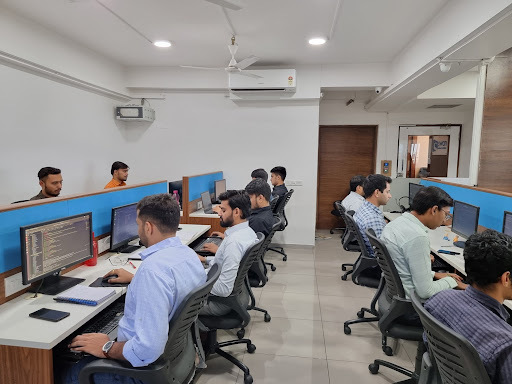
The industrial advantage lies in vertically aligned tech talent pools and cost-efficient development cycles. Suppliers in these zones typically operate agile teams capable of full-stack implementation—from frontend UI/UX design to backend ERP integration—within compressed timelines. Buyers benefit from localized coordination between developers, QA engineers, and DevOps specialists, enabling rapid prototyping and deployment. Average project delivery windows range from 60 to 120 days depending on customization depth, with modular frameworks reducing time-to-market by up to 40% compared to in-house development.
How to Choose B2B Ecommerce Solution Providers?
Evaluate suppliers using the following technical and operational benchmarks:
Technical Capability Verification
Confirm proficiency in key technologies including Shopify, Magento, WordPress/WooCommerce, and custom API integrations. For enterprise clients, assess experience with multi-vendor marketplaces, AI-driven personalization, and secure payment gateway deployment. Request documented case studies or sandbox environments to validate platform performance under real-world transaction loads.
Development Infrastructure Assessment
Analyze supplier capacity through measurable indicators:
- Minimum team size of 15+ dedicated developers for complex builds
- Demonstrated experience with scalable cloud hosting (AWS, Alibaba Cloud, etc.)
- In-house QA and cybersecurity testing protocols
Cross-reference response times (target ≤8 hours) with on-time delivery records where available to gauge project management rigor.
Transaction and Intellectual Property Safeguards
Utilize secure payment mechanisms such as escrow services to protect against delivery risks. Prioritize suppliers offering source code ownership transfer and post-launch support agreements. Conduct due diligence via third-party verification platforms, focusing on dispute resolution history and client retention metrics.
What Are the Best B2B Ecommerce Solution Providers?
| Company Name | Main Services | Starting Price (USD) | Min. Order | On-Time Delivery | Avg. Response | Customization Options | Verification Status |
|---|---|---|---|---|---|---|---|
| Shenzhen Douples Technology Co., Ltd. | Custom B2B/B2C Platform Design, Shopify Development, API Integration | $2,000 | 1 unit | 100% | ≤8h | Full custom build, AI features | Trusted service provider |
| BUSINESS RHINOS | Ecommerce Website Design, WordPress Solutions, Online Store Creation | $100 | 2 pieces | Not specified | ≤2h | Template-based customization | Not verified |
| TWODICE.NET | Web Design, Shopify Stores, Mobile App Development | $100 | 2 pieces | Not specified | ≤5h | Limited branding options | Not verified |
| CORTEX WORK | Multi-Vendor Marketplaces, Magento B2B/B2C, Wholesale Platforms | $500 | 1 piece | Not specified | ≤7h | Scalable modular systems | Not verified |
| Shenzhen Kuaiji Interactive Technology Co., Ltd. | Custom E-commerce Platforms, Mobile App Development, OA Systems | $100 | 1 set | 100% | ≤7h | Logo integration, bespoke functionality | Trusted service provider |
Performance Analysis
Verified suppliers like Shenzhen Douples Technology and Shenzhen Kuaiji Interactive demonstrate strong reliability with 100% on-time delivery and comprehensive customization capabilities, supporting high-complexity projects starting at $2,000 and $100 respectively. BUSINESS RHINOS stands out for responsiveness (≤2h), making it suitable for time-sensitive consultations, though its lower pricing model ($990–$1,000) suggests template-reliant solutions rather than fully custom architectures. CORTEX WORK offers mid-range pricing with proven expertise in multi-vendor and wholesale platforms, ideal for clients seeking scalable B2B marketplace models. While several providers list MOQs of "2 pieces," this likely refers to service packages or website licenses rather than physical units, indicating standardized service bundling.
FAQs
How to verify B2B ecommerce solution provider reliability?
Review documented project portfolios, GitHub repositories, or live demo sites. Validate technical claims through direct inquiry into stack configuration, database architecture, and security compliance (e.g., SSL, PCI-DSS). Check for consistent communication patterns and formal contracts covering SLAs, IP rights, and post-deployment maintenance.
What is the typical lead time for a custom B2B platform?
Standard development cycles range from 8 to 16 weeks, depending on feature complexity. Projects involving ERP integration, AI recommendation engines, or custom admin panels may require 4–6 months. Prototypes are typically delivered within 30 days for client review.
Do suppliers offer post-launch support and maintenance?
Most providers include 30–90 days of free technical support. Extended maintenance plans—covering updates, bug fixes, and server monitoring—are commonly available at monthly rates ranging from $100 to $500 based on system complexity.
Can B2B ecommerce platforms integrate with existing ERP or CRM systems?
Yes, reputable developers implement RESTful APIs or middleware connectors for seamless synchronization with SAP, Oracle, Salesforce, and other enterprise systems. Confirm integration experience during vetting and request test environment access to validate data flow accuracy.
Are there hidden costs in B2B ecommerce development?
Potential additional expenses include third-party plugin licensing, premium themes, domain/hosting renewals, and payment gateway fees. Ensure all components are itemized in the quote and clarify ownership of source code and databases upon completion.





