




Connecting Batteries In Parallel









 1/5
1/5


 1/16
1/16


 1/17
1/17


 1/26
1/26










 1/20
1/20



 0
0



 1/3
1/3




 1/2
1/2



 1/20
1/20





 1/20
1/20


 1/13
1/13


 1/3
1/3


 0
0


 0
0


 1/3
1/3



 1/3
1/3


 1/3
1/3



 1/3
1/3




About connecting batteries in parallel
Where to Find Connecting Batteries in Parallel Suppliers?
China remains the central hub for power storage and battery system manufacturing, with key industrial clusters concentrated in Guangdong, Jiangsu, and Zhejiang provinces. These regions host over 70% of global suppliers specializing in battery interconnection components, including busbars, isolation switches, and parallel connection kits. Guangdong’s Shenzhen and Dongguan zones are particularly notable for advanced lithium-ion infrastructure, offering integrated production from cell assembly to complete battery bank systems.
The clustering enables vertical integration across raw material processing, PCB fabrication, and final assembly, reducing component lead times by up to 40% compared to decentralized supply chains. Suppliers benefit from proximity to anodized copper, aluminum alloy, and insulating polymer sources—critical materials for low-resistance parallel connections. Buyers gain access to ecosystems where engineering support, testing labs, and export logistics operate within tight geographic networks, facilitating rapid prototyping and volume scaling. Typical advantages include 25–35% lower unit costs, lead times of 20–35 days for standard configurations, and flexibility for mixed-voltage or high-capacity designs.
How to Choose Connecting Batteries in Parallel Suppliers?
Implement structured evaluation criteria to ensure technical reliability and supply chain integrity:
Quality & Safety Certification
Require ISO 9001 certification as a baseline for quality management systems. For international deployments, confirm compliance with IEC 62133 (safety for secondary lithium cells) and RoHS directives on hazardous substances. CE marking is essential for European market entry, while UL 1989 (stationary battery systems) adds credibility for North American buyers. Verify test reports for voltage balancing, thermal stability, and short-circuit protection in parallel configurations.
Production Capability Assessment
Evaluate core operational metrics:
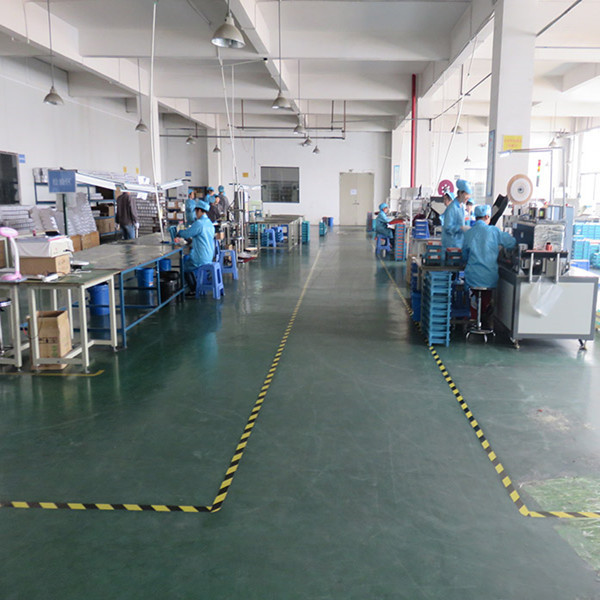
- Minimum 3,000m² factory area to support automated assembly lines
- In-house design capability for custom busbar layouts and connector spacing
- CNC precision cutting and resistance welding infrastructure
Correlate facility scale with documented output capacity—target suppliers capable of ≥50,000 connection units per month for scalable procurement.
Risk Mitigation & Transaction Security
Utilize secure payment structures such as third-party escrow until post-arrival performance verification. Prioritize suppliers with documented export experience to your target region, especially those familiar with customs classification of battery management systems (BMS) and associated hardware. Pre-shipment testing should include load simulation across paralleled units to validate equal current distribution and absence of reverse charging.
What Are the Best Connecting Batteries in Parallel Suppliers?
No supplier data available for comparative analysis.
Performance Analysis
In the absence of specific supplier profiles, procurement focus should shift toward verifying technical documentation and process transparency. Emphasis must be placed on engineering validation—request detailed schematics, torque specifications for terminal connections, and BMS compatibility matrices. Conduct remote audits via live video walkthroughs of production and testing phases to assess adherence to IPC-2221 standards for electrical spacing and trace width. For mission-critical applications, require sample validation under sustained discharge conditions (C/5 rate over 72 hours) to confirm stable voltage sharing across parallel strings.
FAQs
How to verify connecting batteries in parallel supplier reliability?
Validate certifications through official databases and request audit trails covering raw material sourcing, weld integrity logs, and environmental stress testing. Assess responsiveness and technical depth during inquiry stages—reliable partners provide detailed application notes and failure mode analyses upon request.
What is the average sampling timeline?
Standard samples for parallel connection kits typically take 10–20 days to produce, depending on customization level. Fully integrated battery modules with pre-wired parallel architecture may require 25–35 days. Air freight adds 5–9 days for international delivery.
Can suppliers ship battery connection systems worldwide?
Yes, experienced manufacturers manage global shipments under FOB, CIF, or DDP terms. Confirm UN38.3 certification for any lithium-based assemblies to meet air and sea transport regulations. Proper packaging with anti-static and crush-resistant materials is mandatory for terminal protection.
Do manufacturers provide free samples?
Sample availability depends on complexity. Basic copper busbars or fuse holders may be provided at no cost for qualified orders exceeding 1,000 units. For engineered solutions involving custom BMS integration or molded enclosures, expect sample fees covering 40–60% of unit cost, often redeemable against future orders.
How to initiate customization requests?
Submit full technical requirements: battery chemistry (LiFePO4, NMC, etc.), nominal voltage, total capacity (Ah), number of cells in parallel, physical layout constraints, and ambient operating temperature. Leading suppliers respond with CAD models and voltage drop calculations within 72 hours, followed by functional prototypes in 3–5 weeks.





