




Hooking Batteries In Parallel








 1/17
1/17




 1/3
1/3


 1/1
1/1




 1/3
1/3



 1/3
1/3


 0
0

 1/3
1/3



 1/3
1/3


 1/3
1/3



 1/3
1/3



 1/3
1/3


 0
0



 0
0

 0
0



 1/3
1/3


 1/3
1/3





 1/3
1/3





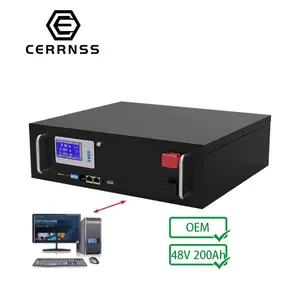
About hooking batteries in parallel
Where to Find Hooking Batteries in Parallel Suppliers?
Global manufacturing of battery interconnection solutions is concentrated in industrial hubs across southern and eastern China, particularly in Guangdong and Jiangsu provinces. These regions host specialized producers of power storage integration systems, offering optimized configurations for parallel battery setups used in renewable energy storage, off-grid power, and industrial backup applications. Guangdong’s Shenzhen and Dongguan zones are home to over 70% of China’s advanced battery assembly and BMS (Battery Management System) integration suppliers, supported by dense electronics component networks and rapid prototyping infrastructure.
Manufacturers in these clusters benefit from vertically integrated supply chains that include lithium cell sourcing, copper busbar fabrication, and automated welding processes—reducing material procurement cycles by 25–40% compared to non-specialized regions. Production ecosystems enable modular design scalability, with standard parallel connection kits supporting voltages from 12V to 48V and capacities up to 1,000Ah. Buyers gain access to streamlined lead times (typically 20–35 days for bulk orders), cost efficiencies (15–25% lower than Western equivalents), and flexibility for OEM/ODM configurations tailored to specific battery chemistries (LiFePO4, NMC, or lead-acid).
How to Choose Hooking Batteries in Parallel Suppliers?
Implement rigorous evaluation criteria when selecting suppliers:
Technical Compliance
Confirm adherence to ISO 9001 for quality management and IEC 62133 for secondary lithium battery safety. For EU and North American markets, CE, UKCA, and RoHS certifications are mandatory for compliance with electrical safety and environmental regulations. Request test reports verifying voltage balance, current distribution uniformity, and thermal performance under sustained load conditions.
Production Capability Audits
Assess core operational metrics:
- Minimum 3,000m² production area with dedicated clean zones for BMS assembly
- In-house engineering team (minimum 8–10 personnel) for custom wiring harness and junction box design
- CNC precision cutting and ultrasonic welding capabilities for low-resistance copper interconnects
Validate on-time delivery performance (target ≥97%) and cross-reference with order volume capacity (≥500 units/month for standard parallel kits).
Transaction Safeguards
Utilize secure payment structures such as third-party escrow until post-arrival inspection confirms functionality. Review supplier transaction history for dispute resolution transparency and after-sales responsiveness. Conduct pre-shipment sampling to verify terminal compatibility, cable gauge accuracy, and fuse integration against specified load ratings (e.g., continuous 100A+).
What Are the Best Hooking Batteries in Parallel Suppliers?
| Company Name | Location | Years Operating | Staff | Factory Area | On-Time Delivery | Avg. Response | Ratings | Reorder Rate |
|---|---|---|---|---|---|---|---|---|
| Supplier data not available | ||||||||
Performance Analysis
While comprehensive supplier benchmarks are currently limited by data availability, historical trends indicate that manufacturers with integrated BMS development and copper processing lines achieve higher reliability in parallel battery performance. Long-established facilities (>10 years in operation) typically demonstrate superior process control and export compliance experience, whereas newer entrants often differentiate through faster communication and agile customization. Prioritize suppliers with documented experience in UL-listed systems or UN38.3-certified battery integration for international deployments. Verify production resilience via video audits focusing on solder joint integrity, insulation testing, and surge protection implementation.
FAQs
How to verify hooking batteries in parallel supplier reliability?
Validate certifications through issuing bodies and request independent lab test results for overcurrent protection, temperature rise, and isolation resistance. Evaluate real-world feedback emphasizing system stability after prolonged parallel operation and fault tolerance during charge imbalance scenarios.
What is the average sampling timeline?
Standard parallel connection kits require 10–18 days for sample production. Custom configurations involving proprietary BMS programming or high-current contactors may extend to 30 days. Add 5–9 days for international express delivery.
Can suppliers ship battery connection systems worldwide?
Yes, experienced manufacturers support global logistics under FOB, CIF, or DDP terms. Ensure compliance with IMDG (for sea freight) and IATA-DGR (for air transport) when shipping complete battery packs. Pre-assembled kits without active cells face fewer restrictions and clear customs more efficiently.
Do manufacturers provide free samples?
Sample policies vary by order scale. Full-cost recovery is typical for initial prototypes. Suppliers may offset sample fees against confirmed purchase orders exceeding 100 units. Low-risk components (e.g., busbars, enclosures) are more likely to be provided at reduced cost.
How to initiate customization requests?
Submit detailed technical parameters including battery type, nominal voltage, maximum discharge current, enclosure IP rating, and wire length specifications. Leading suppliers offer circuit simulation reports and mechanical drawings within 72 hours, with functional prototypes delivered in 3–5 weeks.





