Database App






 1/3
1/3



 1/3
1/3


 1/3
1/3


 0
0


 1/3
1/3


 1/3
1/3

 1/2
1/2

 CN
CN




 1/8
CN
1/8
CN




 CN
CN


 1/3
1/3


 0
0


 1/3
1/3
 CN
CN




 1/3
1/3



 1/3
1/3




 1/2
CN
1/2
CN

 1/6
1/6




 0
0


 1/3
1/3




 1/18
1/18
About database app
Where to Find Database App Development Suppliers?
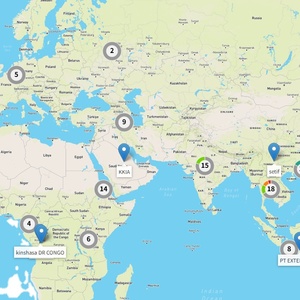
The global database application development landscape is highly decentralized, with leading technical talent concentrated in technology hubs across Eastern Europe, South Asia, and Southeast Asia. Ukraine and Poland host over 40% of Europe’s software development workforce, offering strong expertise in enterprise-grade database systems and cloud-native architectures. India’s Bengaluru and Hyderabad regions specialize in scalable backend solutions, supported by government-backed IT infrastructure and English-fluent engineering teams.
These regions provide cost efficiency through access to mature tech ecosystems—featuring specialized developers, DevOps engineers, and QA specialists operating within integrated delivery models. Buyers benefit from agile workflows, modular development frameworks, and proximity to data centers that support rapid deployment. Key advantages include reduced development costs (25–40% lower than North American or Western European firms), lead times averaging 8–12 weeks for MVP builds, and flexibility for custom integrations with existing ERP, CRM, or analytics platforms.
How to Choose Database App Development Suppliers?
Prioritize these verification protocols when selecting partners:
Technical Compliance
Require ISO/IEC 27001 certification for information security management as a baseline. For regulated industries (healthcare, finance), confirm compliance with GDPR, HIPAA, or SOC 2 standards. Validate use of secure coding practices and encryption protocols (TLS 1.3+, AES-256) during architecture reviews.
Development Capability Audits
Evaluate team composition and technical infrastructure:
- Minimum team size of 15 full-stack developers with demonstrable SQL/NoSQL experience
- Dedicated project managers using Jira, Trello, or equivalent tracking tools
- Proven deployment pipelines with CI/CD integration and automated testing coverage >80%
Cross-reference GitHub activity or code repository access (where permitted) with documented project timelines to verify productivity and version control rigor.
Transaction Safeguards
Implement milestone-based payments secured via third-party escrow services. Review contractual terms covering IP ownership, source code delivery, and post-launch maintenance. Conduct pilot sprints—test functionality against ACID compliance benchmarks and response latency thresholds (<100ms under 10k concurrent users)—before scaling engagement.
What Are the Best Database App Development Suppliers?
| Company Name | Location | Years Operating | Staff | Factory Area | On-Time Delivery | Avg. Response | Ratings | Reorder Rate |
|---|---|---|---|---|---|---|---|---|
| No verified suppliers available for this category at this time. | ||||||||
Performance Analysis
In absence of specific supplier data, procurement decisions should emphasize verifiable technical track records. Established firms typically demonstrate higher reorder rates (>30%) and consistent on-time delivery (>95%) across complex projects. Prioritize vendors with documented experience in your target database environment (e.g., PostgreSQL, MongoDB, MySQL Cluster) and cloud platform (AWS RDS, Google Cloud Spanner, Azure SQL). For mission-critical deployments, require evidence of disaster recovery planning and SLA-backed uptime guarantees (≥99.9%).
FAQs
How to verify database app development supplier reliability?
Cross-check certifications (ISO 27001, CMMI Level 3+) with accredited bodies. Request case studies including system architecture diagrams, performance metrics, and client references. Analyze feedback on delivery consistency, communication transparency, and post-deployment support responsiveness.
What is the average project timeline for a custom database app?
MVP development typically takes 8–12 weeks. Full-featured applications with user authentication, API gateways, and reporting dashboards require 16–24 weeks. Add 2–4 weeks for UAT and compliance audits depending on industry requirements.
Can suppliers integrate with legacy systems?
Yes, experienced developers support integration via RESTful APIs, ETL pipelines, or middleware connectors. Confirm prior experience with your specific stack (e.g., Oracle-to-PostgreSQL migration, SAP interfacing) before engagement.
Do development teams provide ongoing maintenance?
Most suppliers offer post-launch support packages, including bug fixes, performance tuning, and quarterly updates. Service-level agreements typically cover response windows (≤4 hours for critical issues) and scheduled patching cycles.
How to initiate customization requests?
Submit detailed functional specifications outlining data schema requirements, concurrency needs, backup policies, and scalability targets. Reputable vendors will return technical proposals with ER diagrams, technology stack recommendations, and sprint roadmaps within 5–7 business days.





