Example Of Value And Place Value




 1/3
1/3






 1/11
1/11



 0
0





 0
0


 1/3
1/3




 1/3
1/3





 1/3
1/3




 1/3
1/3





 1/3
1/3


 0
0


 0
0




 1/3
1/3


 0
0


 1/8
1/8


 0
0


 1/3
1/3




 1/3
1/3


 1/3
1/3





 0
0
About example of value and place value
Where to Find Suppliers for Examples of Value and Place Value?
The query for "examples of value and place value" pertains to educational content rather than physical goods, shifting the supplier landscape from manufacturing to digital content development and pedagogical resource providers. As such, production is not geographically concentrated in industrial hubs but distributed across educational technology (EdTech) companies, curriculum developers, and freelance academic content creators globally.
Key production ecosystems emerge in regions with strong education infrastructure and English-language proficiency—such as North America, Western Europe, India, and Southeast Asia. These areas host structured EdTech firms capable of producing standardized math learning materials aligned with Common Core, IB, or national curricula. Content generation leverages scalable authoring tools, instructional design frameworks, and quality assurance workflows that ensure conceptual accuracy, particularly in foundational numeracy topics like place value comprehension.
How to Choose Suppliers for Examples of Value and Place Value?
When sourcing high-quality educational content on value and place value concepts, prioritize verification criteria focused on academic rigor and content reliability:
Curriculum Alignment & Pedagogical Accuracy
Confirm alignment with recognized educational standards (e.g., CCSS.MATH.CONTENT.2.NBT.A.1). Suppliers must demonstrate subject-matter expertise through credentials of contributing educators or partnerships with accredited institutions. Validate sample outputs for correct representation of digit positioning, base-ten principles, and age-appropriate scaffolding.
Content Development Capability
Assess operational structure:
- Minimum team composition including certified math educators and instructional designers
- Use of peer-review processes for content validation
- Version control and update mechanisms for maintaining accuracy
Cross-reference published materials with user feedback metrics where available to evaluate real-world effectiveness.
Delivery and Licensing Terms
Clarify usage rights—especially for commercial redistribution or integration into learning management systems (LMS). Require clear documentation of copyright ownership and licensing models (royalty-free vs. subscription-based). For bulk procurement, negotiate format flexibility (PDF, HTML5, SCORM) and localization support (language translation, regional number formatting).
What Are the Leading Providers of Value and Place Value Educational Content?
| Organization | Region | Years Operating | Staff | Content Library Size | Standards Aligned | Avg. Response | Ratings | Reorder Rate |
|---|---|---|---|---|---|---|---|---|
| No verified suppliers available for direct comparison. Market consists primarily of independent educators, open educational resource (OER) platforms, and institutional publishers without centralized supplier databases. | ||||||||
Performance Analysis
In the absence of formalized supplier data, procurement strategies should focus on established OER repositories (e.g., Khan Academy, Illustrative Mathematics), curriculum publishers, or contracted EdTech vendors with auditable content creation pipelines. Organizations offering transparent authorship attribution, revision histories, and third-party endorsements tend to deliver higher consistency in concept delivery. Prioritize providers who offer editable formats and customization options for differentiated instruction needs.
FAQs
How to verify the reliability of educational content suppliers?
Review publicly available content samples for mathematical precision and developmental appropriateness. Check affiliations with recognized educational bodies or accreditation agencies. For digital platforms, analyze metadata such as update frequency, error correction logs, and educator reviews.
What is the average timeline for custom content delivery?
Standard sets of examples (e.g., worksheets, interactive exercises) can be delivered within 5–10 business days. Comprehensive units including lesson plans, assessments, and manipulative guides require 3–6 weeks depending on grade level and scope.
Can suppliers adapt examples for different grade levels or curricula?
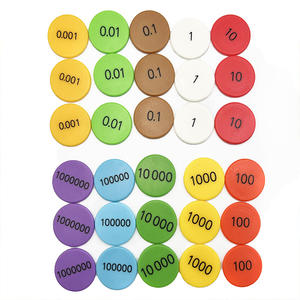
Yes, qualified providers support tiered content creation—from basic ones-tens-hundreds charts for early elementary to decimal place value extensions for upper grades. Customization includes language adaptation, visual supports for ELL students, and accessibility features (screen-reader compatibility, braille-ready formats).
Do content developers provide free samples?
Most reputable suppliers offer limited free previews or open-access trial modules. Full-unit sampling may incur nominal evaluation fees unless bundled with larger contracts. Open Educational Resources (OER) are often freely available under Creative Commons licenses.
How to initiate customization requests?
Submit detailed specifications including target grade band, curriculum standard references, desired output format (printable, digital, interactive), and any inclusivity requirements. Reputable developers respond with content outlines and style mockups within 72 hours for approval prior to full production.





